
Qualcomm
Qualcomm · Networking · Filed May 9, 2025 · USPTO published Nov 12, 2026 · This week's release
Qualcomm Patents Wi-Fi Gear That Notices When Your Camera Turns On
Your router sorts your data into lanes, and Qualcomm's patent application says it should re-sort only when something changes, like your camera turning on or a game match starting.
- Publication number
- US 2026/0361655 A1(US20260361655A1)
- Applicant
- QUALCOMM Incorporated
- Filed · Published
- May 9, 2025 · Nov 12, 2026
- Inventors
- John SANLI, Sandip HOMCHAUDHURI, Prasanthi MUPPIREDDY, Anuradha CHANDRAMOULI, Nagarjun TUMKUR SHARATHKUMAR, Xiaolong HUANG
- Status when we published
- Examiner raised objections; the company can respond
- Document
- 20 claims
- US classification
- 709/224
- Examiner
- BOUTAH, ALINA A (Art Unit 2458)
What Qualcomm's re-check trigger does for Wi-Fi
Your router has to guess what you're doing online. It sorts your data into types, such as a call, a video or a game, and gives the important types a faster lane. The catch is that when you switch your camera on, or a game moves from the lobby to a live match, the data changes and the first guess can be wrong. Checking again all the time wastes processing power.
Qualcomm's patent application describes a small watcher that tells the AI sorter when to look again. It tracks how fast data for each stream is arriving. A big jump, like a camera turning on, triggers an immediate re-check. A drop, like you muting yourself, makes it wait a while first, in case you're right back. It also re-checks when a lane gets clogged and a stream misses its speed or delay target.
obtain information indicative of an ingress rate associated with a traffic flow of an application, wherein the traffic flow is associated with a first traffic class of a plurality of traffic classes corresponding to the application; and output an instruction to perform a traffic classification …
Translation: It measures how fast data is coming in from an app and tells the system to recheck what kind of traffic it is.
How the watcher waits out a mute or a pause
The filing describes a helper, called a selective classification entity, that sits beside an AI model which sorts network traffic (the traffic classifier). Instead of the AI constantly re-examining every data stream, the helper watches one cheap number: the ingress rate, meaning how fast data for a stream is arriving.
The helper tells the AI to re-sort a stream only in certain cases:
- The rate changes past a limit set for that traffic type, and the change lasts for a minimum time. That time can be zero for a sharp increase, but longer for a decrease (the filing gives 30 seconds as an example), so a quick mute does not flip the label back and forth.
- A stream stays inside the usual range of another traffic type, such as 9 to 11 megabits per second for 3 seconds in one example.
- A stream misses its service level agreement, or SLA (a throughput or delay target), because its queue is congested.
A confidence score can also gate the decision. In the filing's table, a score of 0.6 or below lets a drop in data trigger a re-check, while a higher score does not.
For missed targets, the helper first has the AI re-check the clogged queue, then higher priority queues if that fails. It skips the re-check when radio noise is the cause, since re-sorting cannot fix noise.
… triggering the reclassification of traffic flows in accordance with ingress rates of traffic flows, service level agreements (SLAs) of traffic flows, or both.
Translation: It decides when to sort network data again based on data speed or performance guarantees.
Why Qualcomm's re-check trigger matters for gaming
If a router files your video call under background traffic, you get freezes and buffering right when you turn your camera on. If it re-checks everything constantly to avoid that, it burns processing power and can add lag of its own. The filing says continuously re-sorting even a single stream can raise processor use by about 5%.
This approach tries to get the benefits of both: quick reactions to real changes, and calm during short blips. The claims are broad and cover Wi-Fi gear, internet provider equipment and cloud services, so any of them could use it. The examiner's first review rejected the claims as filed, which is routine at this stage and usually followed by amendments.
Qualcomm's 598th filing in our Qualcomm coverage since May adds to a run that includes Wi-Fi reading traffic type and offloading AR glasses to the network.
Source: US 2026/0361655 A1 at the USPTO (PDF). Full patent text and figures are in the official publication.
Get our take in your Top Stories
Liked this breakdown? Add Patentlyze as a preferred source on Google, and our plain-English take shows up more often in your Top Stories the next time Qualcomm patent news breaks.
Add Patentlyze on Google
One click.
There are more where this came from
We read every patent application Big Tech publishes and send you the ones worth knowing. Plain English, free, every week.
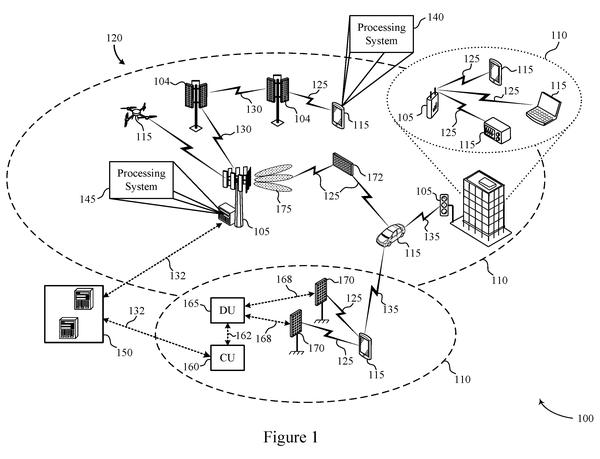
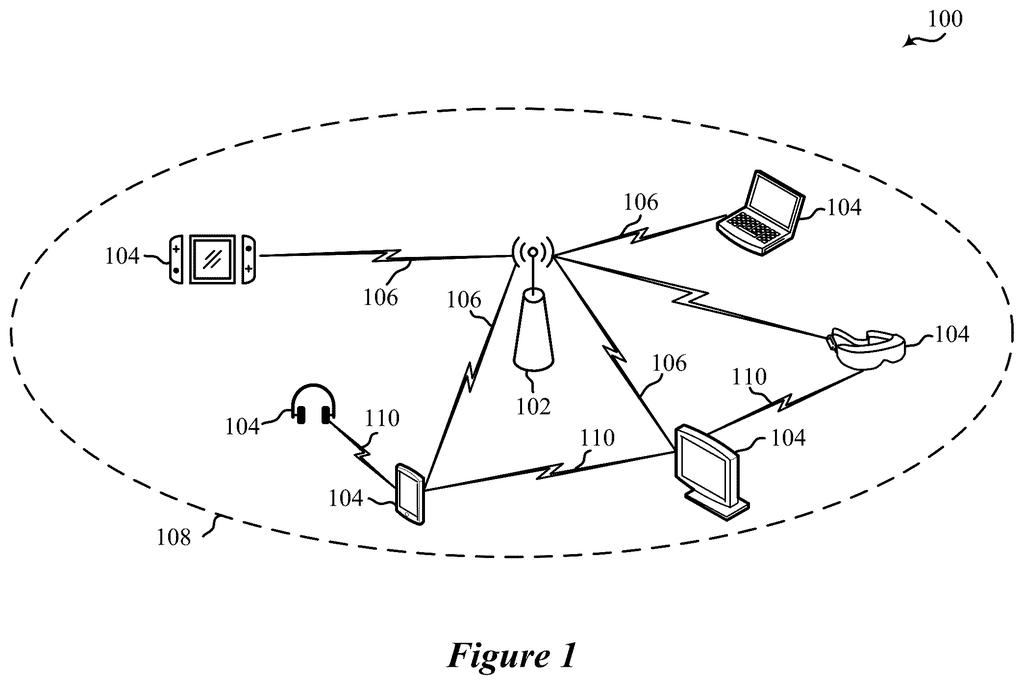
The drawings · 14 sheets
14 drawing sheets from US 2026/0361655 A1 · click any drawing to enlarge


Show the other 6 sheets


More from Qualcomm
All 624 Qualcomm patents →
More in Networking
All 498 Networking patents →
Apple
Apple Files Patent for Borrowing Your Phone's Camera on a Shared TV
Apple
Apple Files Patent for Cutting Headset Lag When Wireless Data Shows Up Late
Apple
Apple Files Patent to Keep Airplane Connections Alive Between Cell Towers
Apple
No comments yet