
Samsung Patents an Alarm That Checks If You're Still Asleep Before Going Off
Most phone alarms go off whether you're dead asleep or already in the shower. Samsung has filed a patent for an alarm system that checks whether you're actually still sleeping before it decides to wake you.
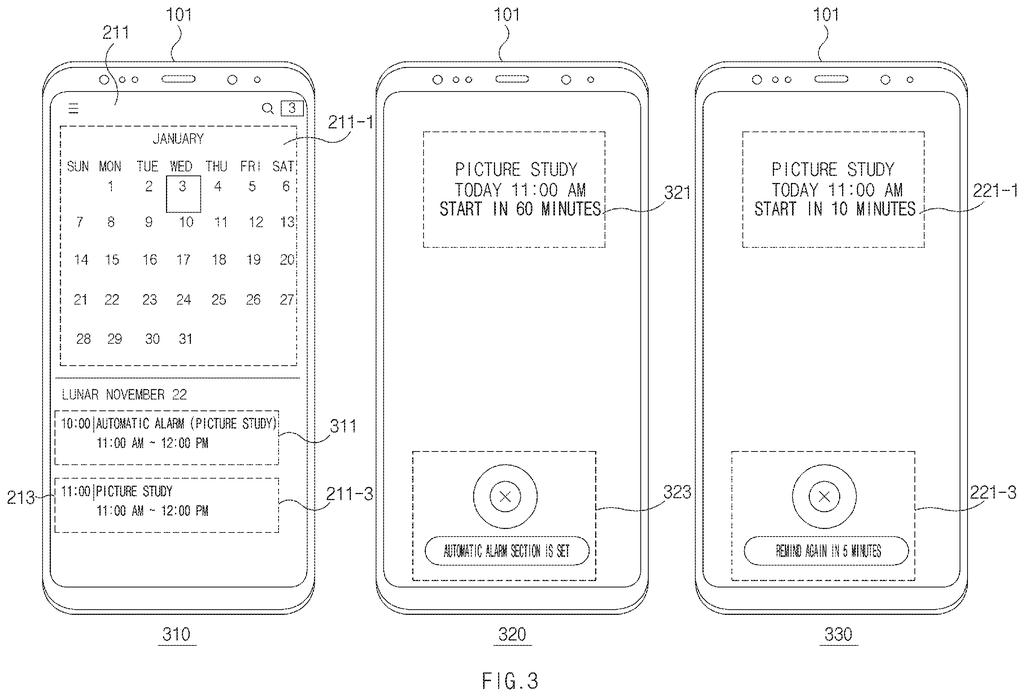
How Samsung's sleep-aware alarm system actually works
Setting an alarm for an early meeting is a small but genuinely annoying chore: you have to estimate how long you need to get ready, then remember to actually set it. Samsung's patent describes a phone that handles this automatically, using information from a calendar event to calculate when an alarm should fire and then checking whether you even need it.
Here's how it plays out for you: you add an appointment to your calendar, and the phone works out what time it should start waking you. When that preparation window arrives, it checks whether you're still asleep using data from a connected device, like a wearable. If you're already awake, no alarm. If you're still sleeping, it figures out the right moment to go off based on the event details and sounds the alert.
The goal is an alarm you never have to set manually for scheduled events. The phone does the math on lead time and skips the interruption entirely if you've already gotten up on your own.
… determine whether a sleep state of a user is maintained using information received through the communication circuitry …
Translation: The device checks external sensor data to see if you are still resting.
How the device detects sleep state and picks alarm timing
The patent describes an automatic alarm generation system built into an electronic device, most likely a smartphone, that ties alarm behavior directly to calendar schedule data rather than relying on a user-defined fixed time.
The core flow works like this:
- The user enters schedule information (an event with a start time).
- The device calculates a preparation time, a window before the event when it begins monitoring the situation.
- When that preparation time arrives, the device queries an external source (a connected wearable or sensor) via its communication circuitry to determine whether the user is still in a sleep state.
- If the user is asleep, the device then computes an alarm occurrence time based on the schedule details and fires the alarm at that moment.
- If the user is already awake, the alarm is not generated.
The patent does not specify exactly what data the external device sends, but the dependency on communication circuitry and an external device strongly implies a paired wearable (like a smartwatch) with sleep-tracking capability. The alarm timing logic itself appears to live on the phone, interpreting schedule metadata to decide how much lead time is needed.
The claim is broad enough to cover multiple device types and does not lock the approach to any specific sleep-detection method, which gives Samsung flexibility in how it eventually implements this across its hardware lineup.
… determine an alarm occurrence time of the automatic alarm based on the at least part of the schedule information …
Translation: It calculates when the alarm should actually ring depending on your calendar.
What this means for people who over-rely on manual alarms
For most people, setting a morning alarm is a small but repetitive task that also introduces real risk: forget to set it, or miscalculate your get-ready time, and you're late. A system that reads your calendar and decides when and whether to wake you could genuinely reduce that friction, especially for people with irregular schedules or frequent early commitments.
The practical upside is less alarm noise in your life overall. If you tend to wake before your alarm naturally, you don't get interrupted. If you sleep through your usual wake-up window before something important, the phone catches it automatically. It's a small quality-of-life improvement, but one that compounds across every day you have something scheduled.
Samsung's 1303rd filing in our Samsung coverage since May follows a VR-to-real-device sync patent and a shared battery protection patent.
Samsung's sleep-aware alarm idea sits closer to a finished product than most patents, because it leans on hardware that already exists: phones and watches that track whether you're asleep. The sensing infrastructure described here doesn't require anything new to be built.
The meaningful gap is in the timing logic. How does the system decide how much lead time a dentist appointment needs versus a flight? The document doesn't answer that, and the answer matters a great deal to whether this feels useful or annoying in practice.
If Samsung can solve that calculation, through user habits or smarter reading of calendar details, the feature becomes something people would notice and keep turned on. Without it, the alarm rings at the right moment for the wrong reason.
There are more where this came from
We read every patent application Big Tech publishes and send you the ones worth knowing. Plain English, free, every week.
The drawings
24 drawing sheets from US 2026/0277167 A1 · click any drawing to enlarge


Want this weekly breakdown for a company we don't cover? Patentlyze Pro →