
Samsung Patents a Corner Magnet Design to Keep Foldable Phones Sealed
Samsung's latest patent filing solves a surprisingly fiddly problem: how do you confirm that a foldable phone's internal seal is properly glued in place without tearing the whole thing apart to look?
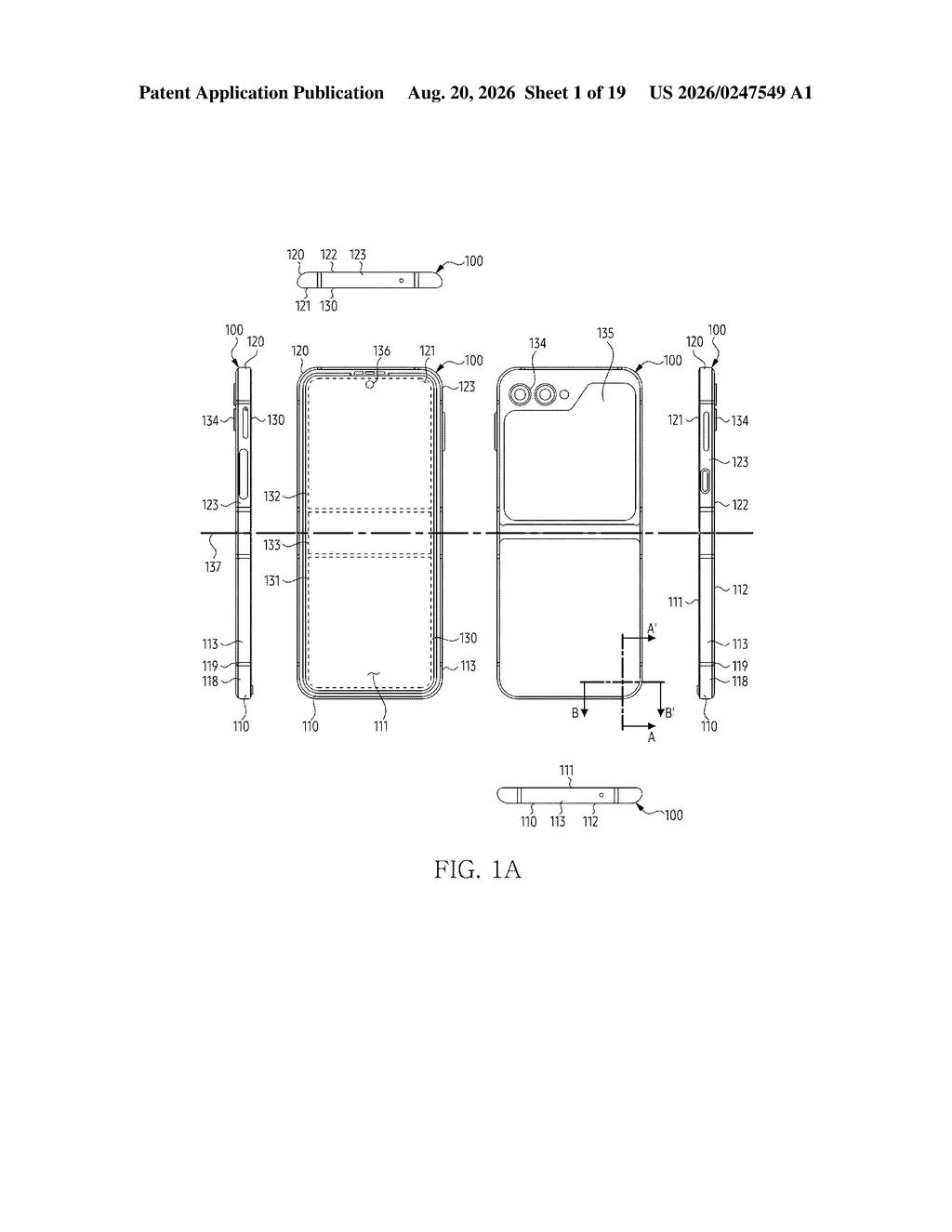
What Samsung's hollow magnet actually does for foldable phones
Foldable phones fold in half along a crease, which means the flexible screen has to be sealed against the frame beneath it so dust and moisture can't sneak into the gap. The tricky part is that once everything is assembled, there's no easy way to check whether that seal is actually sitting where it's supposed to be.
Samsung's answer is to put a hole through the corner magnet that holds the phone shut when folded. That same magnet sits on top of a structural plate that also has a hole in it. Line up both holes, and a technician or a camera can see straight through to the adhesive seal below, confirming it's in the right place without taking anything apart.
The magnet still does its original job of keeping the phone closed. The hole just adds a second job: a built-in inspection window. It's a small addition, but it targets a real weak point in how foldable phones are put together.
… a magnet disposed on a corner portion of the supporting member, the magnet being configured to maintain the foldable electronic device in the folded state …
Translation: A magnet sits in the corner to keep the phone shut.
How the through-holes let assemblers check the internal seal
The patent describes a foldable phone made of two housings connected by a hinge, with a flexible display running across both halves. Beneath the display sits a supporting member (a rigid structural plate) that keeps the screen flat and supported when the phone is open.
At the corner of that plate sits a magnet. Magnets in foldable phones aren't new; they're commonly used to keep the device snapped shut when folded. What's different here is that this magnet has a through-hole, a literal hole bored through it, aligned with a matching hole in the supporting plate beneath it.
Between the display and the supporting plate is a sealing member (a gasket-like component) and an adhesive member (a bonding layer that glues the seal to the display). Together these create a closed internal space that's isolated from the outside air, which matters for dust and water resistance.
The key claim is that the adhesive member is visible from the rear of the supporting plate through both holes. That line of sight lets someone verify, after assembly, that the adhesive is correctly positioned without disassembling the device. The magnet's hole isn't just empty space; it's a deliberate inspection path.
… an adhesive member in contact with the sealing member and the foldable display to isolate an internal space …
Translation: Glue seals off the inside parts to protect them.
What this means for foldable phone durability and water resistance
Foldable phones are more expensive than conventional smartphones and more structurally complex, which makes quality control at the factory level genuinely consequential. A misaligned seal that lets moisture into the display area isn't something most people would notice until the screen starts failing, long after the device left the production line. An inspection path built directly into the hardware lets manufacturers catch that problem earlier and cheaper.
The design is narrow in scope but practical in intent. Foldable phone durability has been a persistent concern for buyers, and solutions that address it at the manufacturing stage rather than through after-sale repair tend to age better. Samsung's foldable lineup sits at the premium end of the Android market, so production consistency matters to the brand. Filings like this one sit alongside a wide range of interesting tech patents covering how foldable display engineering continues to evolve in small but meaningful steps.
Samsung's 53rd filing we've tracked since May in our foldable phone patents watch follows work like the foam screen layer and the hinge antenna.
The engineering trade here is clear: you put a hole in a magnet and you slightly reduce its magnetic mass, which could in theory affect clamping force. Samsung's designers presumably sized the hole small enough that the holding strength stays acceptable, but that's a real constraint the patent doesn't fully address. Given that the payoff is a passive, zero-cost inspection window that survives the entire life of the device, the trade reads as worth it. The more honest question is whether this level of manufacturing refinement shows up in measurably better field reliability, which patents can't promise but production data eventually will.
Get our take in your Top Stories
Liked this breakdown? Add Patentlyze as a preferred source on Google, and our plain-English take shows up more often in your Top Stories the next time Samsung patent news breaks.
There are more where this came from
We read every patent application Big Tech publishes and send you the ones worth knowing. Plain English, free, every week.
The drawings
19 drawing sheets from US 2026/0247549 A1 · click any drawing to enlarge


Want this weekly breakdown for a company we don't cover? Patentlyze Pro →
Be the first to weigh in