
Samsung Patents a Stress-Absorbing Foam Layer for Foldable Phone Screens
The fold crease on foldable phones is one of the most persistent complaints about the category, and Samsung is looking at an unusual material science solution: foam that gets wider when you squeeze it.
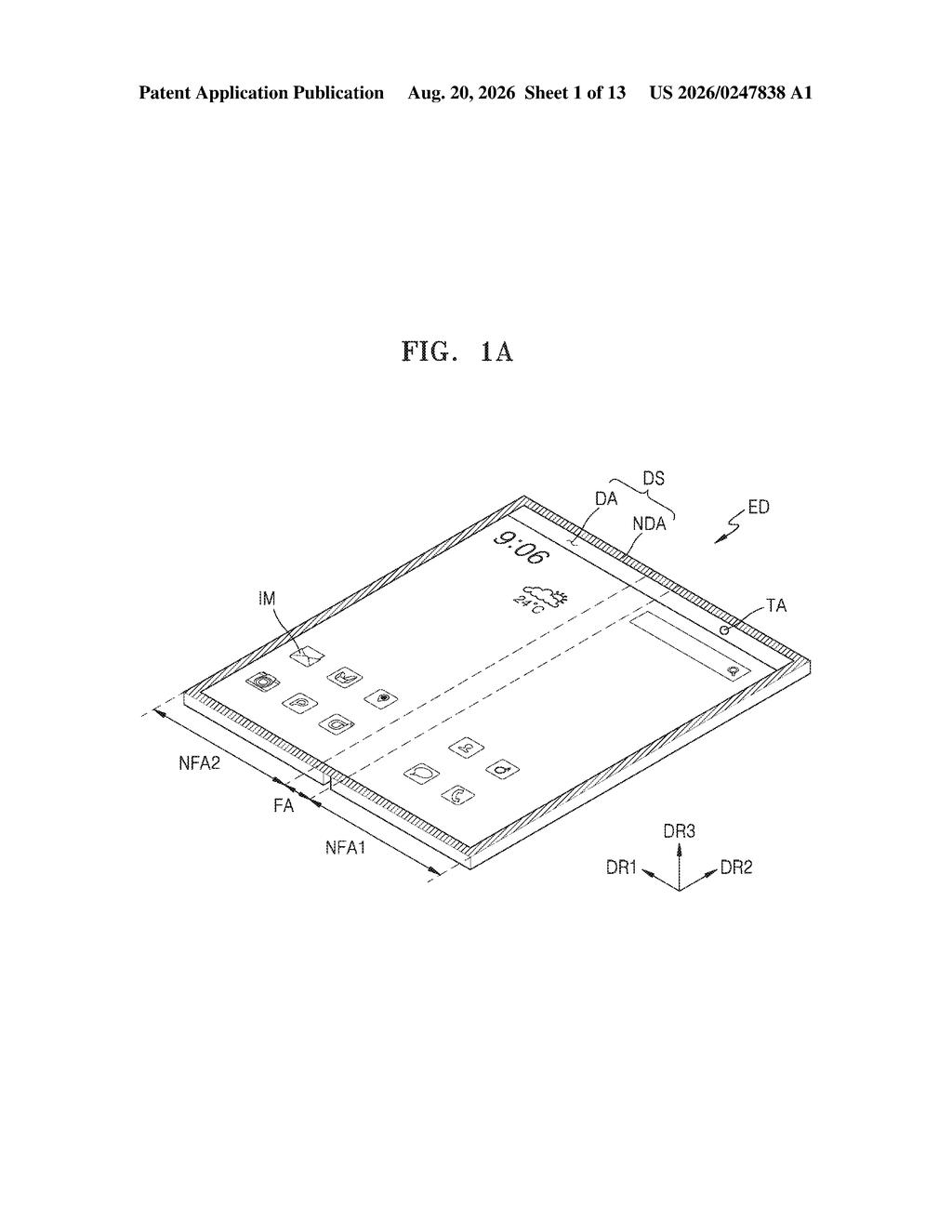
What Samsung's auxetic foam layer actually does for foldable screens
You're folding your phone closed for the hundredth time today, and every hinge cycle puts stress on the screen right at the crease. That repeated bending is one of the reasons foldable displays can develop visible lines, bubbles, or damage over time.
Samsung's patent describes a special foam layer tucked inside the display stack, right at the folding zone. This isn't ordinary foam. It's a type called auxetic foam, which behaves in a counterintuitive way: instead of getting thinner when compressed, it actually expands sideways. That property lets it absorb and redistribute the mechanical stress that builds up every time you open and close the phone.
The idea is that by placing this layer between the screen's backing panel and the rigid plate underneath it, the folding area gets a cushion that moves with the bend rather than fighting it. Less concentrated stress could mean a longer-lasting, better-looking hinge zone.
… a first auxetic structure having a negative Poisson’s ratio is disposed between the panel support and the plate in the folding area, and wherein the first auxetic structure comprises an auxetic foam.
Translation: The screen uses a special foam that expands sideways when compressed to help the device fold without breaking.
How the auxetic structure sits inside a folding display stack
The patent covers a foldable display module divided into three regions: two flat, rigid panels on either side (the non-folding areas) and a flexible hinge zone (the folding area) connecting them. Stacked below the display module is a panel support, and below that a rigid plate.
The key addition is a layer of auxetic foam placed between that panel support and the plate, but only in the folding area. Auxetic materials have what engineers call a negative Poisson's ratio (when most materials are compressed, they bulge outward; auxetic materials do the opposite and pull inward, or in foam form, they can expand in multiple directions simultaneously to absorb force). That property makes the foam unusually good at distributing mechanical load across its volume instead of concentrating it at a single point.
- The auxetic structure sits only in the hinge region, not under the flat display panels.
- It is sandwiched between the panel support above and the rigid plate below.
- Its job is to cushion each fold cycle and reduce stress transmitted to the display layers above.
The patent is focused on the hardware stack, not software or any folding mechanism. It is a materials and structural engineering approach to a known durability problem.
A display device includes a display module including a first non-folding area, a second non-folding area, and a folding area disposed between the first non-folding and second non-folding areas.
Translation: The phone screen is divided into two rigid sections connected by a flexible middle part that allows it to bend.
What this means for the foldable phone crease problem
For everyday foldable phone users, the practical hope is a display that holds up better through years of folding without developing a pronounced crease or delamination at the hinge. Auxetic foam is already used in protective gear and aerospace components for its impact-absorption qualities, so the material itself is proven; applying it to a consumer display stack is the novel step here.
Samsung Display is the supplier behind screens in many foldable devices, so improvements at this level of the display stack could reach a wide range of products. The new Big Tech patents covering foldable display durability show a consistent push across the industry to solve crease and hinge-wear problems through structural engineering rather than just software calibration.
Samsung's 52nd filing we've tracked since May in our foldable phone patents watch follows earlier applications like the hinge antenna idea and wireless charger placement guidance.
A patent filing for physical materials sits further from a real product than a software update does. The sticking point is this: the special foam described in the document has to be manufactured thin enough and precise enough to fit inside a folding phone, and the filing admits that problem is not yet solved at scale.
If the manufacturing catches up, the result is a lasting fix built into the hinge itself, not a cosmetic workaround. That matters to anyone who has watched a folding phone's hinge loosen and wear down over time.
Get our take in your Top Stories
Liked this breakdown? Add Patentlyze as a preferred source on Google, and our plain-English take shows up more often in your Top Stories the next time Samsung patent news breaks.
There are more where this came from
We read every patent application Big Tech publishes and send you the ones worth knowing. Plain English, free, every week.
The drawings
13 drawing sheets from US 2026/0247838 A1 · click any drawing to enlarge


Want this weekly breakdown for a company we don't cover? Patentlyze Pro →
Be the first to weigh in