
Samsung
Samsung · AR / VR · Filed Jul 2, 2026 · USPTO published Nov 12, 2026 · This week's release
Samsung Files Patent to Make Phone Photos Look Deeper in a VR Headset
Your phone's two cameras sit about 1.5 cm apart, but the screens in a VR headset sit about 6.5 cm apart, so home videos tend to look flat. Samsung's patent application tackles the gap by redrawing only one of the two images.
- Publication number
- US 2026/0360074 A1(US20260360074A1)
- Applicant
- SAMSUNG ELECTRONICS CO., LTD.
- Filed · Published
- Jul 2, 2026 · Nov 12, 2026
- Inventors
- Hyokak KIM, Jaeyun JEONG, Seungjae WON
- Status when we published
- Waiting for an examiner
- Document
- 16 claims
- US classification
- 345/419
- Parent application
- Continuation of PCT/KR2024/018275 (filed Nov 19, 2024)(PCTKR2024018275)
What Samsung's phone-to-headset depth fix does
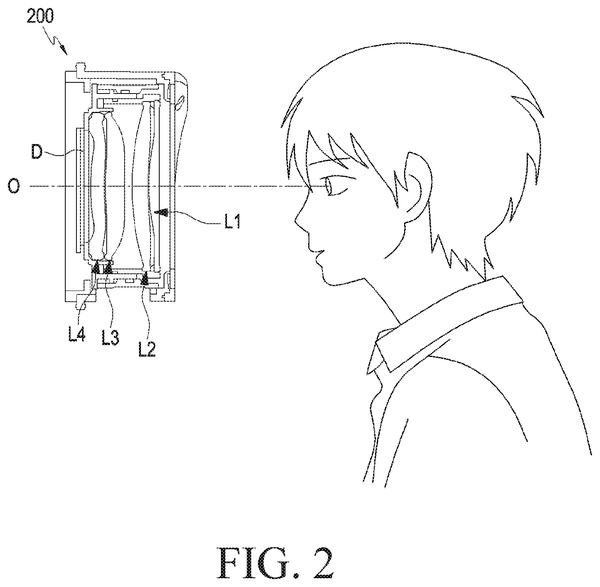
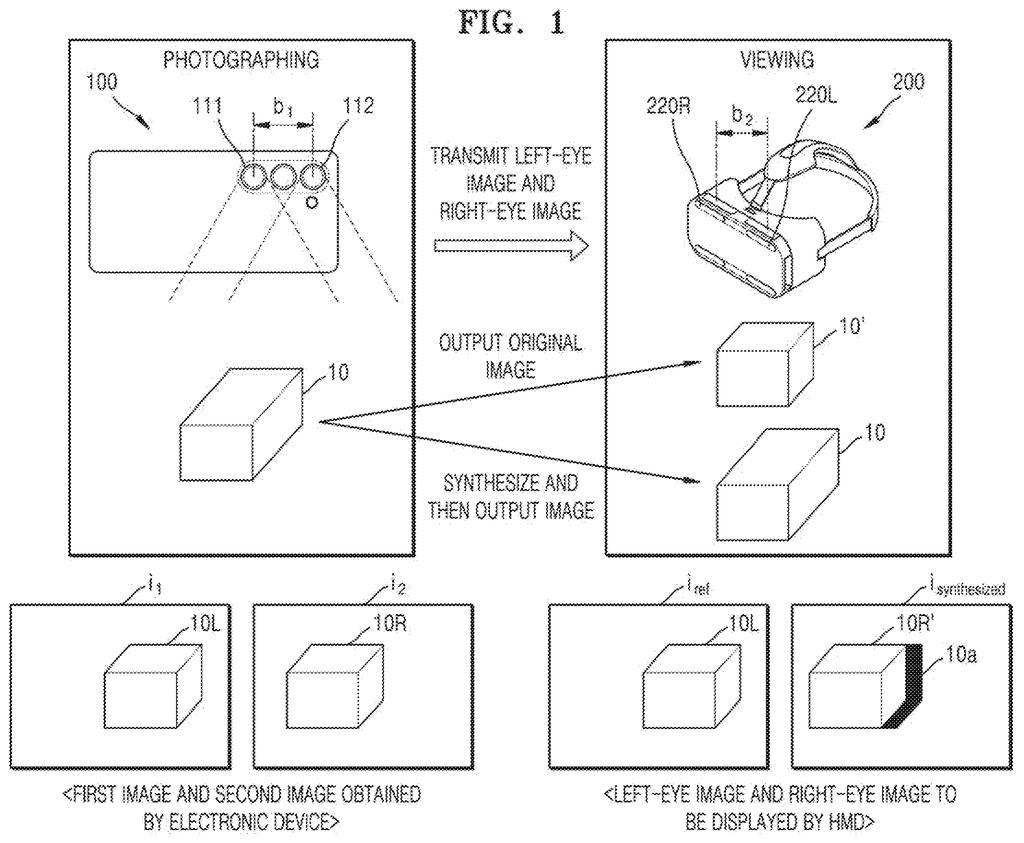
Imagine you film your kid's birthday party on your phone, then put on a VR headset to watch it back. Everything looks oddly flat, like cardboard cutouts. That happens because the two cameras on your phone sit about 1.5 centimeters apart, while the two screens in a headset sit about 6.5 centimeters apart, the average gap between a person's eyes.
Samsung's fix is to rebuild one of the two pictures so it looks like it was shot from a wider spot. The other picture stays untouched, so only half of what you see can pick up the glitches this kind of editing causes, such as smeared gaps around objects.
The phone decides which photo to protect by checking how you held it, or by finding the main subject, like a person, and keeping the image where that subject sits closest to the center.
… obtain a synthesized image comprising an object having a depth value according to a disparity corresponding to a second baseline that is a distance between a left-eye display and a right-eye display of the external device, by performing view synthesis on the synthesis target image based on depth information of the object …
Translation: It creates a new photo adjusted to match the exact distance between your eyes for a 3D headset.
How the phone picks which photo to leave alone
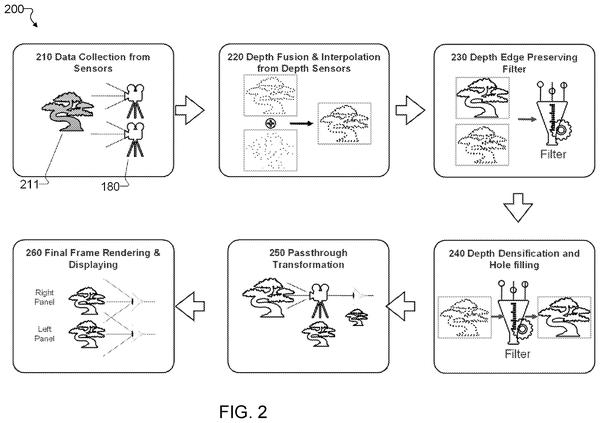
Your phone's two cameras take a left and a right photo. They sit only about 1.5 cm apart (the first baseline), while a headset's two screens sit about 6.5 cm apart (the second baseline), so depth looks weak. The patent applies view synthesis: using a depth map (a record of how far away each thing is), it shifts objects in one image sideways so the pair looks shot from 6.5 cm apart.
Shifting objects leaves gaps the software has to fill, which causes artifacts (visible smudges). So the phone keeps one image untouched as the reference and edits only the other, the synthesis target. It picks the reference two ways:
- A gravity sensor shows how you held the phone, and the image from the camera farthest from the phone's center line becomes the reference.
- Image segmentation (software that outlines each object) finds the main subject, and the image where it sits closest to the center becomes the reference.
The filing also describes a headset-side version that finds your dominant eye by alternating a sharp and a blurred image between the screens and asking which looks clearer. That eye's image becomes the reference. It can also shift both images, with the target moving farther.
… select a reference image among the first and second images, based on a positional relationship of the cameras according to a photographing direction or position information of a main object in an image …
Translation: The device picks the best original shot based on how you were holding the camera and where the subject was.
Why this matters for phone-shot VR video
If you shoot video on your phone and watch it in a headset, this targets the most obvious letdown: people and objects that look flat instead of solid. Matching the depth to the gap between your eyes could make a clip of your dog or a family trip feel closer to being there.
The clever part is damage control. Any depth fix distorts something, so the patent limits the distortion to one eye's image and picks which one based on how you held the phone or where the subject sits. The filing says this minimizes artifacts, a softer promise than removing them. It is a patent application, so it shows what Samsung explored on paper, and no product is announced.
Samsung's 84th filing we've tracked in our AR glasses race since May adds to a run that includes a poster-to-waterfall headset and slim bounce-lens optics.
Source: US 2026/0360074 A1 at the USPTO (PDF). Full patent text and figures are in the official publication.
Get our take in your Top Stories
Liked this breakdown? Add Patentlyze as a preferred source on Google, and our plain-English take shows up more often in your Top Stories the next time Samsung patent news breaks.
Add Patentlyze on Google
One click.
There are more where this came from
We read every patent application Big Tech publishes and send you the ones worth knowing. Plain English, free, every week.
The drawings · 19 sheets
19 drawing sheets from US 2026/0360074 A1 · click any drawing to enlarge


Show the other 11 sheets


More from Samsung
All 1,629 Samsung patents →
More in AR / VR
All 690 AR / VR patents →
Apple
Apple Files Patent for Headset Graphics That Sharpen Only Where Both Eyes Look
Sony
Sony Files Patent for Headset That Fades Virtual Objects Blocking Your Real Hand
IBM
IBM Patents a Virtual World Built From Your Shopping and Social Media History
Apple
No comments yet