
Sony Files Patent for a Tiny Timer That Catches Camera Timing Failures
Your car's camera depends on a metronome you never think about, and Sony has filed a patent for a circuit that notices the moment that beat goes wrong.
What Sony's camera-timing watchdog actually does
A camera behind a car's windshield sends a fresh picture to the car's computer many times every second. Each picture arrives on a regular beat set by a tiny internal timing signal. If that beat falters or stops, the computer could keep working from stale or garbled pictures without knowing anything is wrong.
Sony's chip division has filed a patent for a simple watchdog. It works like a kitchen timer: start it when one beat arrives, stop it when the next one shows up. If the timer runs past a set limit, something has broken, and the system can shut off image processing instead of trusting bad data.
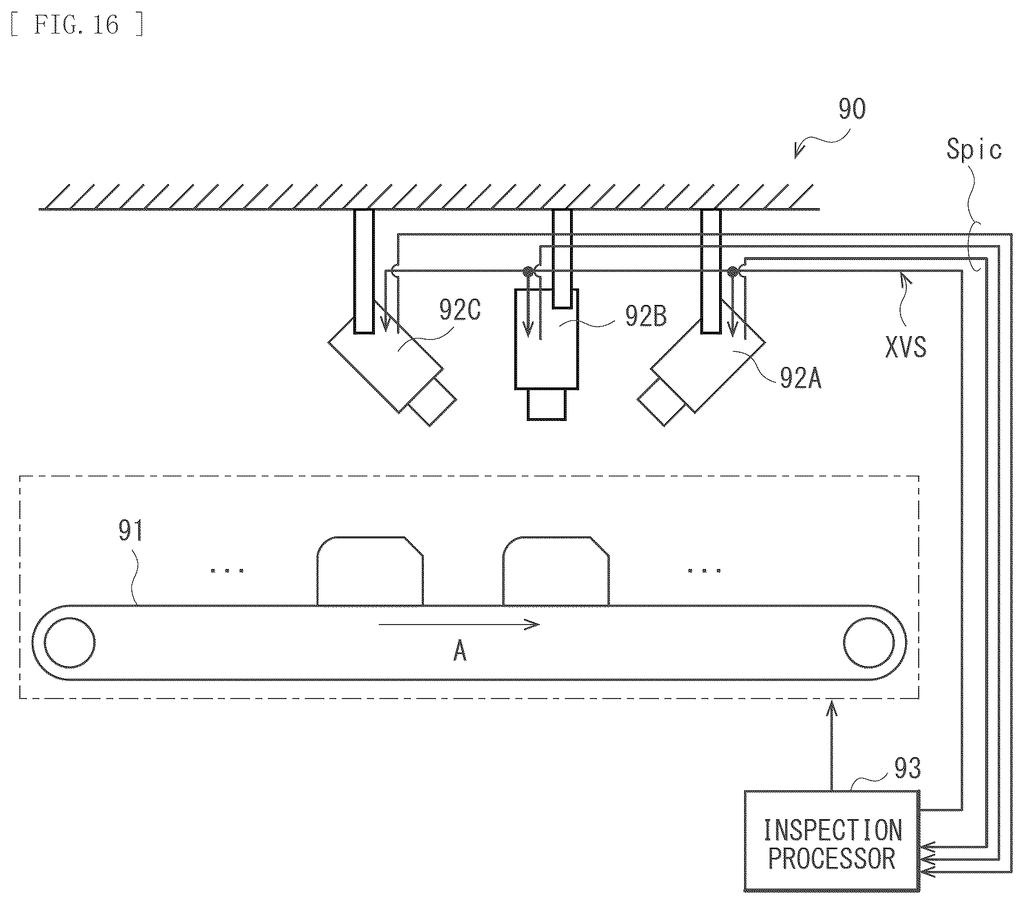
The filing also describes using the same trick on a factory line, where cameras photograph products on a conveyor belt. For you, the practical stake is a car or machine that notices its own camera has lost its rhythm.
a counter configured to, by performing a counting operation on a basis of pulses corresponding to a synchronization signal, detect a time length between two pulses corresponding to the synchronization signal …
Translation: A tiny digital timer measures the exact gap between synchronization pulses.
How the counter catches a missing pulse
Image sensors work to a timing signal. A vertical synchronization signal (a pulse that marks the start of each new frame) tells the sensor when one picture ends and the next begins. A matching horizontal signal marks each line within a frame.
The patent adds a small counter on the receiving chip. When one frame pulse arrives, the counter starts counting ticks of its own clock. When the next pulse arrives, it stops. A comparator (a circuit that checks one number against another) watches the count and raises a flag if it passes a preset limit. In the filing's example, a missing pulse lets the count run past the limit, and a controller then stops the image processor.
The filing describes a few variations:
- Instead of reading the sync pulse directly, a decoder can read frame-start markers hidden in the image data itself. It works with three common camera connections: SLVS-EC, SLVS and MIPI.
- A second version times the response: how long the camera takes to answer a sync pulse that the processor sent. In the example, a limit of 10 ticks is exceeded when the count hits 11.
- The same idea could also flag a pulse that arrives too early.
The claims cover the counter, the check, and an imaging system that halts processing when a fault is found.
The determination circuit is configured to determine an abnormality in the synchronization signal on a basis of a count value of the counter.
Translation: A logic circuit uses that measured count to decide if the timing signal is broken.
Why a late camera pulse matters in a car
If you ride in a car with driver assistance, a camera feeds decisions about braking, lane position and following distance. The filing says the goal is better reliability for those functions, including collision warnings. A frozen or mistimed picture can look fine to the software, so checking the timing separately is a cheap second opinion.
Outside cars, the filing describes an inspection line where three cameras photograph products on a conveyor belt, and a timing fault there could ruin the inspection results. Sony makes image sensors, so a built-in timing check is a natural feature for the chips that receive their pictures.
Sony's 32nd filing we've tracked since July in the self-driving sensing race builds on camera and sensor realignment and adaptive laser ranging.
This one is a plain timer. A counter ticks while it waits, and a limit decides when the waiting has gone on too long. That needs no new sensor and no exotic parts.
The shortest route to a product is adding it to the chip that receives pictures from the camera. That chip already has a clock, and the simplest version needs no change inside the camera at all. The filing also names three common camera connections it can work with, so it could slot into existing designs.
The harder work sits with the carmaker or factory owner: choosing the time limit and deciding what happens after the alarm. The filing describes only one response, stopping image processing, and a moving car would need a better backup plan. As a filing it is routine safety plumbing, and its small size is the reason it could ship quickly.
Get our take in your Top Stories
Liked this breakdown? Add Patentlyze as a preferred source on Google, and our plain-English take shows up more often in your Top Stories the next time Sony patent news breaks.
There are more where this came from
We read every patent application Big Tech publishes and send you the ones worth knowing. Plain English, free, every week.
The drawings
14 drawing sheets from US 2026/0332742 A1 · click any drawing to enlarge


Show the other 6 sheets


Want this weekly breakdown for a company we don't cover? Patentlyze Pro →
Be the first to weigh in