
Sony
Sony · Software · Filed Jul 22, 2026 · USPTO published Nov 19, 2026 · This week's release
Sony Patents a Game Feature That Lowers Graphics Quality When the Action Heats Up
Sony Interactive Entertainment has filed a patent application for a game that watches how much your screen is changing and adjusts its graphics to match. The idea is a sharper picture on pause screens and smoother play in the middle of a fight.
- Publication number
- US 2026/0364447 A1(US20260364447A1)
- Applicant
- Sony Interactive Entertainment LLC
- Filed · Published
- Jul 22, 2026 · Nov 19, 2026
- Inventors
- Alex Zvenigorodsky
- Status when we published
- Waiting for an examiner
- Document
- 20 claims
- US classification
- 463/31
- Parent application
- Continuation of 18/220,406 (filed Jul 11, 2023)(18220406)
What Sony's frame-comparing game patent does
Ever paused a game in the middle of a fight and noticed the picture looks a bit soft? Existing tools often judge by how hard the game is working, so a frozen screen can end up looking worse than it needs to.
Sony's patent application takes a different route. Your console compares each picture on screen with the one just before it. If almost nothing changed, you are probably on a menu or a pause screen, so the game can turn up the fancy visuals. If nearly everything changed, you are probably in the middle of action, so it turns the visuals down to keep things running smoothly.
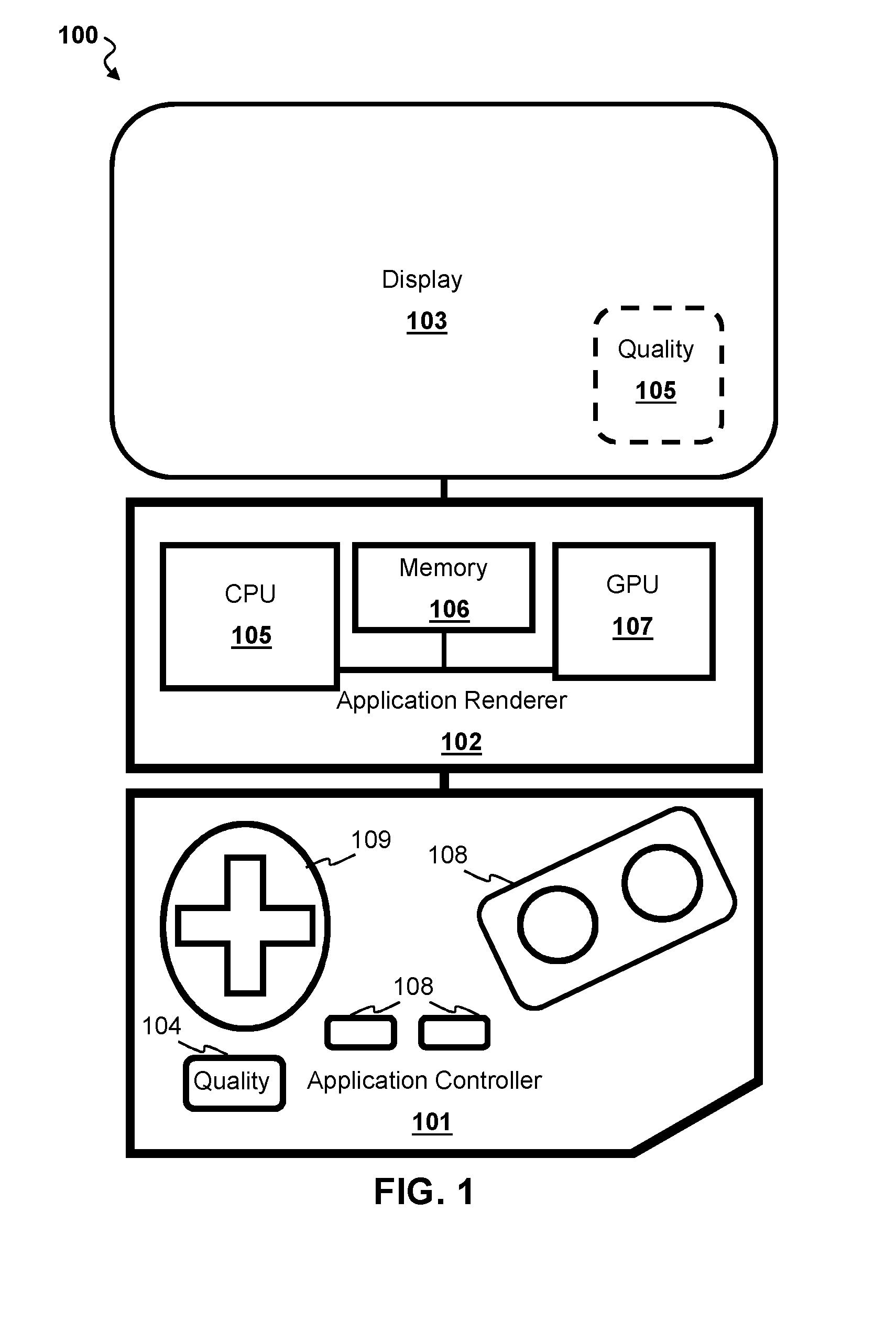
The filing also describes a dedicated button on the controller that flips between a pretty mode and a fast mode, fading gradually between the two so you barely notice the switch.
computing a frame delta based on a difference between pixel values of a first image frame and pixel values of a second image frame, wherein the first image frame and the second image frame are rendered by an application renderer using a first rendering setting …
Translation: The system measures how much the visuals change between one frame and the next.
How Sony picks settings from pixel changes
Claim 1 covers three steps. The system computes a frame delta (a pixel-by-pixel difference between two consecutive pictures the game drew), picks a new rendering setting based on that difference, and uses it for the next picture.
The filing fills in the details. Differences can be measured in brightness or color values, added up into one score, and scaled from 0.0 (nothing moved) to 1.0 (a complete scene change). That score is compared with a weighted table (a per-game list of settings and the thresholds that trigger them). One example table covers texture resolution (1920x1080 versus 4K), filtering on or off, shader levels, and anti-aliasing (smoothing jagged edges) at several strengths.
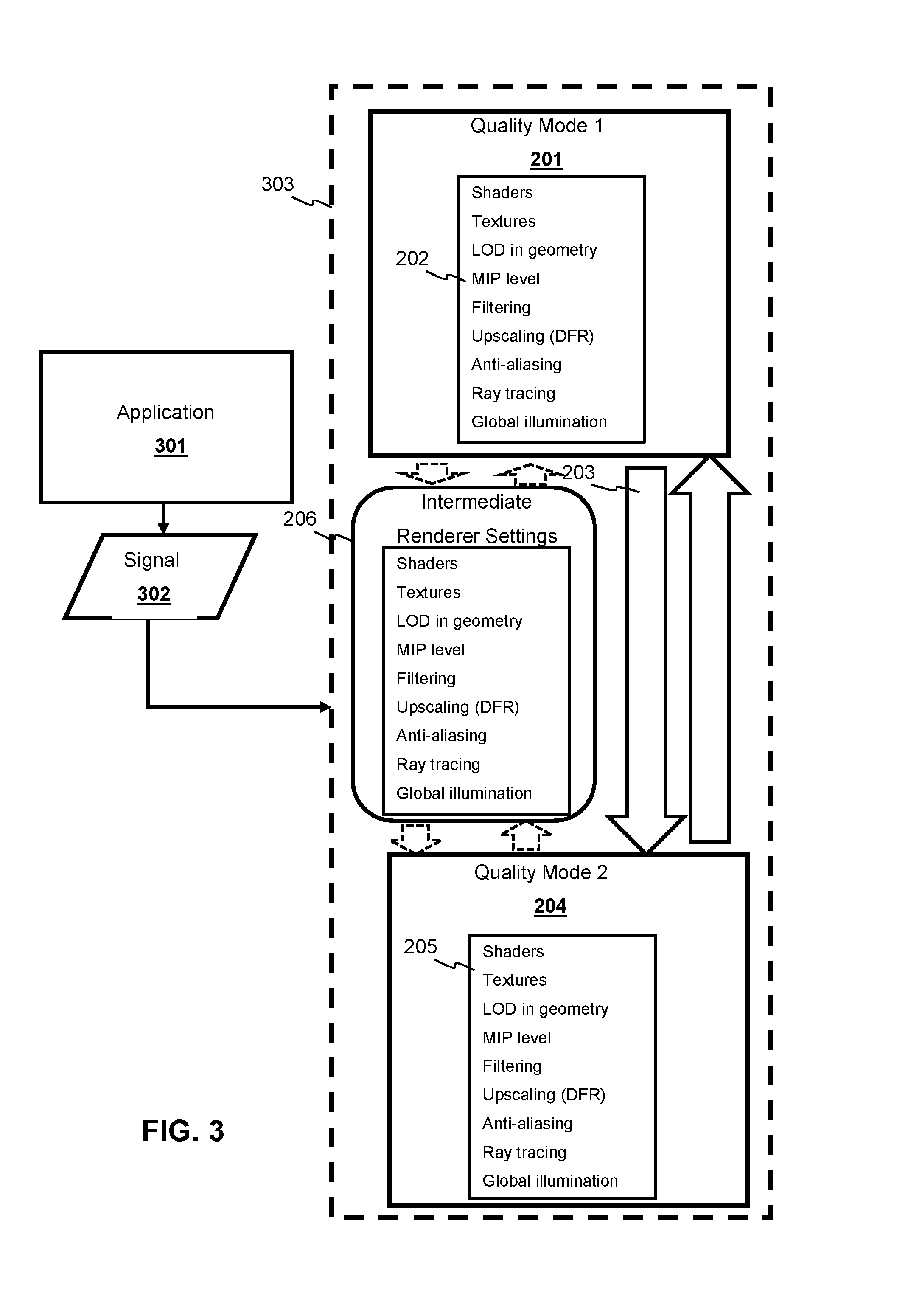
A separate claim covers the manual route. A dedicated button on the controller switches quality modes, and the renderer interpolates (steps through in-between values) over time. One example moves from 8x anti-aliasing toward 2x by stopping at 6x, and a two-second pause on the in-between setting at 60 frames per second spans 120 frames.
Developers can tune the thresholds by hand, or a neural network (a trained software model) can set them using performance targets.
… configured to interpolate between rendering settings values of the first quality mode and rendering settings values of the second quality mode over a period of time before arriving at the rendering settings of the second quality mode.
Translation: It smoothly transitions between graphics settings rather than making an abrupt jump.
What Sony's patent means for your gameplay
For you, the payoff is fewer trips into settings menus. The filing describes a game that favors a sharper picture when little is happening, like a pause screen or a menu, and favors smooth performance when the screen is changing fast, like a firefight. It also tackles a known annoyance: a paused screen that looks blurry because the game was working hard a moment before.
The filing also covers a dedicated controller button that flips between modes, and says the gradual fade makes the change less noticeable. It mentions game streaming too, where network conditions could be weighed alongside screen changes. It is a patent application, so it describes an idea rather than a product you can buy.
This is the 179th Sony filing we've tracked since May in our PlayStation strategy watchlist, adding to work like spotting players about to quit and a heart-rate game soundtrack.
Source: US 2026/0364447 A1 at the USPTO (PDF). Full patent text and figures are in the official publication.
Get our take in your Top Stories
Liked this breakdown? Add Patentlyze as a preferred source on Google, and our plain-English take shows up more often in your Top Stories the next time Sony patent news breaks.
Add Patentlyze on Google
One click.
There are more where this came from
We read every patent application Big Tech publishes and send you the ones worth knowing. Plain English, free, every week.
The drawings · 6 sheets
6 drawing sheets from US 2026/0364447 A1 · click any drawing to enlarge



More from Sony
All 722 Sony patents →
More in Software
All 814 Software patents →
Sony
Sony Files Patent to Let Everyone on the Couch Control a Game by Voice
Sony
Sony Patent Connects Multiplayer Game Events to Specific In-Game Activities
Sony
Sony Files Patent for a Digital Ball That Changes as the Game Unfolds
Sony
No comments yet