
Sony Patents a Method to Reduce Memory Demands When Shrinking Video Files
Sony has patented a way to shrink the memory footprint of video encoding by flipping image data before running the math, instead of storing a separate set of large lookup tables for every transform variation.
What Sony's pixel-flipping compression method actually does
Modern video compression works by finding the difference between what the encoder predicted a frame would look like and what it actually looks like. That "prediction residual" then goes through heavy math to squeeze it down into a much smaller file. The problem is that different types of content need different versions of that math, and storing all those versions eats up a lot of memory inside the chip doing the work.
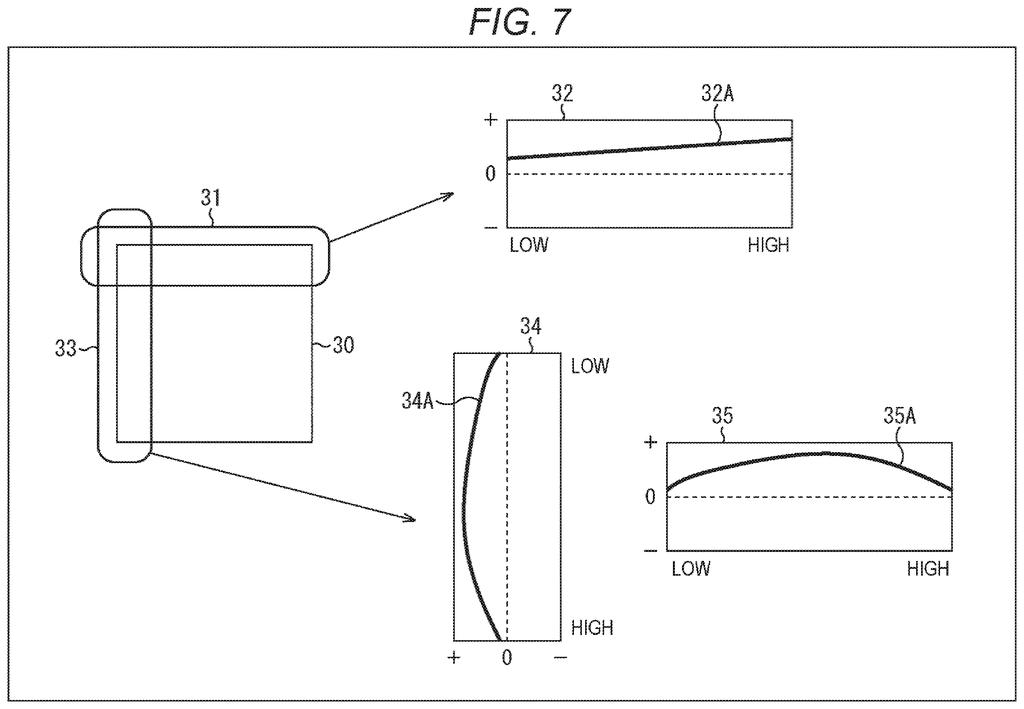
Sony's patent describes a shortcut: instead of keeping a big library of different math tables, the encoder can flip the prediction residual horizontally, vertically, or both before running the math, then use a single base table for everything. The flipping is tracked with simple flag bits so the decoder knows how to reverse the process on the other end.
The result is that you get the same compression quality but the hardware needs far less memory to pull it off. That matters most in tight, power-sensitive devices where every byte of memory has a cost.
… set horizontal identification data for identifying whether to flip a prediction residual of an image in a horizontal direction and set vertical identification data for identifying whether to flip the prediction residual in a vertical direction …
Translation: The system decides whether to flip parts of the image data horizontally or vertically before compressing it.
How the permutation step replaces extra transform matrices
Video encoders break each frame into blocks and compare them to a prediction of what that block should look like. The leftover difference, called a prediction residual, is then run through an orthogonal transform (a mathematical operation, similar to a Fourier transform, that converts the residual into frequency components that compress well).
Different content types call for different transform "types," and each type traditionally requires its own transformation matrix stored in memory. As the number of supported transform types grows, so does the memory bill.
Sony's approach replaces many of those extra matrices with a permutation operation: a controlled flip of the residual block in the horizontal direction, the vertical direction, or both. Two small identification flags record which flip (if any) was applied. The encoder then runs a single base transform matrix on the (possibly flipped) residual instead of switching to a different matrix.
The decoder reads the flags and reverses the flip after decoding, so the reconstructed image is identical to what a full multi-matrix approach would produce. The design sits naturally inside existing codec pipelines (it targets formats like those in the VVC/H.266 family) without changing the structure of the compressed bitstream in ways that would break compatibility.
… suppression of an increase in a memory capacity required for orthogonal transform and inverse orthogonal transform …
Translation: The method aims to prevent video compression from using up too much computer memory.
What this means for video encoders and streaming hardware
For hardware encoders inside cameras, streaming sticks, and broadcast equipment, memory is one of the main cost and power constraints. A compression chip that needs less on-chip memory to hold transform tables can be made smaller and cheaper, or can use the freed-up memory for something else like buffering more frames.
For everyday viewers, the impact is indirect: if this approach lands in production silicon, it could mean higher-quality video encoding in lower-cost or lower-power devices, from streaming boxes to video-call hardware. The patent targets encoding and decoding equally, so both ends of a video pipeline could benefit.
Sony's memory and storage filings we've tracked since August now include a third application, joining one on compressing 3D scans and one on faster LiDAR recovery.
Sony's patent trades flexibility for efficiency: the whole trick depends on one lookup table being a usable mirror image of another, which only works when the underlying mathematics happens to be symmetrical. If future video formats require transforms that lack that symmetry, this approach breaks and a different solution is needed from scratch.
That is a real constraint, but the trade reads as worth it for the problem being solved. Memory is a genuine cost on video chips, and shaving that footprint without changing anything the receiving device needs to understand is a clean win inside existing standards.
The honest limitation is baked into the design in a way anyone can see, which makes this easier to evaluate and easier to trust than a solution whose failure conditions are buried. Focused engineering that names its own ceiling is more useful than ambitious engineering that hides it.
There are more where this came from
We read every patent application Big Tech publishes and send you the ones worth knowing. Plain English, free, every week.
The drawings
102 drawing sheets from US 2026/0303868 A1 · click any drawing to enlarge


Want this weekly breakdown for a company we don't cover? Patentlyze Pro →
Be the first to weigh in