
Sony Files Patent for a VR Play Area That Stretches the Faster You Move
Most VR headsets draw a fixed safety line around you and beep when you cross it. Sony's patent application describes a line that moves with you, reshaping itself based on how fast and in which direction you're going.
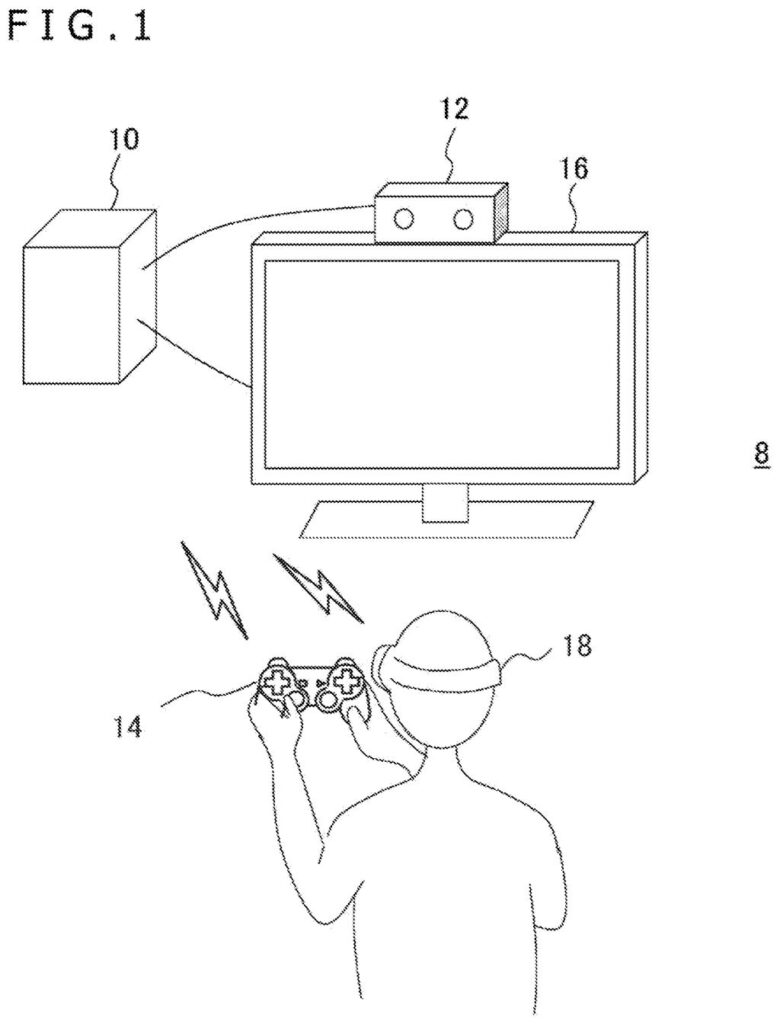
What Sony's speed-aware VR boundary does
Imagine you're deep in a VR boxing game, ducking and swinging, and you've drifted toward the edge of your living room without noticing. Most systems draw a fixed boundary and warn you when you cross it. Sony's patent describes a boundary that changes shape while you play.
A camera watches you and works out how fast you're moving and in which direction. The system then reshapes your safe zone to match. Move quickly one way and the edge of the zone can stretch along that direction, by an amount that grows with your speed. If you end up outside the line, a warning image appears over the game.
The filing also describes keeping the warning quiet when you're standing nearly still, and checking your handheld controller as well as your head.
… change a spatial boundary of the safety play area in the real space based on the real-time movement velocity vector; and present a warning image on a virtual environment image when the tracked position is outside the spatial boundary.
Translation: The system expands your virtual boundary when you move fast and warns you if you cross it.
How the boundary stretches as you move
The system starts with a camera that watches you while you wear a headset (the filing calls it a head-mounted display). From a sequence of camera images it tracks where you are in the room. It also sets up a safety play area tied to the camera's detection field, meaning the slice of space the camera can actually see.
The new twist is the velocity vector, a technical name for your speed and direction, worked out from how your position changes over time. The software uses it to change the play area's boundary on the fly. If you cross that boundary, a warning image is drawn on top of the virtual scene.
The dependent claims add detail:
- The boundary can expand in the direction you're moving, in proportion to your speed.
- Acceleration (how quickly your speed is changing) can distort the shape of the zone.
- Sideways and up-down clearances can be set differently.
- Your handheld controller can trigger the warning too.
- The warning can be switched off when you're nearly stationary, even outside the zone.
- The warning can be a 3D graphic placed where you crossed the line.
The description adds that tracking relies on light-emitting markers on the headset, and that warnings can be translucent, softened at the edges and placed in the lower half of your view so they don't jar your eyes.
… outputting, to the display device, a confirmation screen prompting the user to confirm that there is an obstacle, prior to outputting the data of the image.
Translation: You have to click through a warning screen to confirm there is something in your way before you keep playing.
What this means for living-room VR play
If you play VR in an ordinary living room, the boundary system is your main protection, and it also keeps the game's camera tracking working. A boundary that adapts to how fast and which way you move could mean fewer interruptions when you're barely moving, and a line that keeps pace with you when you aren't.
The older version of this idea, described in the filing, used a camera and light-up markers on the headset. It also asked you to confirm the room was clear before starting. Sony's updated claims add movement to that picture. It is a patent application, so nothing here says it will reach a product, but it shows how Sony thinks about keeping camera-tracked headset players safe and in view.
Sony's 37th filing we've tracked in the AR glasses race since July builds on earlier applications like game characters in your living room and fixing headphone orientation drift.
Anyone who has swung a VR controller near a coffee table knows the stakes. A headset blocks your view of the room, so the boundary system is the only thing standing between you and the furniture. A fixed line treats a slow shuffle and a full lunge the same way, and that mismatch is the heart of the problem.
Scaling the boundary with your speed and direction fits that problem well. The extra details, like separate tolerances for sideways and up-down movement and a quiet mode when you're standing still, show careful thought about nuisance alerts. This application is also the latest in a chain of continuations reaching back to a Japanese filing from 2015, so the idea has had plenty of time to mature.
One open question remains: the filing never says how much the boundary should grow. Whether this feels protective or annoying will depend on tuning nobody has shown yet.
Get our take in your Top Stories
Liked this breakdown? Add Patentlyze as a preferred source on Google, and our plain-English take shows up more often in your Top Stories the next time Sony patent news breaks.
There are more where this came from
We read every patent application Big Tech publishes and send you the ones worth knowing. Plain English, free, every week.
The drawings
12 drawing sheets from US 2026/0315911 A1 · click any drawing to enlarge


Show the other 4 sheets


Want this weekly breakdown for a company we don't cover? Patentlyze Pro →
Be the first to weigh in