
Waymo Patents a Robotaxi That Won't Pick You Up on a Slick Spot
If the curb where you asked to be picked up is covered in ice or standing water, a Waymo car could stop a little earlier or later instead. The patent application also covers telling you about the change and adding time to the trip.
What Waymo's slick-spot pickup rule does
A car pulls up to the curb on a freezing morning, and the exact spot you picked for your ride is a sheet of ice. Stopping and pulling away on a surface like that is where wheels slip.
Waymo's patent application describes a simple fix. The car checks your pickup or drop-off spot against a map that marks slippery areas. If your spot falls inside one, the car chooses a different place to stop, just before or just after it.
The filing says the choice can depend on how bad and how big the slippery patch is. Your phone can get a message that the pickup area has been widened, and the ride may take longer to arrive. The map's slick spots can come from other cars in the fleet that felt their own wheels slip.
… determining, by the one or more processors, that the requested pickup or drop-off location overlaps a low-friction area based on the map information; selecting, by the one or more processors, an adjusted stopping location before or after the low-friction area …
Translation: The car checks the map to see if your stop is on a slippery spot and picks a safer place nearby instead.
How Waymo's map picks a safer stopping spot
The claims describe a short chain of steps run by the car's driving computer. It receives your requested pickup or drop-off location along with map information. It then decides whether that spot overlaps a low-friction area (a stretch of road where tires grip poorly, such as ice, puddles or gravel). If so, it selects an adjusted stopping location before or after that area and drives there.
Several add-on claims fill in the details:
- The new stop can depend on the severity and the size of the slippery area.
- The map ties each area to a location and an estimated road friction (how much grip the road offers).
- An area can carry a traction severity score built from things like the friction number, speed limit, vehicle weight, road shape, confidence level and distance to the next road feature.
On the rider side, the car can send a notification that the expected pickup or drop-off area has been expanded, name the new stopping spot, and raise the estimated arrival time. It can also slow to a set speed before it reaches the slippery area.
The description explains where the map data can come from. The car can notice its own wheels slipping, for example by comparing how much it actually turned with how much it expected to, and share that with the fleet. That slip detection is the focus of the abstract, but the claims here cover the pickup behavior.
A wheel of the vehicle may be determined to be slipping such that the vehicle has limited steering control. In response to determining that the wheel is slipping, steering of one or more wheels may be controlled in order to orient the one or more wheels towards the trajectory in order to allow the vehicle to proceed towards the trajectory when the wheel is no longer slipping.
Translation: When a tire loses traction and steering suffers, the system straightens the wheels so it can safely resume its route once grip returns.
What this means for your next robotaxi ride
For you as a rider, this is about where the car stops. A robotaxi that avoids pulling over on ice or deep water may ask you to walk a bit farther, or wait a bit longer, in exchange for a calmer stop and a safer start. The filing says the app can explain the change, which matters because a car that stops somewhere you didn't pick can feel like a glitch.
For Waymo, it shows a ride service handling weather at the curb, not only on the road. The pickup spot is where the car, the rider and the pavement all meet, and the filing treats it as something to plan around. It also fits with cars sharing what they feel under their wheels, so one car's slip can protect the next rider.
Google's 78th filing we've tracked since May in the self-driving sensing race adds to a run that includes a falling pedestrian patent and blind-spot turn logic.
Claim 1 is short: take a requested pickup or drop-off spot, check a map for a low-friction area, choose a stop before or after it, and drive there. Nothing in the claim says how the map was built, how slippery the area must be, or how far the new stop has to be. That makes it wide for a self-driving ride service that adjusts its stop based on map data about grip.
The later claims narrow things in practical ways. They add severity, size, a traction score, a rider notification, slowing down first and a longer arrival estimate. Those are the pieces that would make a real service feel sensible to riders.
The patent's family began with wheel slip and steering control, yet this claim set is about curb logistics. The idea is easy to understand and likely to be useful in winter cities. Whether it can be called new is for an examiner to decide, but as a rider-facing behavior it makes sense.
Get our take in your Top Stories
Liked this breakdown? Add Patentlyze as a preferred source on Google, and our plain-English take shows up more often in your Top Stories the next time Google patent news breaks.
There are more where this came from
We read every patent application Big Tech publishes and send you the ones worth knowing. Plain English, free, every week.
The drawings
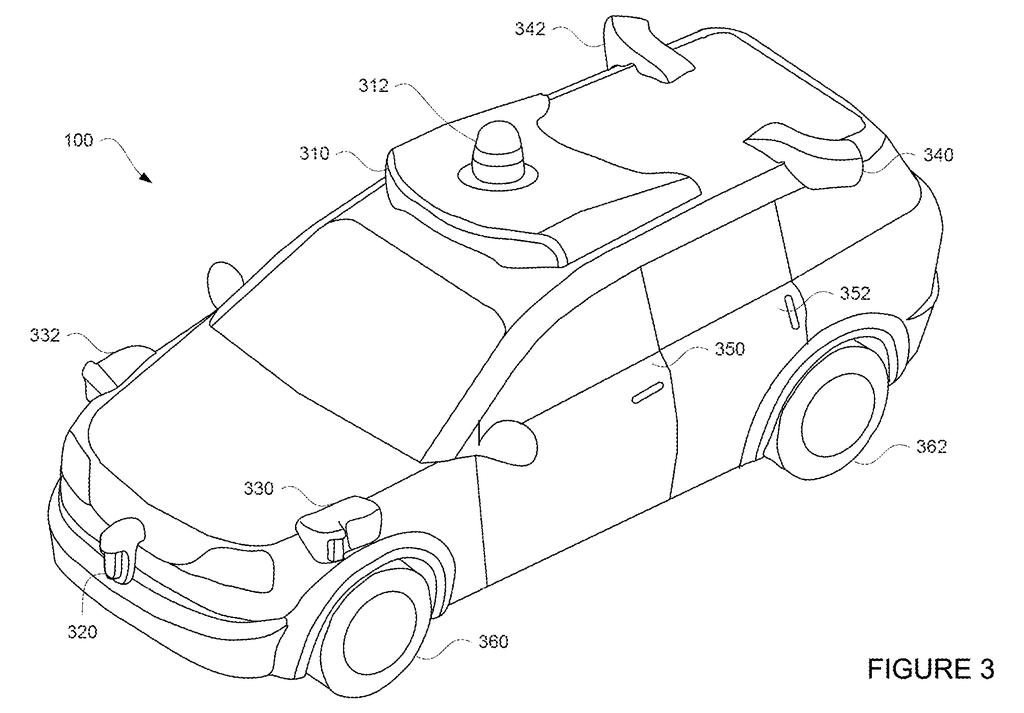
14 drawing sheets from US 2026/0346848 A1 · click any drawing to enlarge


Show the other 6 sheets


Want this weekly breakdown for a company we don't cover? Patentlyze Pro →
Be the first to weigh in