
Apple Patents Headset That Tracks Exactly Where Your Eyes Are Looking
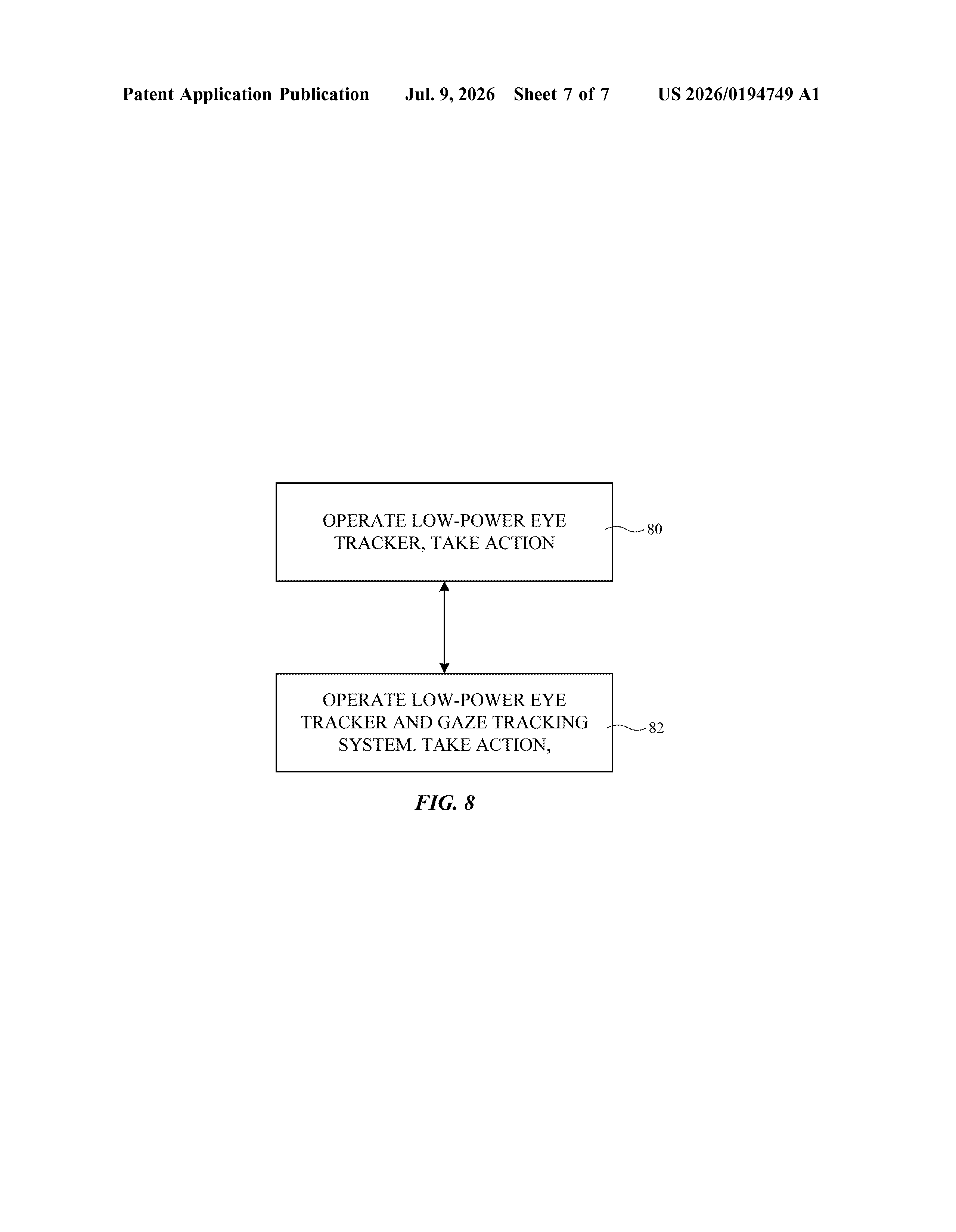
Apple is working on a headset that watches your eyes two different ways at once, using a low-power system and a high-detail camera system simultaneously. The idea is that you get accuracy when you need it and battery savings when you don't.
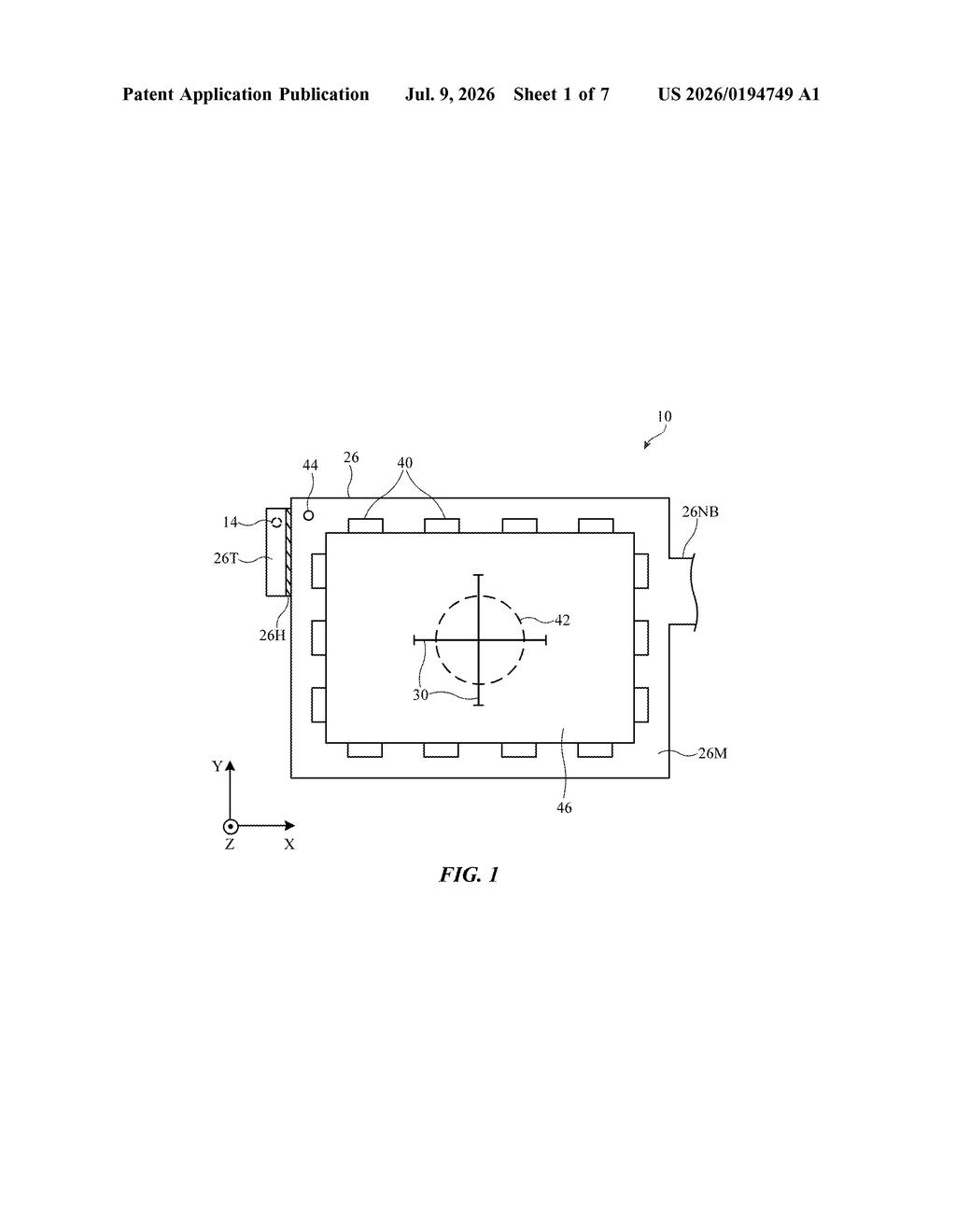
What Apple's dual eye-tracking setup actually does
Imagine your headset is trying to figure out exactly where your eyes are pointed. It can do that with a quick, rough check that barely uses any battery, or it can do a precise, detailed scan that takes more power. Most devices pick one approach. Apple's patent describes doing both at the same time.
The simpler system uses light sensors to measure how much light bounces back from your eye, giving a fast, low-cost read on your general gaze direction. The fancier system uses a camera to spot tiny bright reflections called glints on the surface of your eye, letting the headset calculate exactly where you're looking with much greater precision.
The two systems share the same light sources, so the headset isn't doubling its hardware for no reason. The setup suggests Apple wants a headset that can idle in a low-power eye-tracking mode and then snap to high accuracy only when the situation calls for it, which could make a real difference for a device you wear on your face all day.
How the two tracking systems split the workload
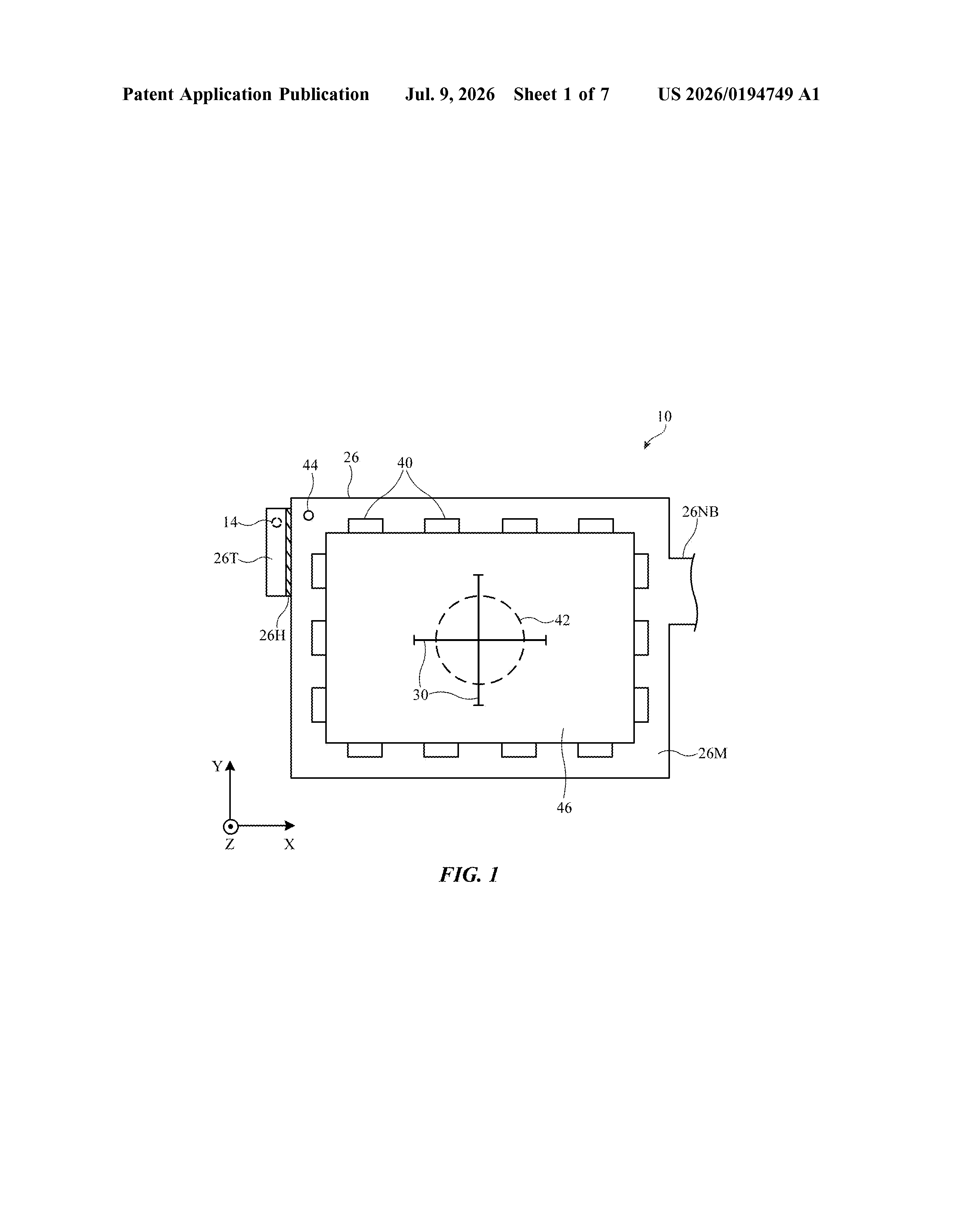
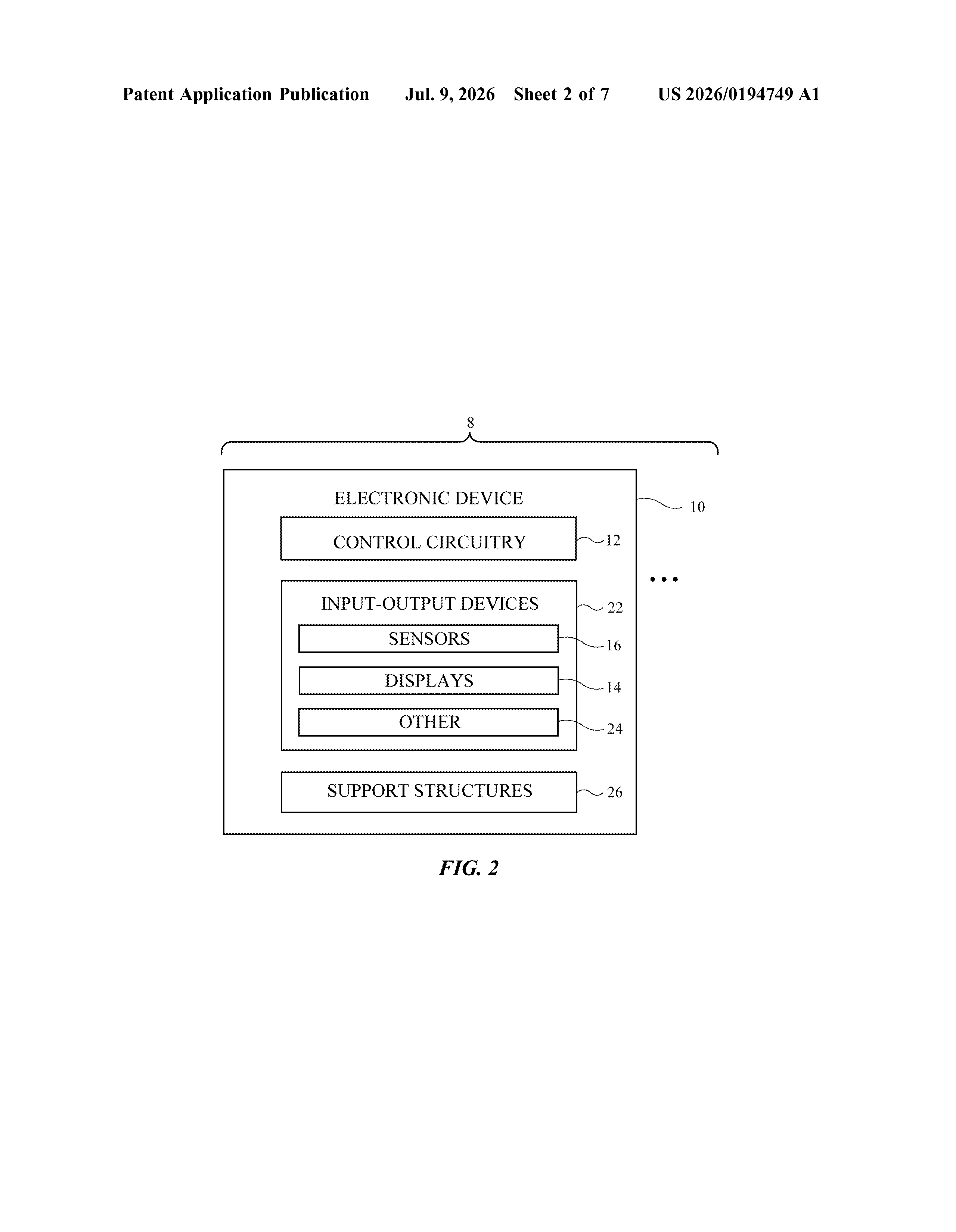
The patent describes a head-mounted device (think a mixed-reality headset like Vision Pro) that contains two completely separate gaze-tracking systems working in parallel.
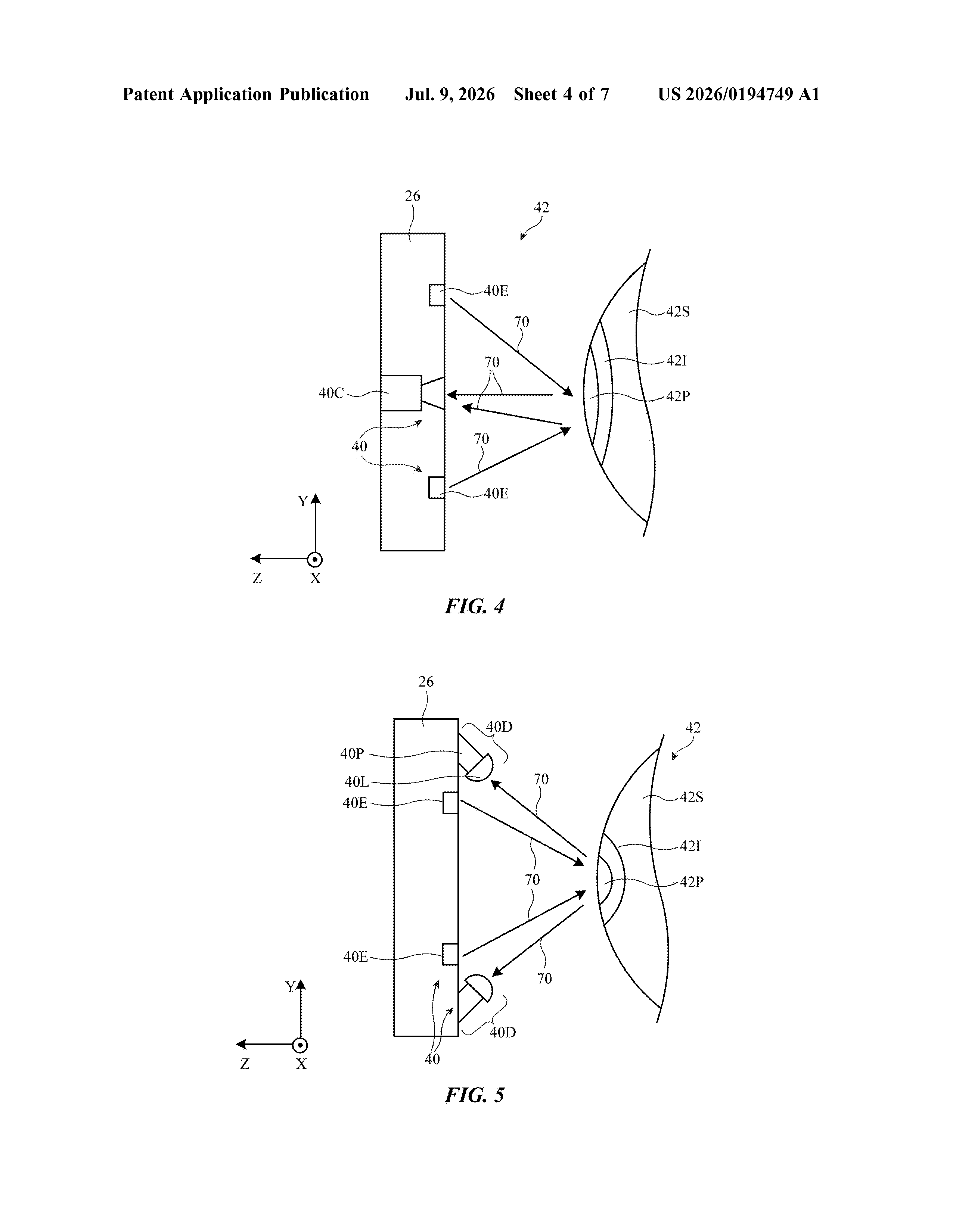
- Glint-based system: Light-emitting devices shine infrared beams at each eye. A camera-style image sensor then captures the tiny bright spots (glints) those beams create on the eye's surface. By analyzing the pattern of those glints, the device can calculate precise gaze direction. This is how most high-end eye trackers work today.
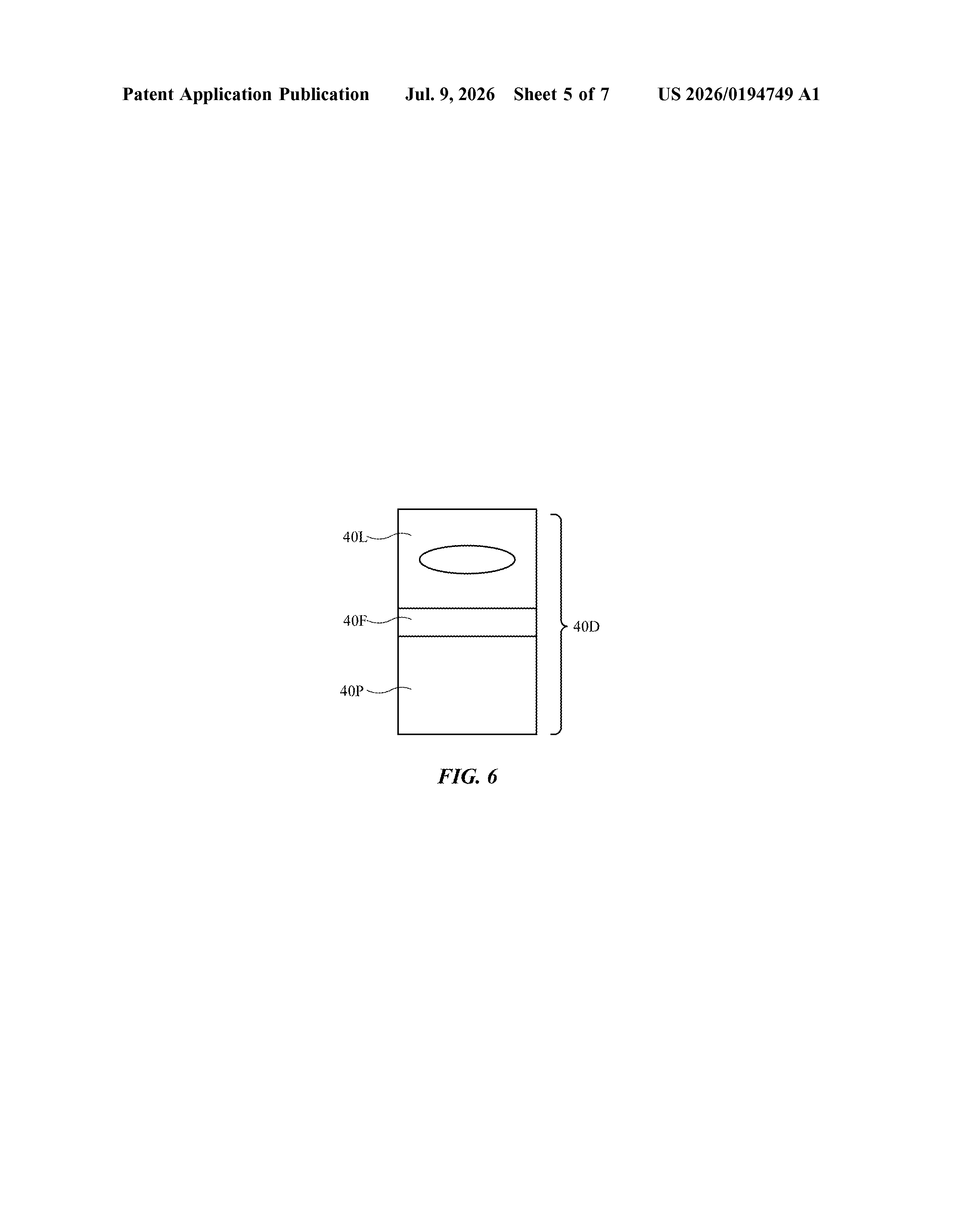
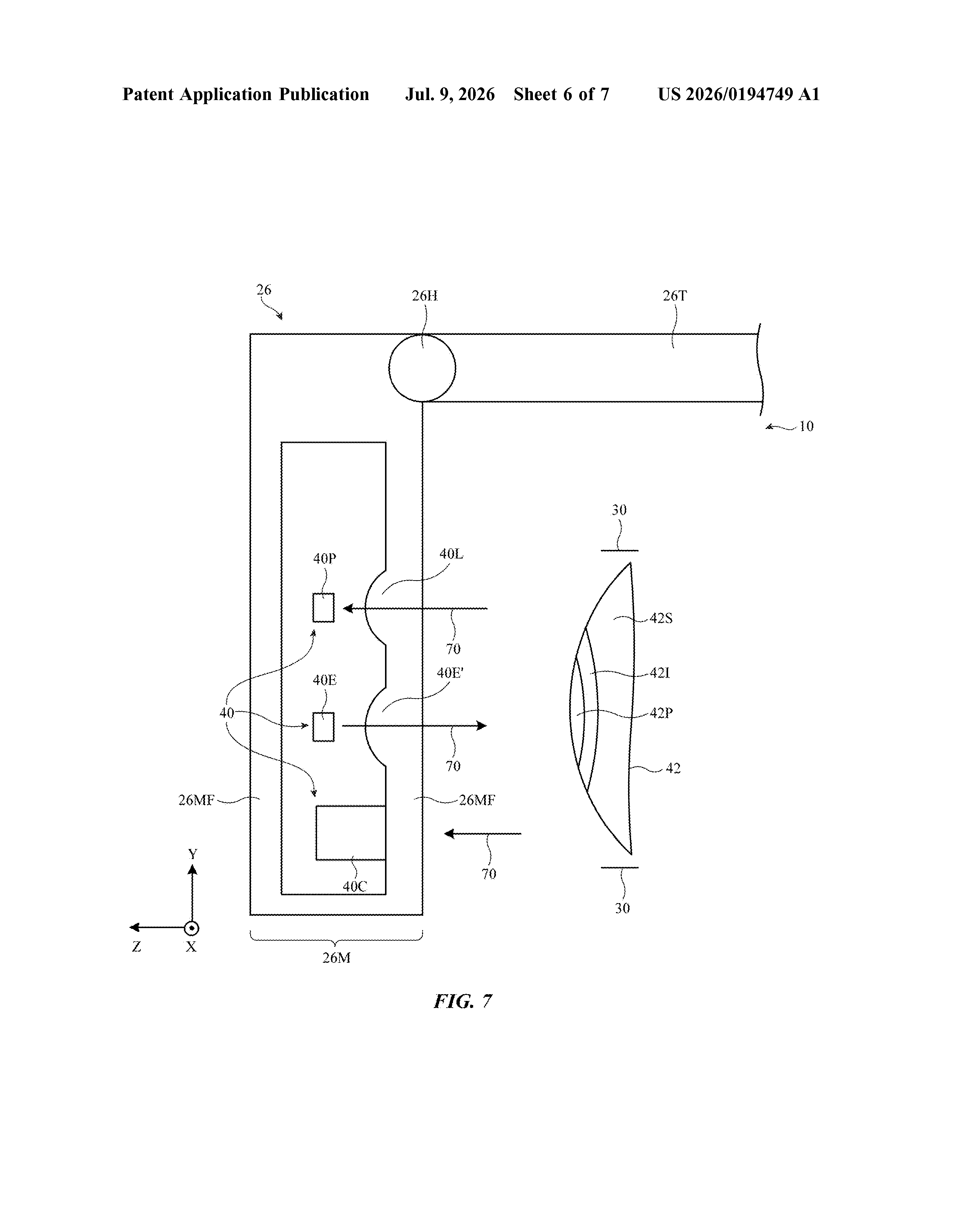
- Non-glint-based (low-power) system: This uses simple light detectors, not a full camera, to measure how much of each light beam reflects back from the eye box area. It doesn't produce a detailed image, just a magnitude reading. That's much cheaper to run computationally.
Critically, both systems share the same set of light-emitting devices already built into the headset's rear housing wall. The light beams pass through that wall toward the user's eyes and the reflections pass back through it to be measured. That shared-hardware design means the dual-system approach doesn't require doubling the number of light sources.
The patent's claim covers having both systems present in the same device at the same time, not as alternatives but as co-existing options the headset can draw from depending on the task.
What this means for the future of Apple Vision Pro
For a device like Apple Vision Pro, battery life and heat are real constraints. A system that can rely on the cheap light-detector approach most of the time, and only fire up the full camera-based tracker when the app or interaction actually demands precision, could extend usable session time noticeably. Eye tracking drives a lot of what makes spatial computing feel responsive, so getting this balance right matters more than it might sound.
This also signals that Apple is thinking seriously about a second-generation or more affordable headset where power efficiency becomes an even bigger selling point than it is today. The architecture here is clearly designed for flexibility, not just maximum accuracy.
This is a genuinely thoughtful engineering approach to a real problem in wearable computing: high-quality eye tracking eats battery, and battery life in headsets is already a sore spot. Filing a patent around a hybrid system that intelligently uses two tracking modes suggests Apple's headset team is working on something more practical than Vision Pro's current single-mode setup. Worth paying attention to.
Get our take in your Top Stories
Liked this breakdown? Add Patentlyze as a preferred source on Google, and our plain-English take shows up more often in your Top Stories the next time Apple patent news breaks.
There are more where this came from
We read every patent application Big Tech publishes and send you the ones worth knowing. Plain English, free, every week.
The drawings
7 drawing sheets from US 2026/0194749 A1 · click any drawing to enlarge
Want this weekly breakdown for a company we don't cover? Patentlyze Pro →