
Nvidia Patents a Circuit Design That Splits Complex Math Across Specialized Chip Hardware
Nvidia has filed a patent describing a way to break complex mathematical operations across different types of chip circuitry, then stitch the results back together. It's a low-level chip architecture idea, but the kind of thing that shapes how fast your next GPU runs AI workloads.
What Nvidia's split-calculation chip design actually does
Ever tried to split a huge task between two people so each handles the part they're best at? That's essentially what this Nvidia patent describes, but inside a chip.
Modern AI chips like GPUs spend most of their time doing one type of math: multiplying big tables of numbers together, then adding up the results. That's called matrix multiplication, and Nvidia has built dedicated circuitry specifically to do it fast. But some parts of these calculations don't fit neatly into that dedicated hardware. This patent describes a processor design where specialized circuits handle the parts they're built for, other circuits pick up the remainder, and then a third set of logic combines everything into a final answer.
The goal is to make sure no math gets left sitting around waiting for the wrong piece of hardware to deal with it. For you, that could translate into faster AI responses, more efficient GPU use in a data center, or better performance per watt on future Nvidia chips.
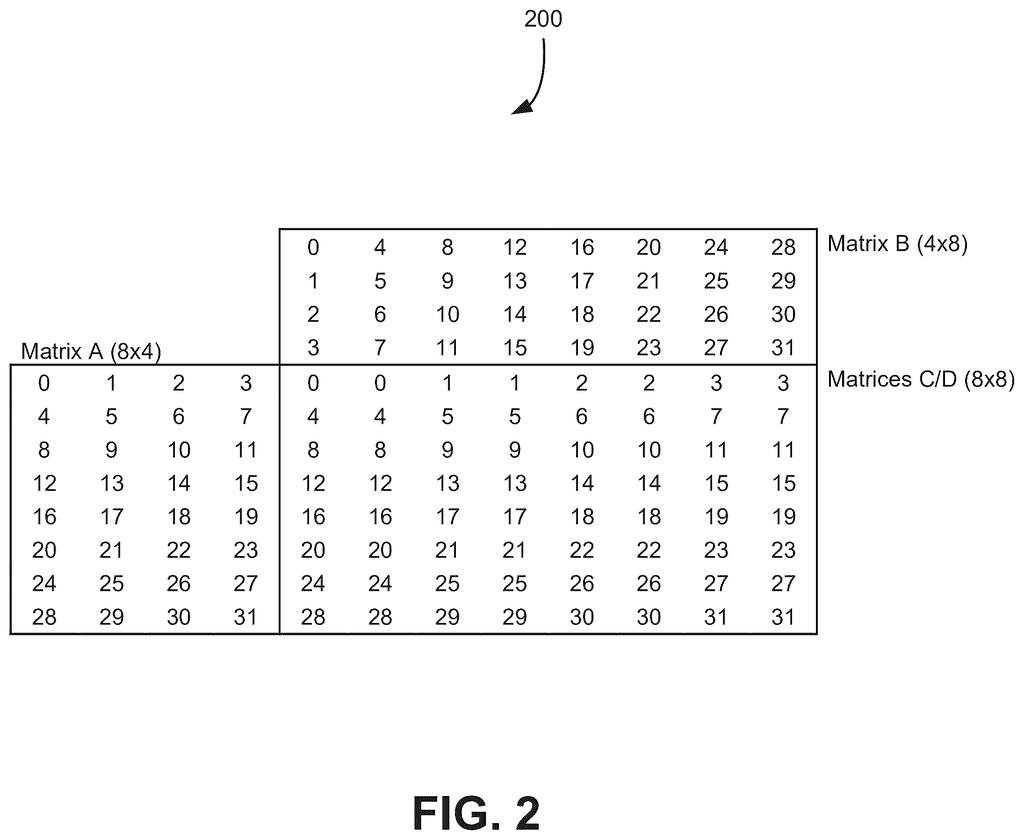
… a processor includes MMA circuitry to perform a first portion of a mathematical operation, one or more first circuits to perform a second portion of the mathematical operation not performed by the MMA circuitry, and one or more second circuits to cause a result of the first portion and the second portion to be combined.
Translation: The chip splits complex math problems into two parts so that specialized hardware can process them simultaneously.
How MMA circuits divide and recombine math operations
The patent centers on Matrix Multiply Accumulate (MMA) circuitry, which is the specialized hardware inside modern GPUs that handles the dominant calculation in AI: taking two large grids of numbers (matrices), multiplying corresponding elements, and summing the results (the "accumulate" part). This operation underlies everything from image recognition to large language model inference.
Nvidia's filing describes a processor architecture with three distinct functional roles:
- MMA circuitry handles a first portion of a given mathematical operation, doing what it's optimized for.
- First circuits (separate from the MMA hardware) handle whatever portion of the operation the MMA circuitry cannot or does not perform.
- Second circuits are responsible for combining the results from both of the above into a single unified output.
The practical effect is a division of labor at the hardware level. Rather than forcing all math through one generalist pipeline or leaving the MMA unit idle for operations it only partially supports, the design routes work to the most appropriate circuitry and then merges the outputs.
The patent is filed at a high level of abstraction, covering the general principle of splitting and recombining operations rather than a specific implementation. That breadth is typical for foundational chip architecture filings.
What this means for AI chip performance at scale
For AI chip design, matrix multiply hardware is already the dominant investment area. Nvidia's entire competitive advantage in the data center market rests on how efficiently its GPUs handle exactly this class of operation. A patent that describes a more flexible way to route math around the limitations of dedicated MMA circuits is directly relevant to future GPU architectures, where the pressure to support more varied numerical formats and operation types keeps growing.
The filing won't tell you which product line this lands in, and chip patents often describe ideas that take years to reach silicon. But it signals that Nvidia is thinking carefully about what happens at the boundary between fixed-function and general-purpose hardware, and those boundaries matter when you're designing chips for workloads that keep changing. It sits alongside a broader category of interesting tech patents covering next-generation chip arithmetic, where the race to support AI's evolving math demands is producing a steady stream of architectural experiments from every major silicon company.
This is the 31st Nvidia patent we've tracked since July in the AI chip wars, following one on self-reshaping AI models and one on skipping blank pixels.
Nvidia's approach here splits arithmetic work between dedicated circuits built for one job and general circuits that handle everything else. The cost of that split is the coordination step required to merge their separate results, which adds complexity and potentially slows things down in ways the patent doesn't quantify or acknowledge.
That silence matters. If the combining logic introduces meaningful delay or consumes significant chip space, it could eat into the very gains the specialization was meant to deliver. The trade is probably worth it for workloads that are almost entirely matrix-heavy, which describes most modern AI processing.
But for anything more mixed, this design could create bottlenecks that a simpler, more uniform architecture would sidestep entirely.
Get our take in your Top Stories
Liked this breakdown? Add Patentlyze as a preferred source on Google, and our plain-English take shows up more often in your Top Stories the next time Nvidia patent news breaks.
There are more where this came from
We read every patent application Big Tech publishes and send you the ones worth knowing. Plain English, free, every week.
The drawings
48 drawing sheets from US 2026/0252661 A1 · click any drawing to enlarge


Want this weekly breakdown for a company we don't cover? Patentlyze Pro →
Be the first to weigh in