
Waymo Patents System That Predicts How Long Drivers Take To React
Waymo is building a system that doesn't just track what other drivers do, it estimates how long they'll take to even notice something has gone wrong. That gap between surprise and response is exactly where accidents happen.
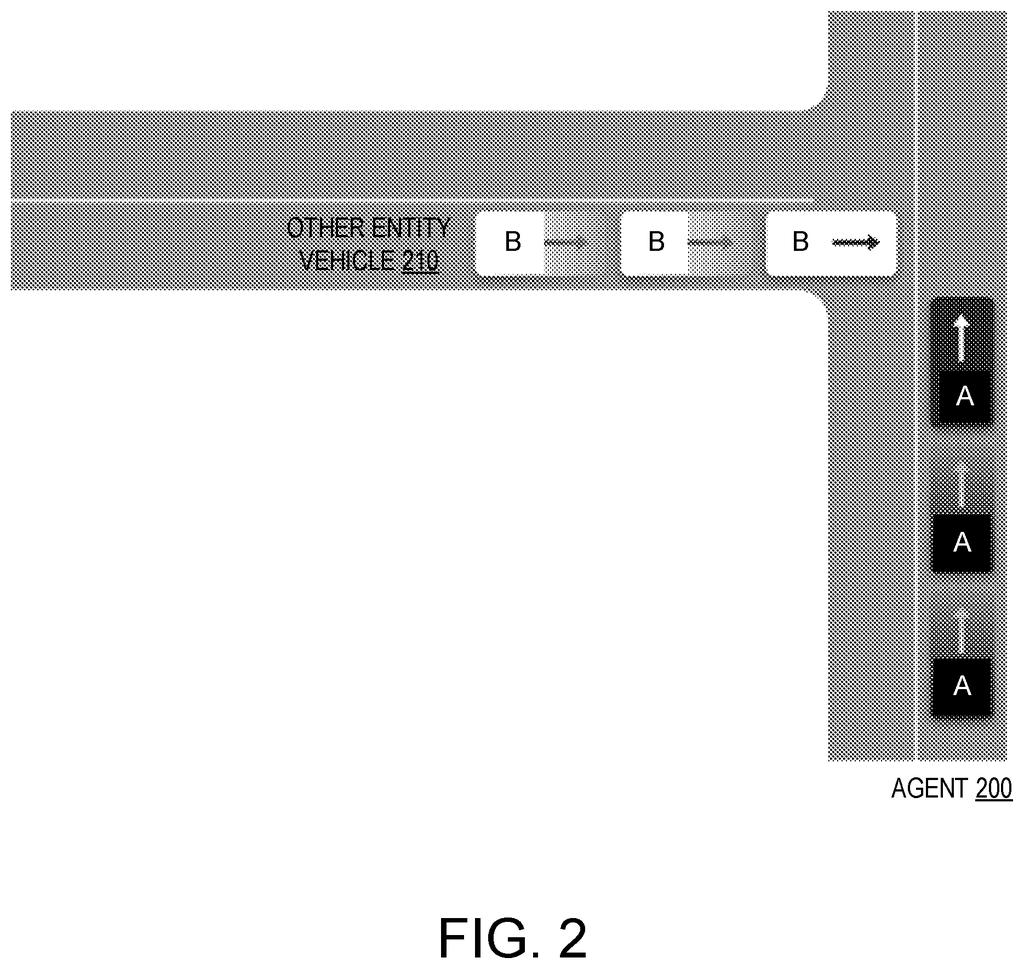
How Waymo measures a driver's reaction time to surprises
Ever been so focused on something that you didn't see a car drift into your lane until it was nearly too late? That delay between something unexpected happening and your brain registering it as a problem is what Waymo is trying to measure and predict.
Waymo's patent describes a method for estimating how quickly a person in a traffic scene (a driver, cyclist, or pedestrian) will respond to something that caught them off guard. The system watches how a nearby vehicle or person is moving, compares that movement to what was expected, and tallies up how surprising that behavior is over time. Once the surprise reaches a certain level, the system predicts the moment when the human would likely begin to react.
For Waymo's self-driving cars, knowing that a distracted driver nearby probably hasn't noticed a problem yet gives the robot car a window to act first. It's a way of modeling not just what humans do, but when they do it.
… continually updating, at each time step of a plurality of time steps, an accumulated measure of surprise for the agent due to the movements of another entity in the traffic environment …
Translation: The system constantly tracks how surprised a driver gets over time based on what other cars do.
How surprise accumulates until a response threshold is crossed
The patent describes a step-by-step process for producing a predicted response time for any agent (a human driver, pedestrian, or cyclist) in a traffic scene.
At each tiny slice of time, the system:
- Uses a generative model (a type of AI that produces a range of plausible future paths) to build a picture of where a nearby entity was expected to go.
- Compares where that entity actually ended up against those expectations, calculating a measure of surprise for that moment.
- Adds that surprise value to a running total, the accumulated surprise.
When the running total crosses a set threshold, the system declares that the human agent has now experienced enough unexpected stimulus to trigger a reaction. The moment of crossing becomes the predicted response time.
The underlying logic borrows from cognitive science: humans don't react instantly to change. They react once something has been surprising enough, for long enough, to break through their current mental model of the world. This patent turns that psychological idea into a computable number.
The system is designed to run continuously and in parallel for multiple agents in the same scene, giving Waymo's software a real-time picture of who has noticed what and who probably hasn't yet.
If the accumulated measure of surprise crosses a threshold at a particular point in time, a predicted response time for the agent is generated based on the particular point in time that the accumulated measure of surprise crosses the threshold.
Translation: Once that surprise builds up past a certain point, the system calculates exactly how long the driver takes to react.
What this means for how Waymo plans around human behavior
For a self-driving car, the most dangerous moment is often not the collision itself but the seconds before it, when a human nearby still hasn't registered that something is wrong. If Waymo's car can estimate that a driver beside it is still oblivious to an obstacle ahead, it can start braking or steering earlier than it would if it assumed everyone around it was paying full attention.
This kind of human-behavior modeling sits at the frontier of autonomous vehicle research, and it shows up across new Big Tech patents in the self-driving space as companies race to handle the unpredictable human element rather than just the physics of the road. Getting the timing right matters enormously: predict the response too early and the car acts on a false alarm; predict it too late and the safety margin vanishes.
This is the 51st Google filing we've tracked since May in the self-driving sensing race, building on blind spot navigation and redundant braking.
The system treats human attention as something that can be measured mathematically, using accumulated surprise as a stand-in for when a person's brain shifts into reaction mode. That is a reasonable bet, but real drivers vary enormously based on fatigue, distraction, and experience, and a threshold calibrated for an alert commuter could be badly wrong for someone exhausted at night.
The deeper cost is what the model cannot see. It infers surprise from movement patterns alone, with no access to where a driver's eyes are pointed, whether they are on their phone, or whether they noticed the hazard immediately but simply have not moved yet.
That trade reads as worth making anyway. A rough estimate of when a nearby human will respond is far more useful for planning a safe maneuver than no estimate at all, and the floor it raises on safety planning is meaningful even if the ceiling on accuracy is real.
Get our take in your Top Stories
Liked this breakdown? Add Patentlyze as a preferred source on Google, and our plain-English take shows up more often in your Top Stories the next time Google patent news breaks.
There are more where this came from
We read every patent application Big Tech publishes and send you the ones worth knowing. Plain English, free, every week.
The drawings
8 drawing sheets from US 2026/0249885 A1 · click any drawing to enlarge


Want this weekly breakdown for a company we don't cover? Patentlyze Pro →
Be the first to weigh in