
Samsung Patents a Speaker System That Rebalances Audio When Your Screen Slides Out
When a phone screen slides or rolls out to get bigger, the speakers that were perfectly placed for a compact device suddenly end up in the wrong spot relative to what you're watching. Samsung's new patent tackles exactly that problem.
What Samsung's expanding-screen audio fix actually does
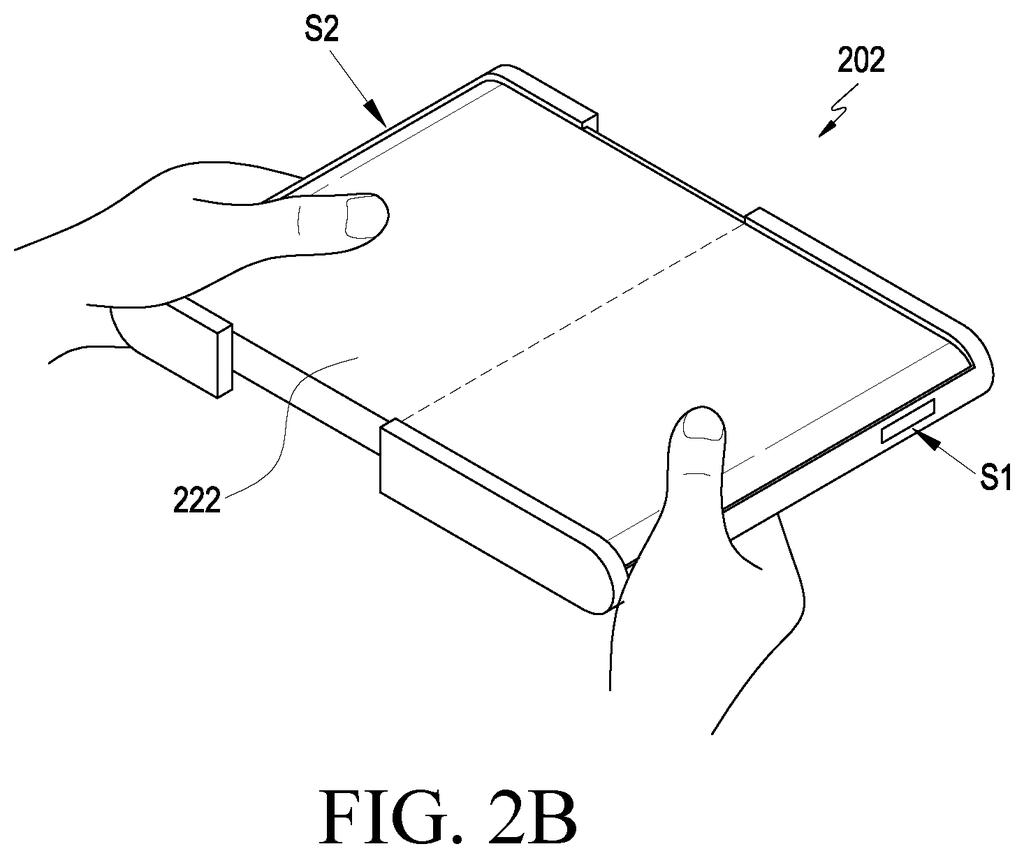
Imagine you're watching a video on a Samsung phone, and you slide the screen out to make it larger. The phone just got a few inches taller, but the speakers are still sitting at the same fixed points on the sides of the device they were before. The sound that was balanced for a compact screen is now mismatched for a bigger one.
Samsung's patent describes a system where the phone knows whether the screen has been slid or rolled out to its larger size, and then automatically adjusts the audio signals going to each speaker to match. Think of it like a sound engineer tweaking the mix every time you resize the stage.
The phone tracks its own physical configuration in real time and uses that information to make sure the audio coming out of each speaker still sounds right, no matter how much of the display is currently showing.
a housing including a first housing part and a second housing part configured to movably engage with the first housing part between a retracted position and an extended position; a flexible display coupled to the first housing part and the second housing part such that a size of an area of the flexible display that is visible from a front side of the housing changes …
Translation: The device uses a sliding housing design that expands or shrinks the visible area of the flexible screen.
How the processor tracks screen position and adjusts each speaker
The patent covers an electronic device with a flexible display that can expand, either by sliding or rolling, so that more screen becomes visible from the front. The housing has two parts: one that stays fixed and one that moves, and as the movable part extends, more of the display is revealed.
Built into the sides of the housing are multiple audio modules (essentially speakers), positioned on the first and second side surfaces. When the screen is compact, those speakers are in one spatial relationship to the display. When the screen expands, that relationship changes.
The processor at the center of the system continuously identifies whether the display is in its retracted (compact) or extended (larger) state. Based on that state, it adjusts the audio signals sent to each individual speaker. The adjustment is tied directly to which configuration the device is in, so each speaker's output is recalibrated to fit the physical layout of the moment.
- Detects retracted vs. Extended screen position
- Identifies whether the display moved by sliding or rolling
- Corrects audio signals for each speaker independently based on the current state
… the processor is configured to identify whether the display moves by sliding or rolling with respect to the housing to allow at least a part of the display to be exposed, and correct an audio signal with respect to the at least one first audio module and the at least one second audio module corresponding to the display being moved.
Translation: The phone detects if the screen is sliding or rolling out and automatically adjusts the sound output to match.
What this means for rollable and sliding Samsung phones
For anyone who has used or considered a sliding or rollable phone, audio quality is one of those details that tends to get overlooked until it sounds off. A speaker tuned for a compact device can produce uneven or unbalanced audio the moment the form factor changes, and Samsung's patent suggests the company is thinking carefully about the full user experience, not just the visual spectacle of an expanding screen.
The latest Big Tech patents in the flexible-display space show Samsung investing steadily in the behind-the-scenes engineering that makes rollable and sliding form factors actually usable day to day, and this audio-correction filing is a concrete piece of that effort.
That makes this Samsung's 60th filing we've tracked in our foldable phone patents watchlist since May, adding to work like the flexible support fix and the rainbow pattern fix.
Putting speakers on the sides of a phone that physically expands and contracts means no single placement works well for every shape. Samsung's solution is to adjust the audio signal in software depending on how far the screen has slid out, compensating for whatever the hardware can't naturally handle.
That fix has a ceiling, though. Software can rebalance sound, but it cannot move a speaker to a better spot. One configuration will almost certainly sound fuller than the other, and users will notice even if they can't explain why.
Given that the screen itself is already a manufacturing challenge, tuning the mix per configuration is probably the right call. The cost is predictable audio inconsistency depending on how you're holding the phone; the gain is a workable speaker system across both states without adding more hardware.
Get our take in your Top Stories
Liked this breakdown? Add Patentlyze as a preferred source on Google, and our plain-English take shows up more often in your Top Stories the next time Samsung patent news breaks.
There are more where this came from
We read every patent application Big Tech publishes and send you the ones worth knowing. Plain English, free, every week.
The drawings
15 drawing sheets from US 2026/0252144 A1 · click any drawing to enlarge


Want this weekly breakdown for a company we don't cover? Patentlyze Pro →
Be the first to weigh in