
Samsung Patents a Memory Module That Moves Its Own Data Between Servers
Most memory modules just sit there and wait for instructions. Samsung is patenting one that can pack up its own data and move it directly to another machine, without asking the host computer to do the heavy lifting.
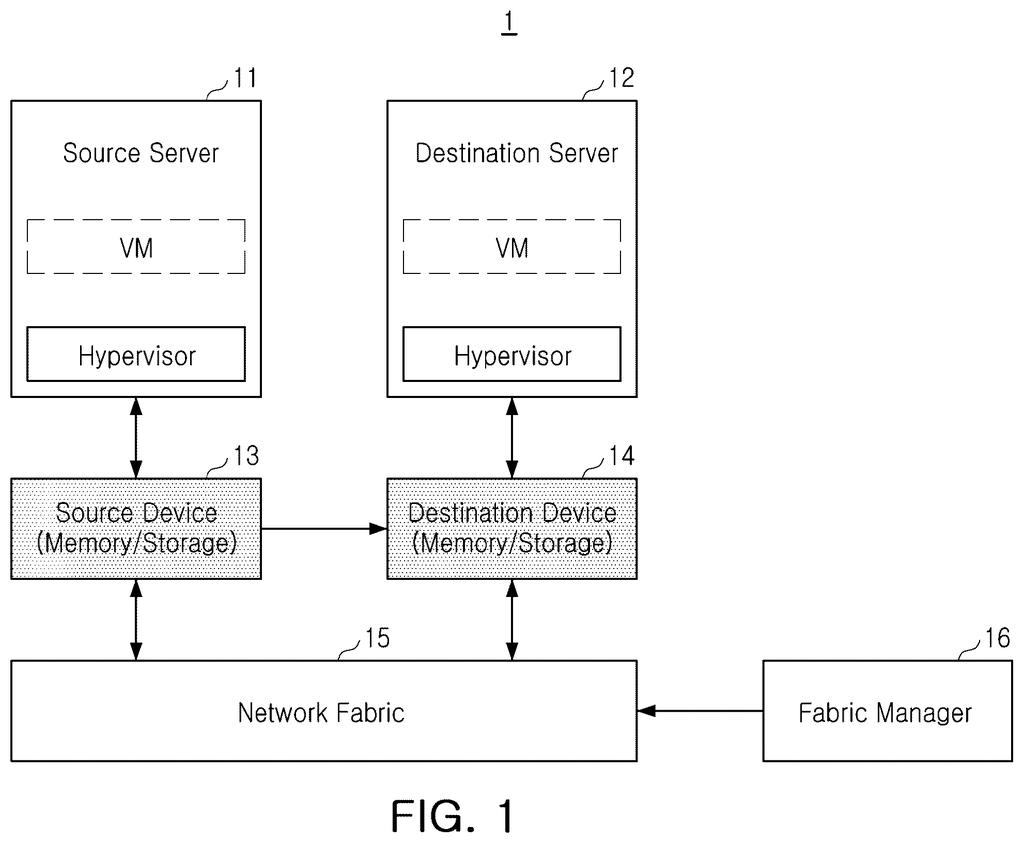
What Samsung's self-migrating memory module actually does
Imagine a storage locker that can walk itself across the building and set up in a new room, without anyone having to carry it. That's roughly what Samsung is describing here, but for the memory chips inside a server.
When a cloud provider needs to move a running program from one machine to another (something called "live migration"), the host computer usually has to copy all the program's memory data over the network. It's time-consuming and the host has to do all the work. Samsung's design lets the memory module itself handle that transfer directly, talking machine-to-machine through a technology called peer-to-peer communication. The host just sends a "start moving" signal.
The module waits until its internal holding area (a cache) is full, then pushes the data straight to the destination. Your software keeps running throughout, and the host server is freed up from managing a very large data-moving job.
… a host interface circuit configured to perform peer-to-peer (P2P) communication with an external device, and to receive, from a host device, a live migration request …
Translation: It talks directly to other servers to handle requests to move data while running.
How the LRU buffer cache and P2P link handle migration
The patent describes a smart memory module, a memory chip assembly that contains its own controller and a dedicated communication circuit, rather than being a passive component that a CPU manages entirely.
Inside the module is an LRU buffer cache (Least Recently Used cache, meaning it tracks which data has been touched most recently and holds the freshest data in a fast holding area). When a host computer sends a live migration request (an instruction to move a running workload to another machine without shutting it down), the module's controller takes over.
Instead of the host copying memory contents byte-by-byte across a network, the module uses a peer-to-peer (P2P) communication channel, a direct machine-to-machine link that bypasses the host CPU entirely. The migration only starts transmitting under a buffer-full condition, meaning the module waits until its cache is full before sending, which keeps the data stream efficient rather than sending small trickles.
The key components working together are:
- At least one memory device connected via a channel
- A controller with an LRU buffer cache managing what gets sent and when
- A host interface circuit that both receives commands from the local host and handles outbound P2P transfers to the target machine
… a migration operation of transmitting buffer data to a target device through the P2P communication under a buffer-full condition …
Translation: It sends stored information straight to another server when its cache fills up.
What this means for cloud servers and live workloads
Live migration is a routine but expensive operation in cloud computing. Every time a provider moves a virtual machine between physical servers, whether for maintenance, load balancing, or energy savings, the host CPU has to copy gigabytes of memory across the network. That ties up resources and can slow running applications. A memory module that handles its own migration offloads that burden and could make the process faster and less disruptive.
For everyday users, the impact is indirect but real: shorter slowdowns when a cloud provider moves the server your app is running on, and more efficient data centers overall. This is infrastructure-level work, the kind that doesn't show up in a product announcement but shapes the performance of nearly every cloud-hosted service you use.
Samsung's 20th filing in memory and storage we've tracked since May adds to a run that includes one on drives overheating during saves and one on data corrupting silently in storage.
Getting this idea out of a patent and into a data center requires building new physical hardware first, full stop. The design calls for a special memory board, a direct high-speed connection between servers, and circuitry that can decide on its own when to move data, none of which exist as off-the-shelf parts today.
The shortest route to a real product would be a custom memory module paired with servers already built to support that direct connection, meaning a cloud provider would need to buy new equipment before seeing any benefit at all.
Samsung can manufacture memory at scale, which matters, but a patent is a claim on an idea rather than a delivery timeline, and the core logic described here still needs to be tested in actual chips under real conditions before any data center would trust it with live workloads.
There are more where this came from
We read every patent application Big Tech publishes and send you the ones worth knowing. Plain English, free, every week.
The drawings
19 drawing sheets from US 2026/0277824 A1 · click any drawing to enlarge


Want this weekly breakdown for a company we don't cover? Patentlyze Pro →
Be the first to weigh in