
Samsung Patents a Circular Arc Menu for Picking Tracks on Audio Devices
Samsung has filed a patent for a music player interface that arranges track controls along curved arcs layered over a spinning disc graphic, changing the look of each track button the moment you tap it.
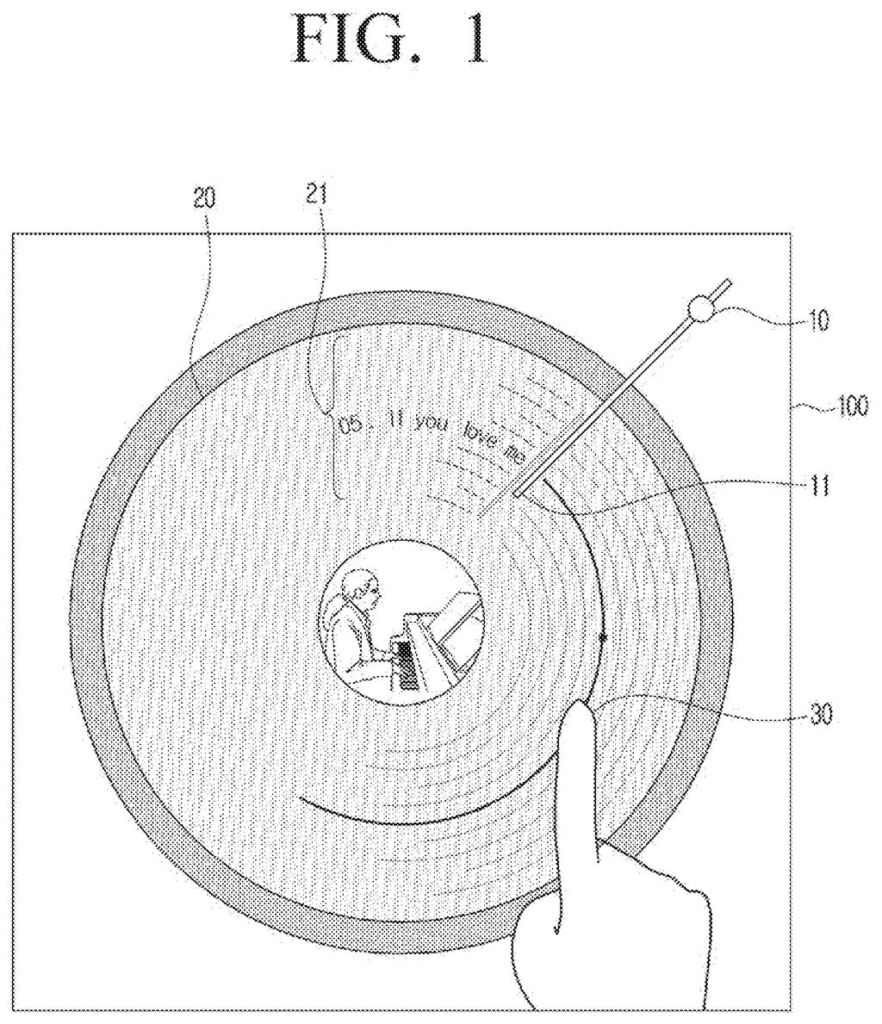
What Samsung's arc-based track selector actually does
A small screen on a smart speaker or wireless speaker shows a spinning vinyl-disc graphic while music plays. Around that disc, buttons for each song in the album are arranged in curved rows, following the shape of the circle. That's the core idea in this Samsung filing.
When you tap one of those curved buttons to switch tracks, it visually transforms into a different style of button that reflects your selection. The interface is built around the idea that the background playback graphic and the track controls should feel like one unified circular design, not a list of buttons slapped on top.
For you as a listener, this could mean navigating an album on a small display feels more like spinning a physical record than scrolling a flat menu. The patent describes this for an audio output apparatus, which broadly covers speakers and similar devices with screens.
control, based on a background user interface (UI) indicating a state of replaying contents being displayed, display a plurality of first UIs along a plurality of arcs that divide the background UI into a plurality of track regions …
Translation: The system arranges media tracks along curved lines across the playback screen.
How the arcs divide and respond to track selection
The patent describes a display-equipped audio device (think a smart speaker with a screen) that shows a background UI representing playback state. That background UI is circular, suggesting a spinning disc or similar visual metaphor tied to music playback.
Layered over that background, the system draws arc-shaped regions that divide the circle into sections, one per track. Along those arcs, the device displays what the patent calls first UIs, essentially the default state of each track button, arranged to follow the curve of the circle rather than sitting in a straight list.
When a user taps a track, the device swaps that button's visual from the default first UI to a second UI, a changed visual state that signals the item has been selected or is now active. The transition is triggered directly by the user's tap, and only the tapped item changes; the others stay in their default arc arrangement.
The claim is software and display logic, not new hardware. The key design questions the patent answers are:
- How to divide a circular background into equal arc-based track zones
- How to place controls along those arcs without a flat grid
- How to visually confirm a selection by switching UI states per item
… change a first UI corresponding to the item among the plurality of displayed first UIs to a second UI corresponding to the item, and display the second UI.
Translation: Selecting a track visually transforms its menu icon to show your choice.
What this means for Samsung's audio device screens
Small screens on audio devices are notoriously hard to use. A flat list of track names on a two-inch display is fine for text-heavy phones but awkward on a speaker with a round or square touchscreen optimized for glanceable visuals. A circular, arc-based layout designed around a spinning disc graphic could make track navigation feel more at home on those form factors.
That said, this is a software UI patent, not a new chip or sensor. Samsung already sells speakers and soundbars with displays, so the shortest route to a product is a firmware or software update rather than new hardware. Whether this specific arc design makes it into a shipping product depends on user testing and product decisions that the patent document doesn't address.
Audio filings we've tracked from Samsung since May now reach 29th, adding to work like TV and speaker audio bridging and vacuum sound-reading floors.
From a shipping standpoint, this patent is unusually close to a real product. It describes a software interface, not new hardware, so the only thing standing between this idea and a firmware update is the decision to ship it.
The concept only makes sense on a speaker with a small round screen, which already exists in Samsung's lineup. No new chip, no external service, no missing piece.
Whether Samsung builds it into a product is the open question. UI ideas get filed and dropped all the time. But the shortest path here is short enough that a single software release could carry it.
There are more where this came from
We read every patent application Big Tech publishes and send you the ones worth knowing. Plain English, free, every week.
The drawings
10 drawing sheets from US 2026/0288307 A1 · click any drawing to enlarge


Want this weekly breakdown for a company we don't cover? Patentlyze Pro →
Be the first to weigh in