
Microsoft Patents a System That Shifts Storage Space Automatically as Task Demands Change
When a chip's memory is carved into fixed buckets, some buckets overflow while others sit empty. Microsoft's new patent describes a controller that watches those buckets in real time and redraws the lines.
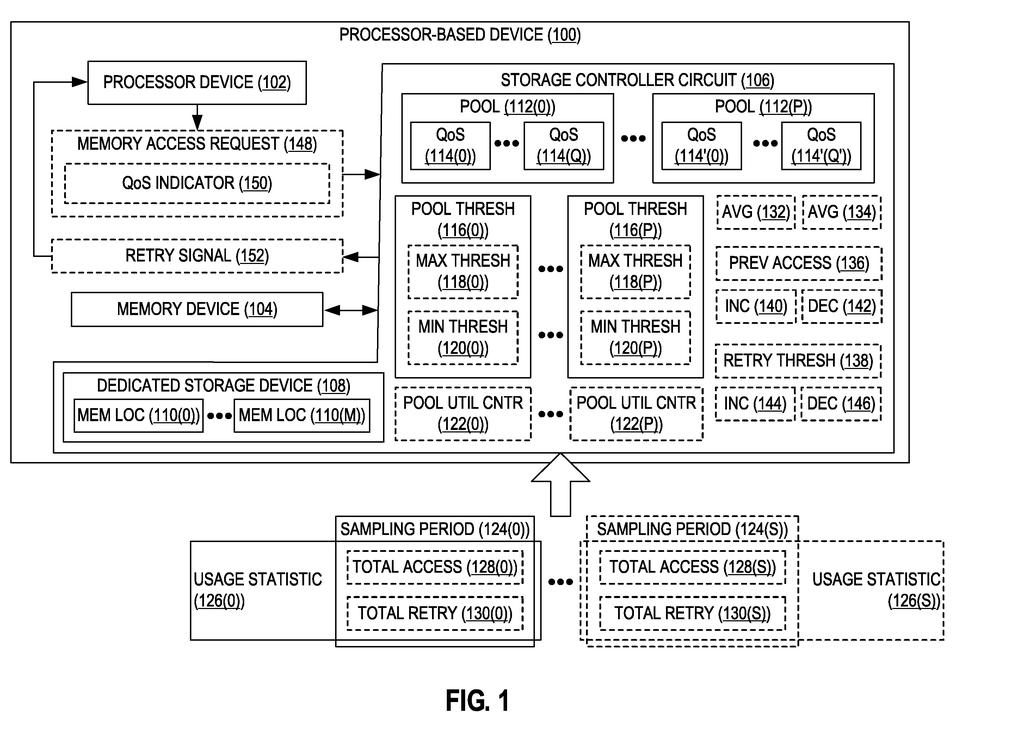
How Microsoft's self-adjusting memory pools actually work
Today's processors often divide their internal storage into separate sections, each reserved for a different type of task. The problem is that those sections are usually set at a fixed size, so a busy section can run out of room even when the section next to it is half-empty.
Microsoft's patent describes a controller that watches how much of each section gets used over a measured window of time. If one section is consistently packed while another is consistently light, the controller adjusts the size limits, giving more room to the busy section and pulling back from the idle one. No human has to intervene.
The idea is that memory allocation tracks actual demand rather than a one-size guess made at setup time. For devices running many different jobs at once, that could mean fewer slowdowns when one task suddenly needs more breathing room.
collect a usage statistic for the pool during a sampling period; determine, based on the usage statistic, whether to modify the pool threshold value corresponding to the pool among the plurality of pool threshold values; and responsive to determining to modify the pool threshold value corresponding to the pool, modify the pool threshold value based on the usage statistic.
Translation: The system monitors usage over time to decide if storage limits need to be changed.
How the controller tracks usage and moves storage limits
The patent describes a storage controller circuit that sits between a processor and a memory device. Inside that controller is a chunk of dedicated fast storage, divided into multiple pools. Each pool is associated with one or more Quality-of-Service (QoS) levels (essentially priority tiers: think of QoS as the rulebook that says which tasks get served first and how much resource they're guaranteed).
Each pool has a pool threshold value, a number that defines how large that pool's slice of the storage is allowed to be. Normally these thresholds would be static, set once during device configuration and left alone.
What the patent adds is a feedback loop:
- During each sampling period, the controller records a usage statistic for every pool (how full it got, how often it hit its limit, etc.).
- After the period ends, the controller checks whether each pool's current threshold is still a good fit for its actual usage.
- If the fit is off, the threshold is updated, expanding the pool that needed more room or shrinking the one that had too much.
The adjustment happens automatically and repeatedly, so the allocations track changing workload patterns over time rather than reflecting only the conditions that existed when the device was first configured.
Dynamically adjusting memory allocations based on Quality-of-Service (QoS) pool threshold values in processor-based devices is disclosed herein.
Translation: The patent describes automatically shifting device storage limits to match performance needs.
What this means for servers running mixed workloads
Servers and high-end processors routinely run dozens of competing tasks at once: database queries, background maintenance jobs, real-time user requests. When memory is partitioned badly, high-priority tasks get throttled not because the hardware is undersized but because the wrong parts of the hardware are undersized. That kind of waste is hard to diagnose and even harder to fix manually across a data center with thousands of machines.
A self-tuning approach reduces the need for engineers to hand-tweak memory settings every time a workload changes, which in practice means workloads change faster than anyone can keep up with anyway. For cloud providers like Microsoft's Azure, squeezing more efficiency out of existing hardware has direct cost implications at scale.
Microsoft's 18th filing we've tracked in the AI chip wars since July adds to earlier work on compressing AI math tables and running AI math on any processor.
The problem this patent addresses is real. Fixed memory partitions are a well-known operational headache in multi-tenant systems, and the cost shows up as either wasted capacity or unexpected latency spikes for users. The frustrating part is that the fix seems obvious in hindsight: just watch what's actually being used and adjust.
The approach here is modest in scope. Collecting usage statistics per sampling period and nudging thresholds accordingly is not a dramatic architectural leap. The value is in having it done automatically and in hardware, rather than relying on software tuning that happens too slowly or not at all. That said, the patent doesn't describe particularly novel math; it describes a control loop applied to a specific part of the memory subsystem.
For anyone outside the chip-design world, this reads as infrastructure plumbing: important when it breaks, invisible when it works. The problem it attacks is proportional to the scale at which Microsoft operates, which makes even a modest improvement meaningful.
There are more where this came from
We read every patent application Big Tech publishes and send you the ones worth knowing. Plain English, free, every week.
The drawings
6 drawing sheets from US 2026/0299806 A1 · click any drawing to enlarge


Want this weekly breakdown for a company we don't cover? Patentlyze Pro →
Be the first to weigh in