
IBM Files Patent to Pick the Right Moment for Your Car's Software Update
Your car's next software update could wait for a good moment, based on your driving habits, the weather and how urgent the fix is. IBM filed a patent application for a scoring system that decides when each update gets sent.
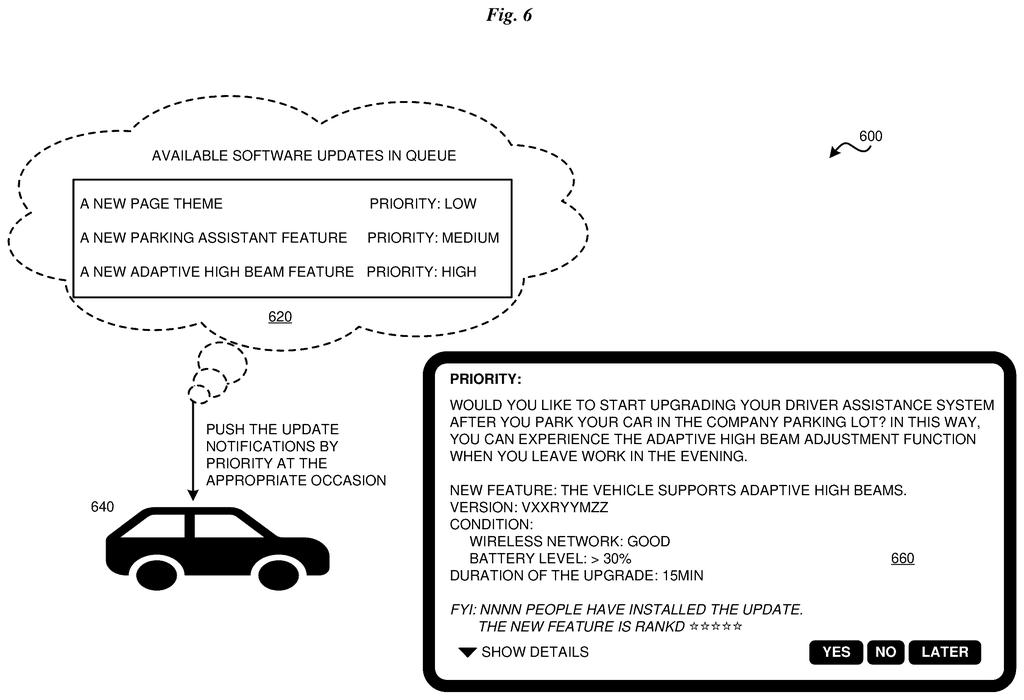
What IBM's car-update timing system does
Today, when a carmaker has a software update ready, it usually sends it to your car as soon as possible, whether or not that suits you. A car is not a phone, though. Its main job is getting you around safely, and the filing says drivers should be disturbed as little as possible.
IBM's patent application describes a system that builds a picture of you and your car: your driving habits, your preferences, the car's health, the weather, even where the car is. It gives each update a score and a "suitable condition," such as it being nighttime. Updates then line up in a queue, ranked by those scores.
When an update goes out, a message can appear on the car's screen with buttons to accept, reject or save for later. Your answers feed back into the system so it learns your tastes.
establishing, by an inference component of a subject vehicle update system, an inference model based at least in part on sensor data received from a network, wherein the inference model comprises multidimensional data representative of contextual relationships among a plurality of properties of a subject vehicle and a plurality of properties of a user; …
Translation: The system builds a model using network and sensor data to understand the connection between car conditions and driver habits.
How IBM scores and queues each car update
The system starts by gathering data from several places: sensors in the car (temperature, battery, vibration and similar), your profile and driving habits, details about the installed software, and which updates are available. It organizes all of that into a knowledge base, a web of connected facts where each dot stands for the car or the user and each line stands for how they relate.
An inference model (a program that applies logical rules to stored facts to judge new information) then produces a suitability metric for each update. That metric has two parts:
- A score, built from weighted factors such as the update type, how severe it is, and your preferences
- A suitable condition, such as it being night or the car not sitting at a temporary location
In the filing's example rules, a firmware update (code that runs the car's hardware) scoring 3 or more is pushed right away. A score between 1 and 3 goes into a queue, and anything under 1 is ignored. The queue is ranked by weight and severity.
When an update goes out, the car can show a notification, possibly written by a large language model (an AI that generates human-like text), with accept, reject and save-for-later buttons. Your responses are sent back to retrain the model.
… generating, by executing a first specially purposed code within the inference component of the subject vehicle update system, a suitability metric for an update, where the suitability metric comprises a score and a suitable condition for the update of the subject vehicle.
Translation: Specialized software calculates a score and determines the best time and environment to apply a software update.
What better update timing means for your car
The filing says the usual approach is to send updates the moment they are ready. A system like this could mean fewer prompts at awkward times and more updates that install successfully, because each one goes out when conditions fit. Urgent firmware fixes can still jump the line.
The patent application is aimed at software-defined vehicles, cars whose features are mostly controlled by software. As more of a car's behavior arrives through updates, when a change lands matters almost as much as what it changes. The filing's own example is an adaptive high beams feature sitting in the queue. It is only a patent application, so nothing here says IBM or any carmaker will ship it.
IBM's 419th filing we've tracked since May adds to a run that includes picking the best AI model and a virtual factory copy.
Every timing system pays for itself in data. To pick a good moment, this one wants your driving times and places, your preferences, your mood, even what people say about updates on social media. That is a lot of personal information to hand over for the job of scheduling downloads.
The second cost is delay. Holding back a routine update means your car runs older software longer, and a score-and-threshold rule only works if someone sets the weights well. A bad weight could park an important fix in the queue. The override for high-scoring firmware updates softens that risk.
The trade reads as worth it for convenience updates like a new lighting feature, where waiting a night costs you nothing. The mood and social media inputs look like the weakest part, since they add privacy exposure for little clear gain.
Get our take in your Top Stories
Liked this breakdown? Add Patentlyze as a preferred source on Google, and our plain-English take shows up more often in your Top Stories the next time IBM patent news breaks.
There are more where this came from
We read every patent application Big Tech publishes and send you the ones worth knowing. Plain English, free, every week.
The drawings
7 drawing sheets from US 2026/0329570 A1 · click any drawing to enlarge


Want this weekly breakdown for a company we don't cover? Patentlyze Pro →
Be the first to weigh in