
Samsung
Samsung · Security · Filed Jun 12, 2026 · USPTO published Nov 12, 2026 · This week's release
Samsung Files Patent for Fingerprint Unlocking That Still Works on Dry or Scarred Fingers
Samsung's filing describes reading a damaged fingerprint the way you follow a broken dotted line: keep heading the same direction until the line picks back up. It even treats the gaps as a clue for spotting scars.
- Publication number
- US 2026/0360179 A1(US20260360179A1)
- Applicant
- SAMSUNG ELECTRONICS CO., LTD.
- Filed · Published
- Jun 12, 2026 · Nov 12, 2026
- Inventors
- Youngbae JEON, Jungil CHO, Moongyu JUNG, Joonghwan LEE, Jongsung LEE, Jaewoo SEO, Iljoo KIM, Bumjun KWON
- Status when we published
- Waiting for an examiner
- Document
- 20 claims
- US classification
- 382/125
- Parent application
- Continuation of PCT/KR2026/096292 (filed Apr 24, 2026)(PCTKR2026096292)
What Samsung's fingerprint line-tracing does
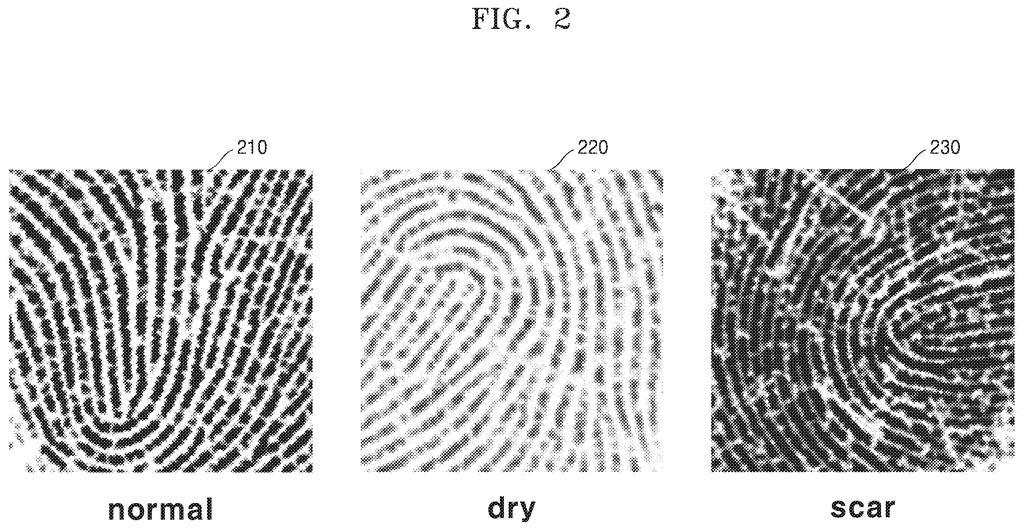
Every time you press your thumb to your phone, a sensor takes a picture of the tiny ridges on your skin, and the phone tries to match it to the one it has on file. That works well when your finger is in good shape. When your skin is dry, or a scar interrupts the pattern, the picture comes out faint or broken, and the phone can misread it.
Samsung's patent describes a way to follow each ridge like a path. The phone guesses where the line goes next based on how it has been heading and how sharply it has been curving. Then it checks the image and nudges the guess onto the real line. If the image goes blank for a few steps, it keeps going instead of giving up.
Those blank stretches turn out to be useful too. When a lot of them bunch together, the phone can mark that spot as a likely scar.
predicting a next point of a ridge path, based on a current point and motion state parameters; adjusting the predicted next point and updating the motion state parameters, based on the predicted next point and pixel values of the fingerprint image …
Translation: The software guesses where the fingerprint line goes next and corrects its guess using the actual image.
How the scanner guesses, checks and skips gaps
Claim 1 covers a loop that traces one fingerprint ridge (the raised lines that make up a print) at a time. Starting from a point in the image, the device predicts the next point from the current position plus motion state parameters, which are numbers describing how the line is moving. It then adjusts that guess using the image's pixel values, updates the numbers, and repeats until a whole ridge is identified.
Later claims add detail. The motion numbers are velocity and acceleration, so the tracker can follow sharp curves. The correction uses maximum likelihood estimation (picking the position that best explains the pixels it sees), with a bell-curve function sized to the average ridge thickness. If the likelihood falls below a threshold, the device skips the adjustment and keeps predicting.
Tracking of a ridge ends when either of these happens:
- The number of skipped points passes a threshold (the filing's examples use values like 2, 3 or 4).
- The path runs into another ridge at an angle past a threshold.
Afterward, connections between ridges can be optimized, and clusters of skipped points can be used to estimate a scar. The description also covers running two models, one keeping scars and one with scars restored, and averaging their match scores.
Why dry and scarred fingers are the target
If your phone has ever rejected a dry thumb, Samsung is going after that everyday annoyance. The filing says dry skin and scars can leave ridges broken, so a print is missed or misread. Fingerprints guard unlocking, payments and file access, so fewer misreads would mean fewer repeated tries. The filing lists smartphones, tablets, laptops, smart TVs and signage as possible devices.
There is a security tradeoff, and the filing admits it. Counting a scar as part of your print can help a match, but a fake scar made with a sticker could fool the system. That is why the description blends the scores of two models, one with scars and one with scars restored. It is a patent application, so nothing here says a product is on the way.
Samsung's 1612th filing in our Samsung coverage since May follows the adaptive surround sound application and the in-memory AI chip filing.
Source: US 2026/0360179 A1 at the USPTO (PDF). Full patent text and figures are in the official publication.
Get our take in your Top Stories
Liked this breakdown? Add Patentlyze as a preferred source on Google, and our plain-English take shows up more often in your Top Stories the next time Samsung patent news breaks.
Add Patentlyze on Google
One click.
There are more where this came from
We read every patent application Big Tech publishes and send you the ones worth knowing. Plain English, free, every week.
The drawings · 20 sheets
20 drawing sheets from US 2026/0360179 A1 · click any drawing to enlarge


Show the other 12 sheets


More from Samsung
All 1,629 Samsung patents →
More in Security
All 341 Security patents →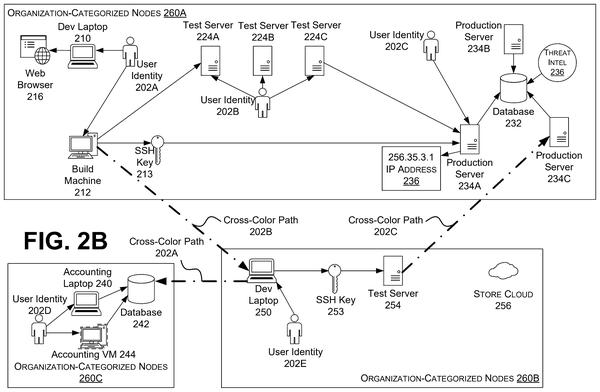
Microsoft
A New Microsoft Patent Flags Suspicious Computer Connections by Checking Who Normally Talks to Whom
Microsoft
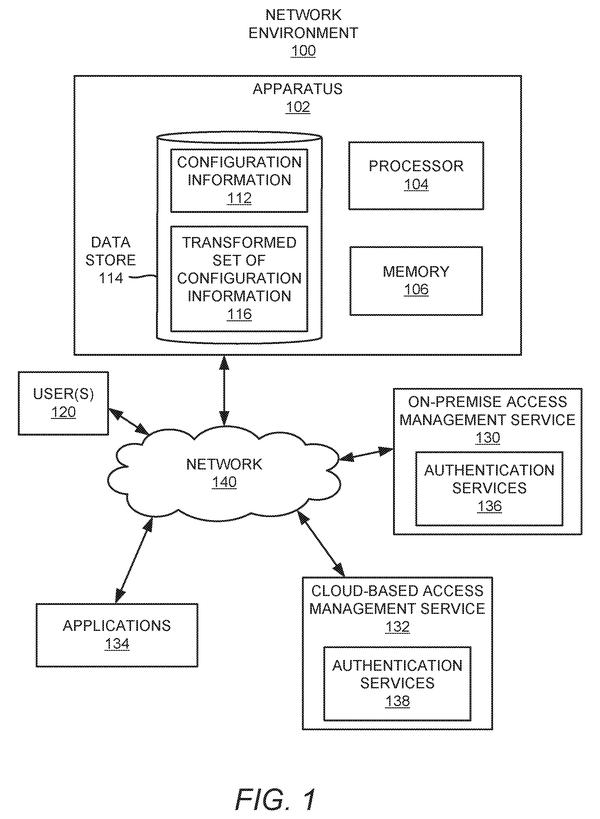
Microsoft Patents a Readiness Check for Moving Work Logins to the Cloud
IBM
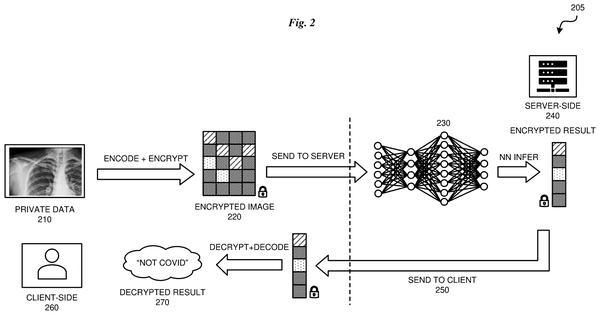
A New IBM Patent Lets Chips Skip Steps When Crunching Encrypted Data
Microsoft
No comments yet