
Adobe
Adobe · AI / ML · Filed May 7, 2025 · USPTO published Nov 12, 2026 · This week's release
Adobe Files Patent for AI That Rebuilds Your Marketing Automations in a Different App
Moving a marketing automation from one app to another usually means rebuilding it by hand. Adobe's patent application would have an AI read the old version, rewrite it in the new app's vocabulary, and hand back something the new app can run.
- Publication number
- US 2026/0359755 A1(US20260359755A1)
- Applicant
- Adobe Inc.
- Filed · Published
- May 7, 2025 · Nov 12, 2026
- Inventors
- Aayush KAPOOR, Shani Kumar VISHWAKARMA
- Status when we published
- Rejected again; the company can still amend or appeal
- Document
- 20 claims
- US classification
- 705/7.27
- Examiner
- LEE, PO HAN (Art Unit 3623)
What Adobe's workflow-moving assistant does
Marketing tools don't speak the same language. An automation you built in one app, say one that emails customers after a purchase, can't simply be copied into another app, because each stores its steps in its own format. Today that usually means rebuilding it by hand, and many people who run campaigns have a business background, not an engineering one.
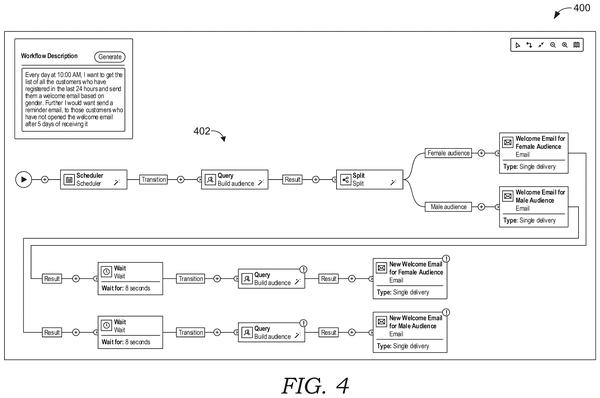
Adobe's filing describes an assistant that does the rebuilding for you. You pick the automation you already have and the app you want to move it to, then click a button. The assistant reads the steps, writes a plain-English description of what the automation does, swaps in the matching step names from the new app, and produces a version the new app can show and run.
Adobe's own examples are marketing and analytics tools such as Campaign Standard and Campaign Classic.
… normalizes workflows encoded in different domain-specific language (DSL) formats into a common internal representation and serializing the common internal representation of workflow activities and transitions of the source workflow into the workflow graph data structure …
Translation: It translates different app languages into a single standard format that the system can process.
How the AI matches steps between two apps
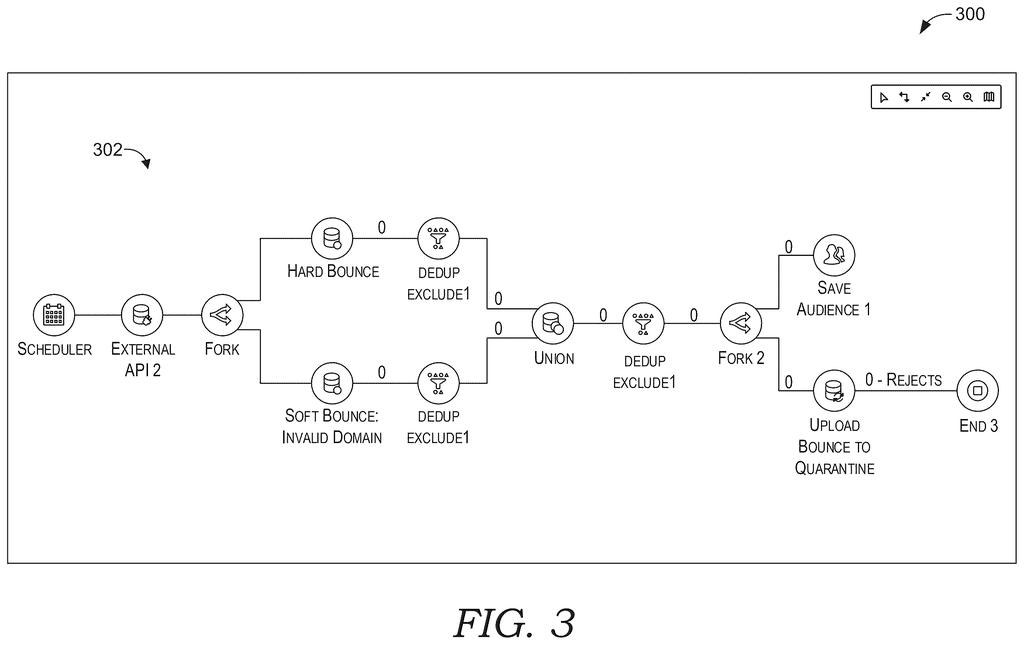
The system starts by reading the saved file behind a workflow. Each app stores that file in its own domain-specific language (a format like JSON, XML or YAML). A parser (a program that sorts a file into its pieces) converts all of them into one common internal shape, then writes it out as a workflow graph: every step is a dot, and every arrow is a handoff from one step to the next.
A language model (the same kind of AI behind chatbots) reads that graph and writes a plain-English summary of the workflow. Next, each step is matched to a step in the destination app, using three checks in order:
- Exact name match: a step called "query" pairs with "query."
- TF-IDF similarity (a score for how much the names' words overlap) when names differ.
- Semantic similarity (comparing the meaning of each step's description) when the names are too far apart.
In the filing's example, "Save Audience" became "saveGroup" and "External API" became "js." If nothing clears the cutoff, the closest candidate is still chosen.
The model then rewrites the summary using those matches and the new app's step descriptions. Finally it converts that summary into the new app's file format, using retrieval-augmented generation (the AI looks up the new app's documentation as it writes), so the app can display and run the result.
Why switching marketing software could get easier
If this ever reaches a product, changing marketing software would hurt less. Today the automations you have built (who gets which email, and when) are stuck in the app that holds them, and moving them takes technical know-how many campaign staff lack. Adobe's examples are its own Campaign products, but the filing frames the idea as moving between various marketing and analytics services.
Keep expectations modest. The patent examiner issued a final rejection of this application as of September 30, 2026, though Adobe can still amend the claims or appeal. A patent application describes an idea, not a product.
Adobe's eighth filing we've tracked on our AI agents that act for you watchlist since August follows patents like writing its own tools and finding the right PDF table.
Source: US 2026/0359755 A1 at the USPTO (PDF). Full patent text and figures are in the official publication.
Get our take in your Top Stories
Liked this breakdown? Add Patentlyze as a preferred source on Google, and our plain-English take shows up more often in your Top Stories the next time Adobe patent news breaks.
Add Patentlyze on Google
One click.
There are more where this came from
We read every patent application Big Tech publishes and send you the ones worth knowing. Plain English, free, every week.
The drawings · 7 sheets
7 drawing sheets from US 2026/0359755 A1 · click any drawing to enlarge


More from Adobe
All 264 Adobe patents →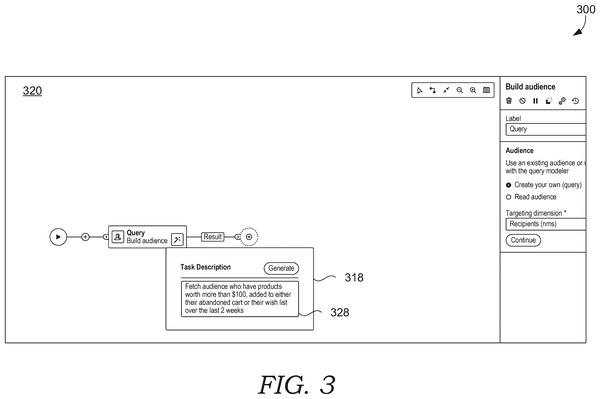

More in AI / ML
All 2,637 AI / ML patents →
Microsoft
Microsoft Patents an AI That Builds Apps From a Written Description
Samsung
Samsung Patents an AI That Arranges Your Split-Screen Apps Automatically
IBM
IBM Files Patent to Help AI Turn Vague Requests Into Working Regulatory Instructions
IBM
No comments yet