
Qualcomm
Qualcomm · Cell phone · Filed Apr 9, 2025 · USPTO published Nov 12, 2026 · This week's release
Qualcomm Files Patent for Sharper Phone Video When Your Subject Won't Hold Still
Fix a shaky, grainy frame by borrowing from the one before it, and you can end up with ghosts and smears instead. Qualcomm's filing tries to decide, pixel by pixel, how much borrowing is safe.
- Publication number
- US 2026/0359935 A1(US20260359935A1)
- Applicant
- QUALCOMM Incorporated
- Filed · Published
- Apr 9, 2025 · Nov 12, 2026
- Inventors
- Kai Liu, Chung-Yan Chih, Zhongshan Wang, Wen-Chun Feng
- Status when we published
- Waiting for an examiner
- Document
- 20 claims
- US classification
- 345/629
- Examiner
- CHEN, FRANK S (Art Unit 2611)
- Parent application
- National Stage Entry of PCT/CN2022/138625 (filed Dec 13, 2022)(PCTCN2022138625)
What Qualcomm's motion-blending camera fix does
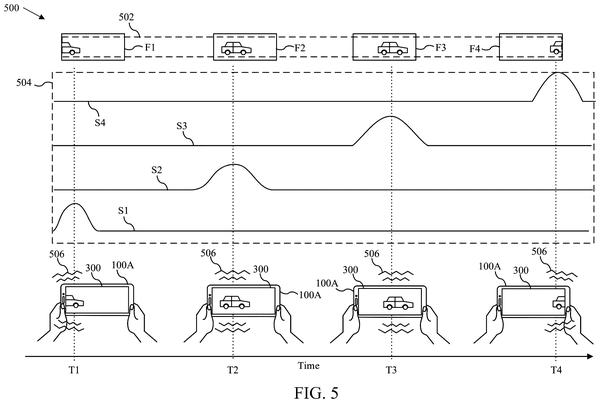
Ever tried to film a toddler running across the yard, or a dog chasing a ball, only to get a clip that looks smeary or grainy? Cameras fight that by combining each frame with the one before it. The trouble is that when something moves, mixing frames can blur it or leave strange trails.
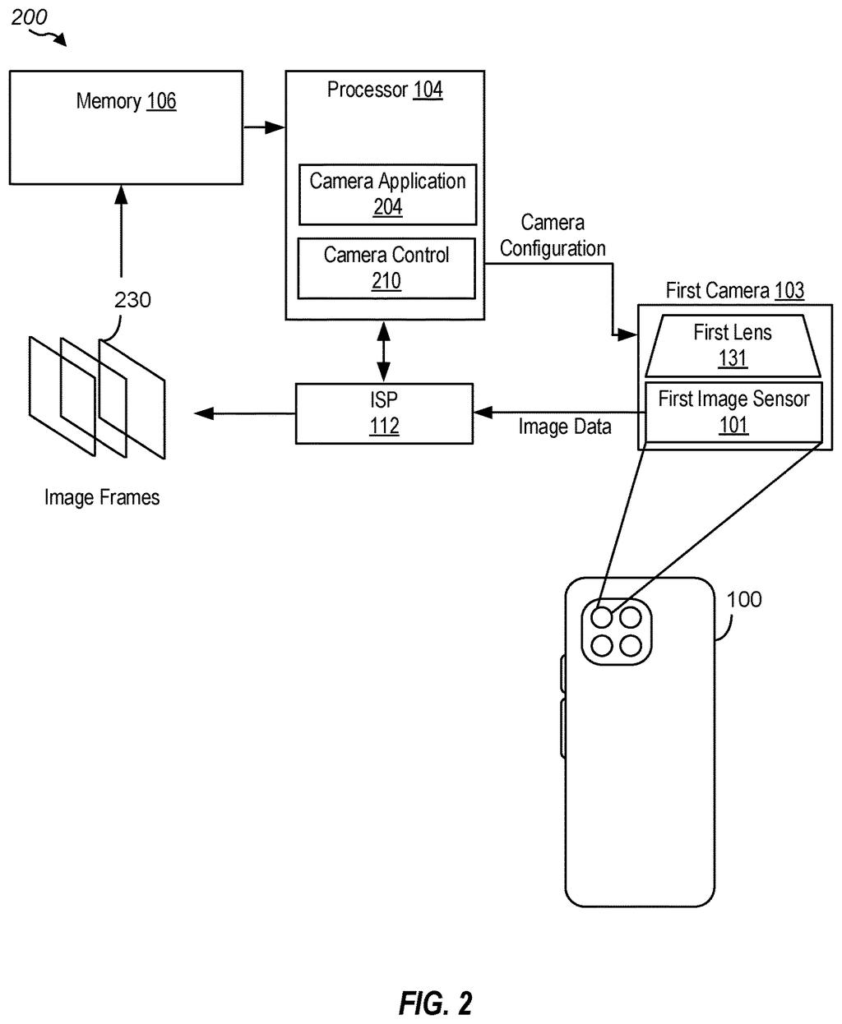
Qualcomm's patent application has the camera's image chip make two quick maps of each frame: one showing where things are moving, and one showing which areas were brightened (brightening also amplifies grain). Those maps set how strongly each part of the picture gets blended.
So a still wall gets heavy cleanup, a sprinting kid gets a lighter touch, and dim patches that picked up extra grain get more noise removal. The goal is a cleaner frame without the ghosting.
… determining at least one parameter for a temporal filtering process based on the at least one of the gain map and the motion map; and determining a corrected image frame by temporally filtering the first image frame based on the at least one parameter.
Translation: The phone figures out how to smooth the video using the maps it created of the lighting and movement.
How the camera blends three versions of a frame
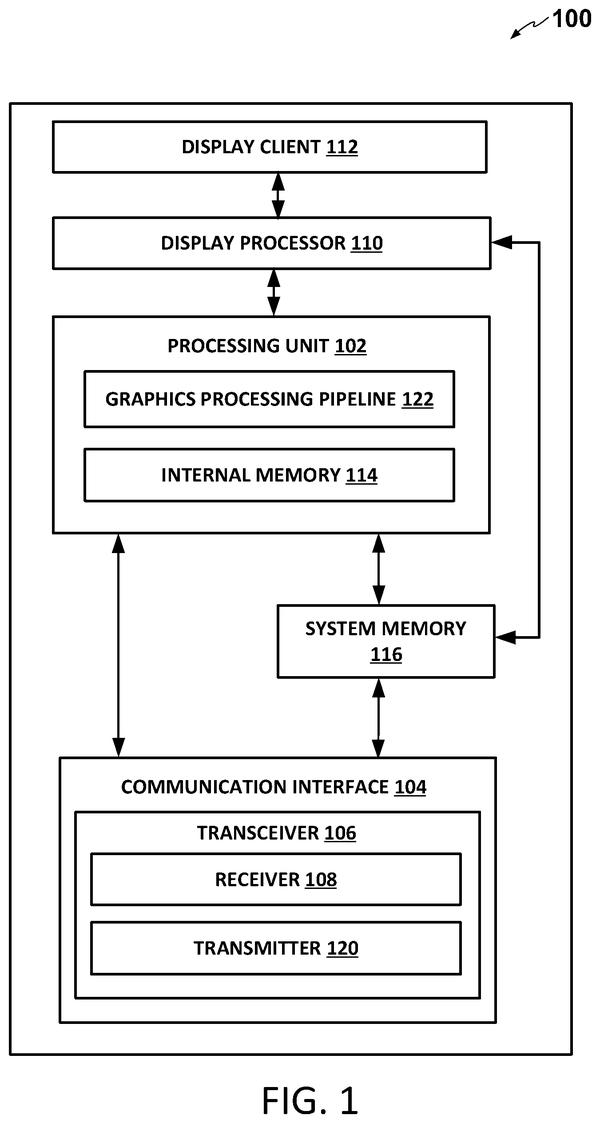
The filing describes a temporal filtering step (blending a frame with neighboring frames in time to reduce noise) that adjusts itself for each pixel. The chip, called an image signal processor, first builds a motion map and a gain map for the current frame.
The motion map comes from comparing the current frame to an earlier one. The description also says it can use gyroscope or accelerometer readings to separate the phone's own movement from things moving in the scene. The gain map is based on brightness: dark areas get boosted, and that boost also magnifies noise.
The chip then creates three versions of the frame:
- The original frame.
- A motion-aligned frame, shifted to line up with the previous frame.
- A denoised frame, with grain reduced within the single frame.
The motion map sets how much of the aligned version to use, and the gain map sets how much of the denoised version to use. In areas with heavy motion, the aligned version is blended in less to avoid artifacts. In high-gain areas, the denoised version is blended in more. The claims cover this core method and the parts that build on it: comparing two frames, the aligned frame, per-pixel blending strengths, and a brightness-based gain map.
… support improved temporal filtering of image frames to correct for motion distortion.
Translation: The technology helps clean up blurry smartphone video when your subject moves around.
What this means for your phone's photos and video
If you shoot video or photos on a phone, the places you would notice this are the usual trouble spots: kids at a birthday party, a pet in motion, a dim restaurant. Those are the scenes where cleanup tends to leave either grain or smears.
Qualcomm sells the chips behind many phone cameras, so a better blending recipe could end up in image processors that phone makers build around. The filing only describes the method, and nothing in it names a product or a result. It says its aim is to keep the added detail from aligned frames without the artifacts that alignment sometimes brings.
Qualcomm's 73rd filing we've tracked in our cell phone coverage since May adds to a run that includes a touch shortcut for smoother screens and shrinking the camera black bar.
Source: US 2026/0359935 A1 at the USPTO (PDF). Full patent text and figures are in the official publication.
Get our take in your Top Stories
Liked this breakdown? Add Patentlyze as a preferred source on Google, and our plain-English take shows up more often in your Top Stories the next time Qualcomm patent news breaks.
Add Patentlyze on Google
One click.
There are more where this came from
We read every patent application Big Tech publishes and send you the ones worth knowing. Plain English, free, every week.
The drawings · 5 sheets
5 drawing sheets from US 2026/0359935 A1 · click any drawing to enlarge


More from Qualcomm
All 624 Qualcomm patents →
More in Cell phone
All 485 Cell phone patents →
Samsung
Samsung Files Patent for a Screen That Corrects Its Colors as It Heats Up
Samsung
Samsung Patents Touchscreen Wiring That Crosses Over Itself Without Shorting Out
Google
Google Files Patent for a Toy Wand That Flashes a Color to Pair With Your Phone
Samsung
No comments yet