
Google
Google · AI / ML · Filed May 4, 2026 · USPTO published Nov 12, 2026 · This week's release
Google Patents a Tool That Reads Your Website to Suggest Ad Keywords
Google's ad system could read your website and hand you keywords borrowed from advertisers who sell similar things. The patent application describes a scoring step that ranks which borrowed keywords fit you best.
- Publication number
- US 2026/0359309 A1(US20260359309A1)
- Applicant
- Google LLC
- Filed · Published
- May 4, 2026 · Nov 12, 2026
- Inventors
- Abhinav Khandelwal, Aravindan Raghuveer, Snehal Sunilkumar Motarwar, Rishi Saket
- Status when we published
- Waiting for an examiner
- Document
- 1 claims
- US classification
- 707/723
- Parent application
- Continuation of 18/774,775 (filed Jul 16, 2024)(18774775)
What Google's keyword-suggestion patent does
Today, the keywords Google suggests to advertisers usually come from what people type into the search box. Advertisers pick keywords for a different reason: to make their ads pay off. What shoppers type does not always show which words do that.
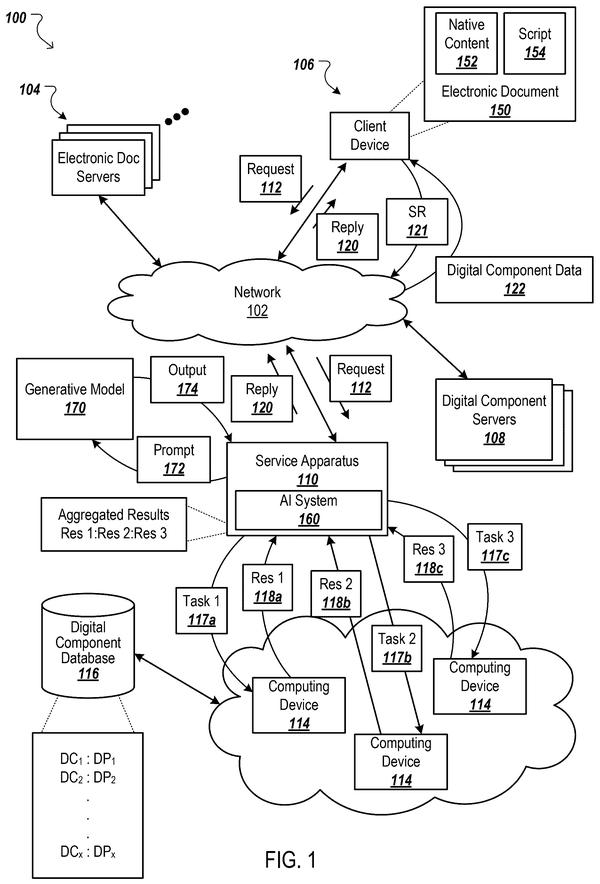
This patent application describes another source. You point the system at your landing page (the web page your ad sends people to), and an AI model reads it to come up with a starting keyword. The filing also describes starting from a keyword you type in yourself. The system then compares that keyword against a database of keywords other advertisers have used, scores how close each one is, and shows you the best match.
The filing also describes keeping only keywords that more than a set number of other advertisers have used (50 is the example), so suggestions come with some track record.
extracting content data from a landing page of a first content provider; processing, using a machine-learned model, the content data to generate an initial keyword associated with a content item of the first content provider; …
Translation: The system reads a website to automatically figure out what the business is about.
How Google scores keywords against your site
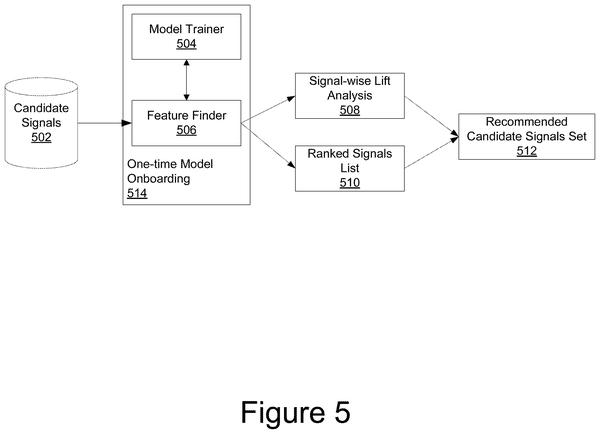
The first claim covers a computer system that runs a machine-learned model (software trained on examples instead of hand-written rules) through these steps:
- Read the landing page. It pulls content from the page an advertiser's ad links to.
- Make a starting keyword. The model turns that content into an initial keyword for the ad.
- Pull candidates. It fetches a set of candidate keywords from a database.
- Score the match. The model gives each candidate a similarity score against the starting keyword.
- Suggest. It picks a suggested keyword based on those scores and shows it.
The description fills in more. The candidate keywords come from other advertisers, and a keyword only gets into the database if more than a threshold number of them (50 in the example) have used it in campaigns. The score can come from standard methods such as cosine similarity or Jaccard similarity (two common ways of measuring how alike two things are), or from a count of keywords both advertisers use.
One example involves shoes. Three merchants have keyword groups of 20, 15 and 10 keywords, and the system finds that five overlap. Those shared keywords get stored as a set for the shoe category. The system can also weigh each keyword's return on investment (how much an ad dollar earns back) when choosing what to suggest.
… calculate a similarity score for each keyword in the subset of keywords and the first keyword. The system can determine a suggested keyword from the subset of keywords based on the similarity score …
Translation: It compares those ideas against a database of options to find the best possible ad terms.
What this means for small advertisers on Google
If you run ads for a small business, picking keywords is guesswork that costs real money. A tool that reads your page and suggests words other advertisers in your field already use could cut the trial and error. The filing also says it would cut the typing and the number of setup screens you have to click through, since you may only need to enter one keyword.
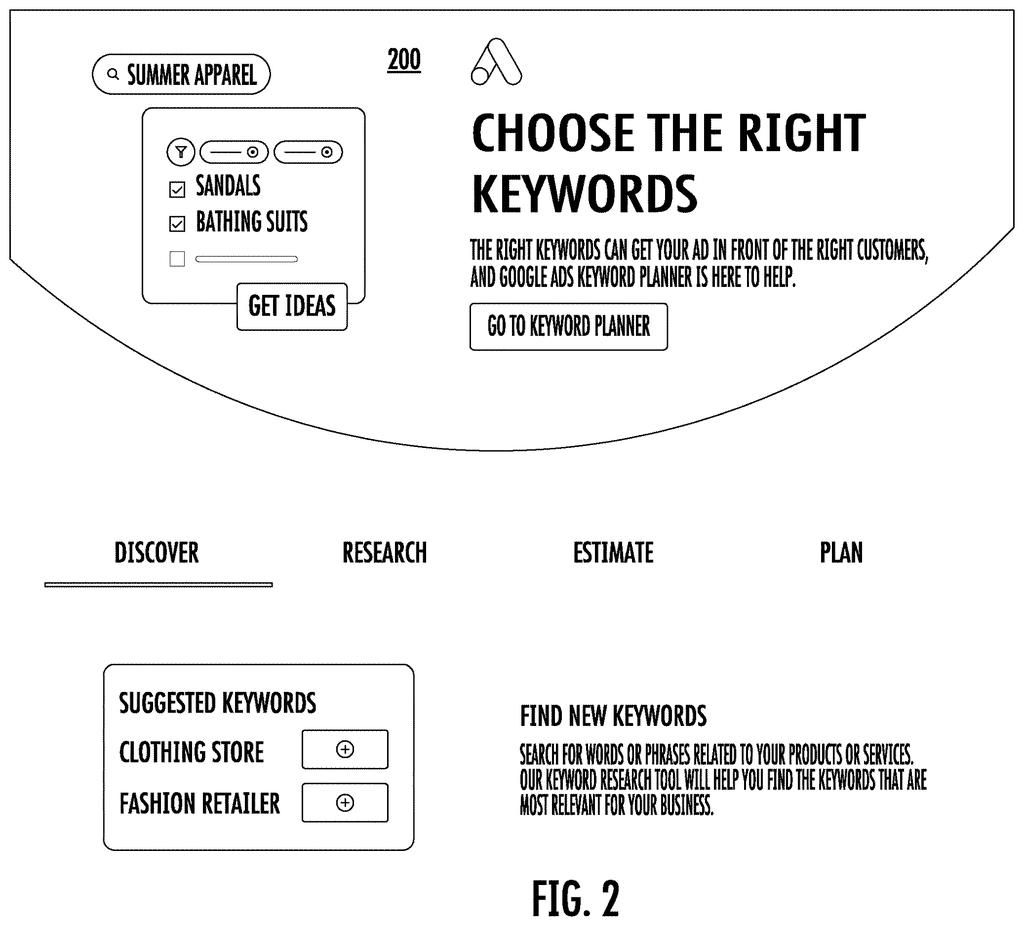
The description notes that small businesses often lack enough sales data to judge a keyword, so borrowing signals from other advertisers fills that gap. The figures show campaign setup and keyword planner screens, which suggests the ad-building process doing more of the work for you. It is a patent application, so nothing here says when or whether it will ship.
Google's 27th filing we've tracked in AI recommendation since May follows one on picking ad layouts fast and one on ranking training data quality.
Source: US 2026/0359309 A1 at the USPTO (PDF). Full patent text and figures are in the official publication.
Get our take in your Top Stories
Liked this breakdown? Add Patentlyze as a preferred source on Google, and our plain-English take shows up more often in your Top Stories the next time Google patent news breaks.
Add Patentlyze on Google
One click.
There are more where this came from
We read every patent application Big Tech publishes and send you the ones worth knowing. Plain English, free, every week.
The drawings · 14 sheets
14 drawing sheets from US 2026/0359309 A1 · click any drawing to enlarge


Show the other 6 sheets


More from Google
All 1,079 Google patents →

More in AI recommendation
All 86 AI recommendation patents →
Sony
Sony Patents a System That Sorts You Into Fan, Superfan or Hater
Sony
Sony Patents a System That Reads Your Mood Mid-Game to Keep You Playing

Samsung
Samsung Patents a Self-Updating Database That Reads Between the Lines of Your Inputs
Apple
No comments yet