
Google
Google · AR / VR · Filed Apr 30, 2025 · USPTO published Nov 12, 2026 · This week's release
Google Files Patent for Glasses Lens That Keeps Images in View for More Wearers
Smart glasses only show you the picture if your eye lands in a small sweet spot. A new Google patent application tries to widen that spot in both directions using a single patch of tiny mirrors built into the lens.
- Publication number
- US 2026/0358632 A1(US20260358632A1)
- Applicant
- GOOGLE LLC
- Filed · Published
- Apr 30, 2025 · Nov 12, 2026
- Inventors
- Ozan Cakmakci, Eliezer Glik, Oscar Alberto Martinez
- Status when we published
- Waiting for an examiner
- Document
- 21 claims
- US classification
- 385/36
- Parent application
- National Stage Entry of PCT/US2023/012371 (filed Feb 6, 2023)(PCTUS2023012371)
What Google's one-layer glasses lens actually does
Ever put on a pair of binoculars and watched the picture black out because your eyes were a hair off? Glasses that project a display into your view have the same problem. The image only shows up when your pupil sits inside a small zone, and everyone's face is a little different.
Google's patent application describes a lens that carries light from a tiny projector along the inside of the glass. The light then hits one patch of microscopic mirror surfaces that spreads it out both sideways and up and down, so the image stays visible across a bigger area.
Earlier designs needed two separate mirror sections, one for each direction. Google folds both jobs into one spot, which could help glasses look like regular curved eyewear instead of gadgets.
… a spatially integrated reflective structure to expand an eyebox provided by the light guide in two dimensions.
Translation: A built-in mirror system enlarges the viewing area so your eyes can move around more freely.
How the pyramid-shaped mirrors spread the light
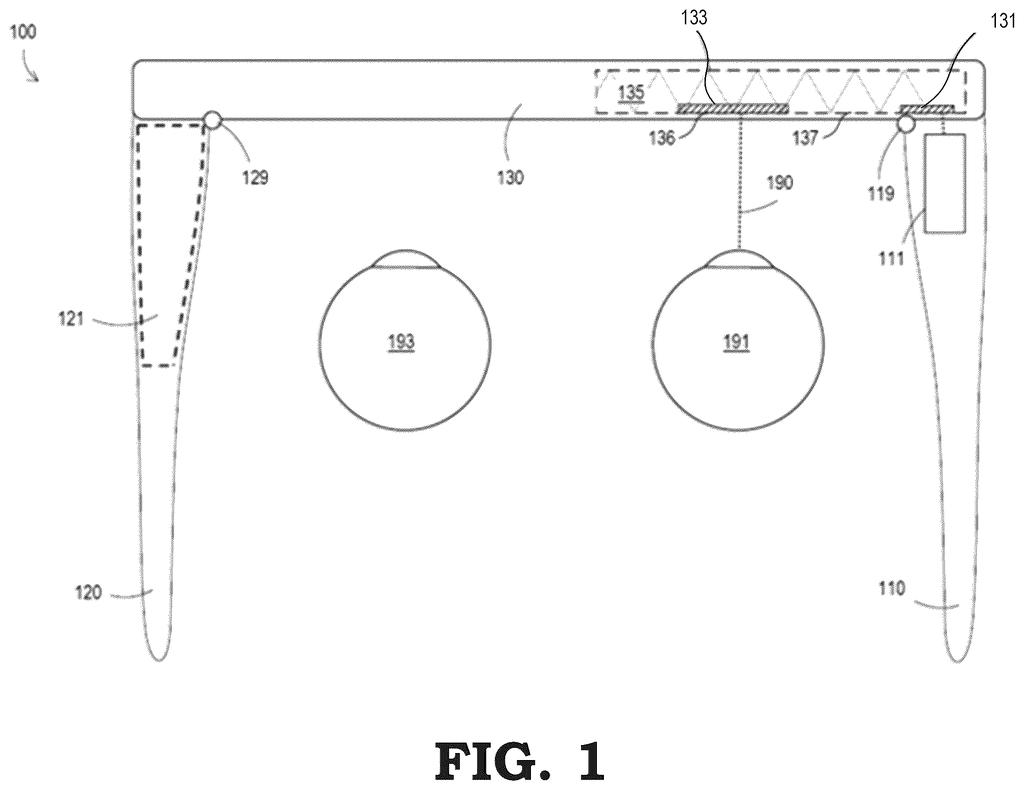
The filing covers a light guide, a transparent lens layer that moves light from a small projector to your eye. Light enters through an incoupler (the entry point), bounces along the glass by total internal reflection (light staying trapped inside because it hits the surface at a shallow angle), and eventually exits toward your eye.
The key piece is a spatially integrated reflective structure. In plain terms, the surfaces that widen the image sideways and the surfaces that widen it up and down occupy the same patch of lens. This widens the eyebox, the 3D zone where your pupil must sit to see the whole image.
In one example, the patch is made of tiny pyramids. Each has four triangular faces: two spread light along one axis and two along the perpendicular axis. The filing also describes prism versions that spread light in two directions that are not at right angles.
- The pattern repeats roughly every 1 mm, which the filing says keeps unwanted light-bending effects minimal.
- The mirrors can be coatings between two glued halves of lens material, with reflectivity of about 20% or less so they stay invisible.
- The same structure can also push the light out toward your eye, or a separate exit structure can do that.
An incoupling structure receives display light and directs the display light into a light guide and towards an integrated reflective structure.
Translation: An internal mechanism catches the projector beam and steers it directly into the special lens.
Why this matters for everyday-looking smart glasses
For you, this is about fit and looks. If a display works only when glasses sit perfectly, a lot of people will get a dim or missing image. A bigger viewing zone means one frame style could work for more faces, with fewer fussy adjustments.
It also targets how the glasses look. The filing says all-day eyewear needs thin, curved lenses like ordinary glasses, and that current designs struggle with thickness, appearance and prescription lenses. Combining two mirror jobs into one patch frees up space and gives frame designers more room. A patent application is not a product, but it shows where Google is putting its engineering effort for wearable displays.
Google's 58th filing we've tracked since May on our smart glasses display watchlist follows ideas like eye-controlled menus and a wrist buzz for mid-air writing.
Source: US 2026/0358632 A1 at the USPTO (PDF). Full patent text and figures are in the official publication.
Get our take in your Top Stories
Liked this breakdown? Add Patentlyze as a preferred source on Google, and our plain-English take shows up more often in your Top Stories the next time Google patent news breaks.
Add Patentlyze on Google
One click.
There are more where this came from
We read every patent application Big Tech publishes and send you the ones worth knowing. Plain English, free, every week.
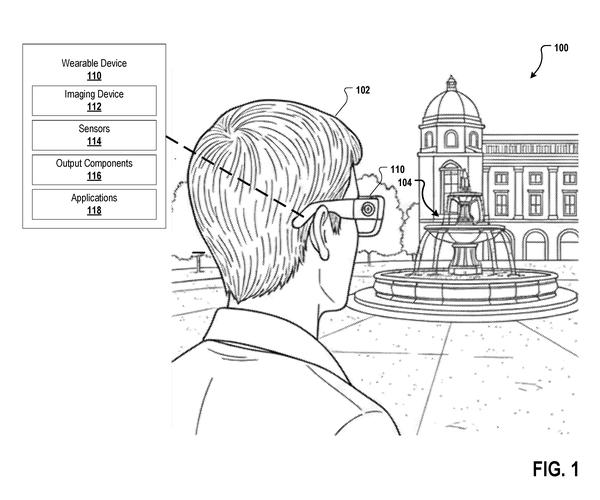
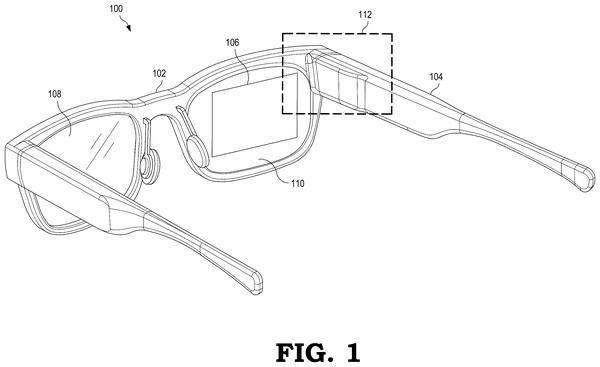
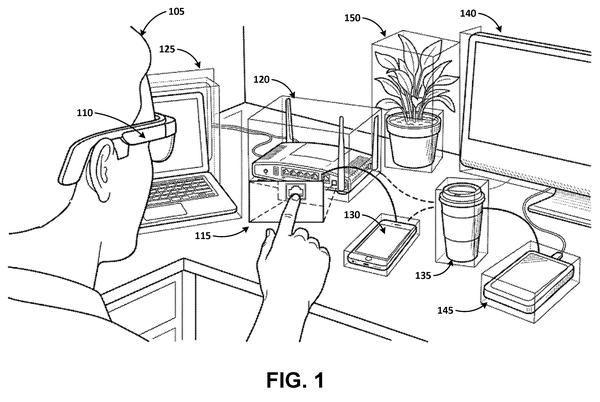
The drawings · 6 sheets
6 drawing sheets from US 2026/0358632 A1 · click any drawing to enlarge



No comments yet