Latest AI patents, Page 218
How the biggest tech companies are building AI: language models, assistants and agents, vision, voice, and the systems that train them. The artificial intelligence and machine learning patent applications we have broken down from the companies we track, newest first.
- in the Nov 12 release
- 96
- in November so far
- 188
- filings tracked
- 2,637
- sub-topics
- 10
Recent filings
Newest first · 2,637 total-
Google · Published Apr 30
Google Patents a Method for Recycling Generative AI Models as Search Encoders
Training a powerful AI model from scratch costs millions. Google's new patent describes a shortcut: take a generative model you already have, rewire its attention mechanism, and turn it into a search engine's retrieval brain.
-
Google · Published Apr 30
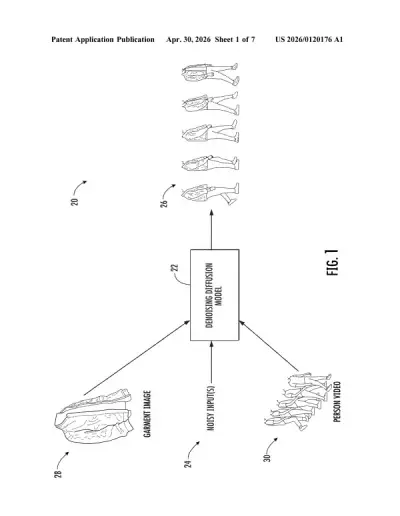
Google Patents an AI System That Shows You Wearing Clothes Without a Fitting Room
Imagine being able to see exactly how a jacket looks on your body before buying it online — no guesswork, no returns. Google is patenting an AI image-generation system designed to do exactly that, and the technical approach is more sophisticated than the simple "paste a shirt onto a photo" tricks you've seen before.
-
Google · Published Apr 30
ML System Dynamically Optimizes Payment Authorization Requests
Every declined payment is a lost sale — and Google thinks machine learning can fix that by dynamically tuning the payment request before it ever gets rejected.
-
Nvidia · Published Apr 30
Nvidia Patents a Neural Network System That Auto-Corrects Database Queries
What if your database search could learn from its own bad results and try again — automatically? That's the core idea behind Nvidia's latest patent on neural-network-guided query refinement.
-
Nvidia · Published Apr 30
Nvidia Patents a Smarter Batching Method for Graph Neural Network Training
Training graph neural networks is notoriously wasteful — most batching methods ignore the graph's own structure, so each training step spends half its time chasing connections that aren't even in the batch. Nvidia's new patent tries to fix that from the ground up.
-
Nvidia · Published Apr 30
Nvidia Patents a System That Amplifies Robot Training Data 100x Automatically
Teaching a robot to do something useful requires enormous amounts of demonstration data — and collecting that data by hand is slow, expensive, and exhausting. Nvidia's new patent describes a system called SkilGen that could turn a single human demonstration into a hundred usable training examples, automatically.
-
Google · Published Apr 30
Google Patents a Two-Factor Source-Picking System for AI-Generated Answers
When Google's AI gives you an answer, how does it decide which sources to pull from? A new patent reveals that relevance alone isn't the whole story — there's a second score in play.
-
Nvidia · Published Apr 30
Nvidia Patents an AI System That Learns Where Objects Belong Before Placing Them
Dropping a new object into a photo sounds simple — until the AI places a car on the ceiling. Nvidia's new patent describes a smarter approach: teaching the system to understand spatial context before it ever draws a single pixel.
-
Google · Published Apr 30
Google Patents Its Wide & Deep AI Architecture Nearly a Decade After Publishing It
Google published its Wide & Deep learning architecture in a 2016 research paper — and is now, apparently, patenting it. That gap between 'we told the world' and 'we own it legally' is worth understanding.
-
Microsoft · Published Apr 30
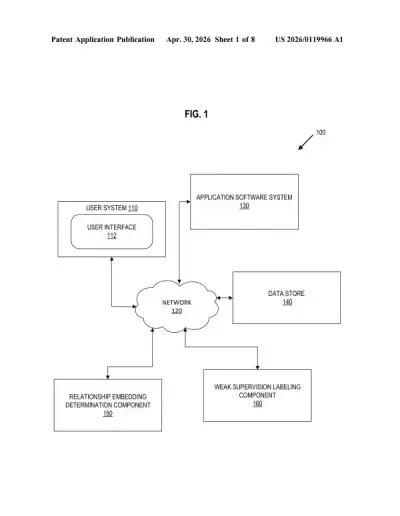
Microsoft Patents an AI System That Scores the Strength of Your Professional Relationships
Not all LinkedIn connections are equal — some are close colleagues, others are people you met once at a conference. Microsoft is patenting an AI system designed to figure out which is which, and use that signal to power smarter recommendations.
-
Microsoft · Published Apr 30
Microsoft Patents a 2D Parallel Method for Cheaper Transformer Self-Attention
Training large language models on very long documents is expensive — partly because the math that lets tokens 'attend' to each other gets brutally slow at scale. Microsoft's new patent describes a smarter way to split that math across a grid of processors so the work gets done in parallel without the usual bottlenecks.
-
Microsoft · Published Apr 30
Microsoft Patents a Weight-Rotating Trick to Keep GPUs Busy During AI Training
Training large AI models on very long sequences of text is brutally expensive — partly because GPUs end up waiting around with nothing to do. Microsoft's new patent tries to fix that by pipelining the heavy math with the data transfers so the two happen at the same time.