Latest AI training & infrastructure patents, Page 23
The unglamorous machinery underneath: training methods, inference speedups, model compression, and the scheduling tricks that make AI affordable to run.
- in the Nov 19 release
- 8
- in November so far
- 22
- filings tracked
- 324
- last 90 days
- 123
Recent filings
Newest first · 324 total-
Samsung · Published Jun 11
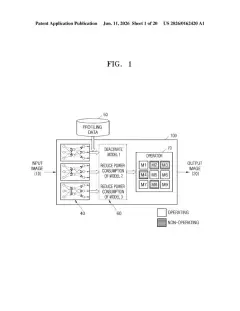
Samsung Patents an AI Image Processor That Dials Down Power on Demand
Samsung is patenting a way for an AI image processor to instantly shed power consumption by switching to a leaner version of itself — without re-training anything from scratch.
-
IBM · Published Jun 11
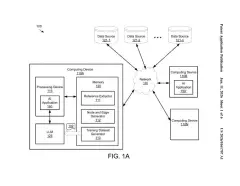
Red Hat Patents a Method to Score and Filter AI Training Sources
An AI model is only as good as the data it learns from — and Red Hat just filed a patent for a system that automatically figures out which sources are worth trusting before training even begins.
-
IBM · Published Jun 11
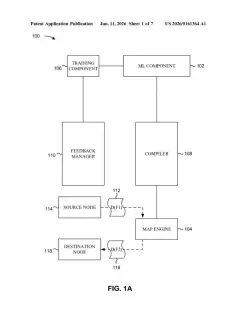
IBM Patents an AI Code Writer That Learns From Its Own Broken Builds
Most AI coding tools ignore compiler errors and leave fixing them to the developer. IBM's new patent describes a system that treats every error as a lesson, looping back to train itself until the code compiles clean.
-
Qualcomm · Published Jun 11
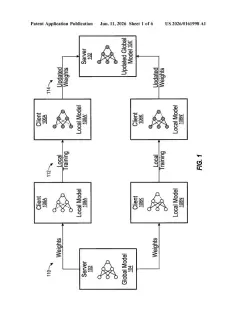
Qualcomm Patents a Fix That Keeps AI Sharp After Shrinking It for Low-Power Chips
When AI models get squeezed down to fit on a phone chip, they often get a little dumber. Qualcomm's new patent tackles that problem at the training stage itself — before the model ever ships.
-
Qualcomm · Published Jun 11
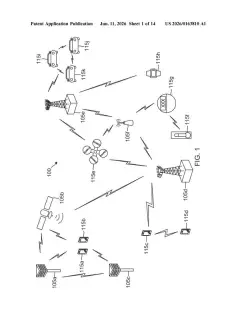
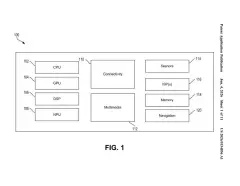
Qualcomm Patents Technology That Teaches Phones to Predict Their Own Signal Needs
The same technology that powers ChatGPT could soon be making split-second decisions about how your phone connects to a cell tower. Qualcomm's new patent puts a generative AI model directly inside your device's wireless chip — not in the cloud, not on a server, but on the phone itself.
-
Google · Published Jun 4
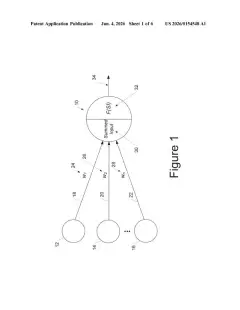
Google Patents an AI Building Block That Fades Instead of Snapping
Every neural network needs activation functions to decide which signals get passed forward — and the most popular one, ReLU, has a well-known rough edge that can cause training headaches. Google's new patent describes a family of smoother replacements that behave like ReLU without that rough edge.
-
Google · Published Jun 4
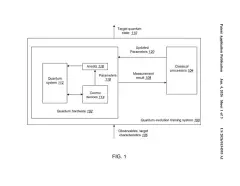
Google's New Patent Bets Quantum Computers Can Train Themselves by Tuning Their Own Hardware
Google is filing patents that treat quantum hardware itself — the physical knobs that tune electromagnetic fields and laser pulses — as the training parameters for a machine learning model. It's a bet that useful quantum ML doesn't require perfect logical qubits, just well-tuned analog hardware.
-
Samsung · Published Jun 4
Samsung Patents an AI Image Compression Method That Fights Quantization Errors
Every time an image is compressed, tiny rounding errors chip away at quality — and most codecs just ignore them. Samsung's new patent describes a learned compression system that bakes awareness of those errors directly into the encoding process.
-
Samsung · Published Jun 4
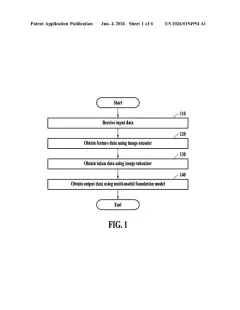
Samsung Patents a Dual-Track Image Input System for On-Device AI Models
Most AI vision systems make a choice: send raw image detail or compressed tokens to the model. Samsung's new patent says you don't have to pick — send both at once.
-
IBM · Published Jun 4
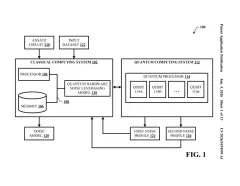
IBM Patents a System That Turns Quantum Hardware Noise Into a Feature
Every quantum computer is noisy — qubits misfire, decohere, and produce errors constantly. IBM's new patent flips that problem on its head by treating the noise itself as useful data for machine learning.
-
IBM · Published Jun 4
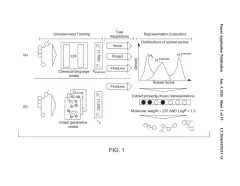
IBM Patents a System for Auditing How Well Pre-Trained AI Models Adapt to New Tasks
Pre-trained AI models are everywhere, but knowing whether one has actually learned the right things for your specific task is surprisingly hard. IBM's new patent describes a way to measure that — by scanning the model's internal representations for meaningful structure.
-
Qualcomm · Published Jun 4
Qualcomm Patents an AI That Blends Any Image's Style With Any Other's Content
Qualcomm has filed a patent for a system that can take the visual style of one image and apply it to the content of another — without retraining the underlying AI model for each new combination.