Latest AI training & infrastructure patents, Page 24
The unglamorous machinery underneath: training methods, inference speedups, model compression, and the scheduling tricks that make AI affordable to run.
- in the Nov 19 release
- 8
- in November so far
- 22
- filings tracked
- 324
- last 90 days
- 123
Recent filings
Newest first · 324 total-
Qualcomm · Published Jun 4
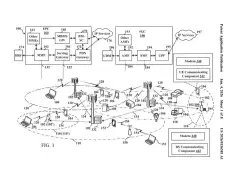
Qualcomm Patents a Way to Train AI Models Faster Over Noisy Wireless Networks
Training an AI model across thousands of phones simultaneously sounds chaotic — especially when half of them have weak signal. Qualcomm's new patent describes a system that groups devices by their connection quality and uses that structure to keep model updates accurate even when the wireless channel is a mess.
-
Nvidia · Published Jun 4
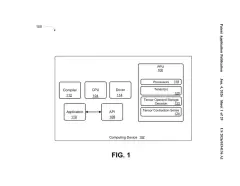
Nvidia Patents an API That Batches Tensor Math Into a Single GPU Call
Every time a GPU switches between separate math operations, there's overhead. Nvidia's new patent describes an API designed to collapse a chain of tensor operations into one coordinated call — potentially shaving time off the kind of workloads that run millions of times per second in AI training.
-
Google · Published May 28
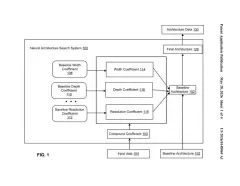
Google Patents a Compound Scaling Method for Neural Network Architecture
Building a bigger neural network isn't just about making it deeper — Google's patent describes a principled way to scale three separate dimensions of a network at once, using a single tunable coefficient to divide up extra compute budget.
-
Microsoft · Published May 28
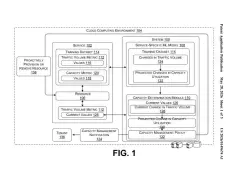
Microsoft Patents a Traffic-Aware ML System for Predicting Cloud Capacity Shortfalls
Instead of waiting for a server to buckle under load, Microsoft's new patent trains a per-service ML model to spot rising traffic early and pre-emptively add — or trim — cloud resources before an outage can happen.
-
Microsoft · Published May 28
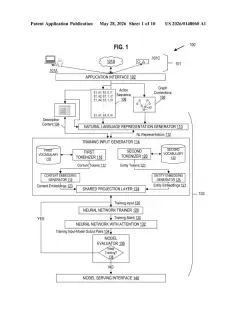
Microsoft Patents a Neural Network That Predicts Action Sequences from Entity Relationships
Microsoft has patented a way to train attention-based neural networks that treat 'who you interact with' and 'what those interactions say about you' as two separate — but jointly learned — inputs. The goal: predict what a user or entity will do next.
-
Nvidia · Published May 28
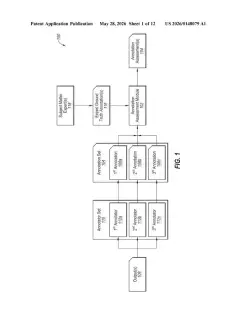
Nvidia Patents a System for Grading Its Own AI Output Annotators
If you're training an AI model, the quality of its training data is only as good as the people — or AI tools — labeling it. Nvidia is patenting a system that watches the watchers, automatically grading the annotators who grade AI outputs.
-
Nvidia · Published May 28
Nvidia Patents a Scaling System to Fix Float16 Overflow in Neural Network Training
Training a neural network in reduced precision is a constant balancing act — go too low and your numbers either explode or vanish. Nvidia's new patent describes a systematic way to catch and correct that before it happens.
-
Nvidia · Published May 28
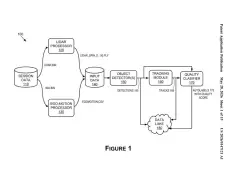
Nvidia Patents an AI Pipeline That Labels Its Own Self-Driving Training Data
Training a self-driving AI requires millions of labeled sensor frames — and labeling them by hand is slow and expensive. Nvidia's new patent describes a system where the AI essentially grades its own homework, flagging only the tricky cases for human reviewers.
-
Nvidia · Published May 28
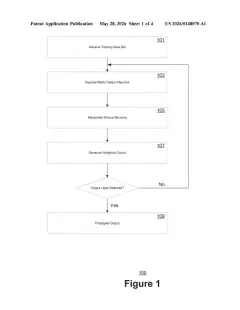
Nvidia Patents a Unified Training Framework That Merges Two Types of AI Learning
Most AI models are trained to either generate content or classify it — rarely both at once. Nvidia's new patent describes a training framework that unifies those two goals into a single learning loop.
-
Nvidia · Published May 28
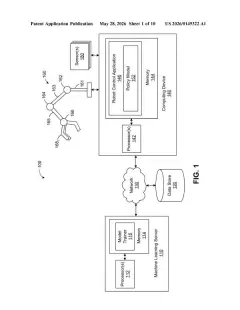
Nvidia Patents a Progressive Difficulty Training Loop for Robot Control AI
Training a robot AI on tasks that are too hard from the start is a recipe for failure — so Nvidia's latest patent borrows a trick from human education: start easy, raise the bar only when the student is ready.
-
Nvidia · Published May 28
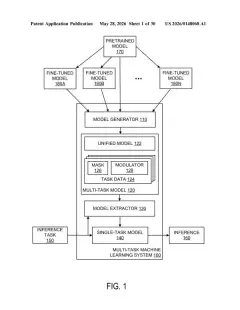
Nvidia Patents a System That Builds Task-Specific AI Models from One Unified Network
What if you could train dozens of specialized AI models and then collapse them all into a single network — pulling out whichever one you need at inference time? That's exactly what this Nvidia patent describes.
-
Nvidia · Published May 28
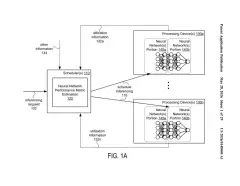
Nvidia Patents a Dynamic Neural Network Workload Scheduler Across Multiple Processors
Running a giant neural network on a single chip is increasingly a bottleneck — Nvidia's new patent describes a system that watches performance metrics in real time and dynamically slices the network across two or more processors to keep things moving.