Latest display patents, Page 52
Screens are one of tech's fiercest battlegrounds: folding panels, pixel circuits, brightness tricks, and the seams where two displays meet. We read every display filing and translate it into plain English.
- in the Nov 19 release
- 10
- in November so far
- 44
- filings tracked
- 746
- last 90 days
- 228
Recent filings
Newest first · 746 total-
Samsung · Published Jun 4
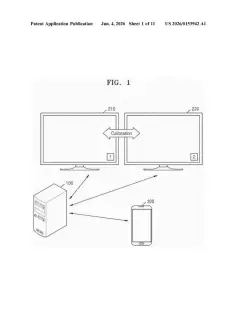
Samsung Patents a System That Auto-Matches Colors Across Multiple Monitors
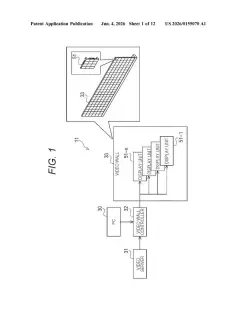
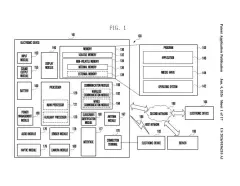
If you've ever plugged a second monitor into your PC and spent twenty minutes tweaking brightness and color temperature to make it look remotely like the first, Samsung's new patent is aimed squarely at that frustration — and it automates the whole process.
-
Samsung · Published Jun 4
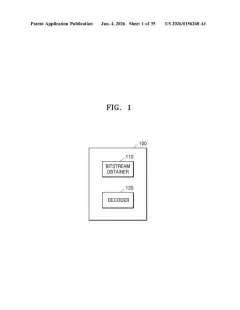
Samsung Patents a Fix for Probability Drift at Video Tile Boundaries
When a video decoder chops a frame into processing tiles, the math it uses to decode the edges of each tile can drift out of sync — and Samsung thinks it has a fix worth patenting.
-
Samsung · Published Jun 4
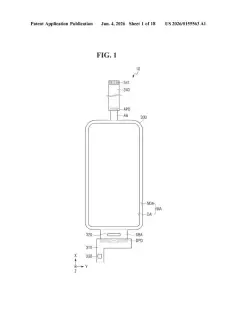
Samsung Patents a Display Panel With a 5G Antenna Array Built Into Its Edge
Samsung Display is trying to solve one of mmWave 5G's messiest hardware problems — where to put the antennas — by building them directly into the display panel itself.
-
Samsung · Published Jun 4
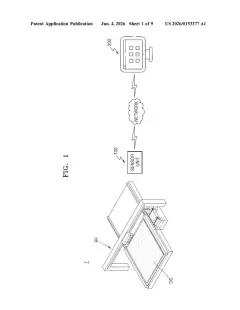
Samsung Display Patents a Vibration-Pattern System for Catching Factory Equipment Failures Early
Samsung Display is patenting a system that listens to the vibrations of factory machines and matches those patterns against a library of known failure signatures — essentially giving manufacturing equipment a way to self-report what's going wrong before it causes a defect.
-
Qualcomm · Published Jun 4
Qualcomm Patents a Color-Aware Frame-Dropping System for Smoother Video Playback
When a game runs at 90fps but your screen refreshes at 120Hz, something has to give — and Qualcomm thinks analyzing color data is the smartest way to decide which frames to sacrifice.
-
Qualcomm · Published Jun 4
Qualcomm Patents Presence Detection That Adapts to Foldable Phone Angles
Your foldable phone held flat on a desk behaves very differently than one propped up at a 120-degree angle — and Qualcomm thinks its presence-detection system should know the difference.
-
Sony · Published Jun 4
Sony Patents a Display That Lowers Its Own Scan Rate Zone by Zone to Save Power
Your display wastes energy refreshing pixels that haven't changed — Sony's new patent wants to fix that by treating each part of the screen as its own independent refresh zone.
-
Nvidia · Published Jun 4
Nvidia Patents a Faster Multistage Motion Search for Video Encoding
Video encoders spend a surprising amount of time just figuring out how pixels moved between frames — and Nvidia thinks it has a leaner way to do that job without the usual computational baggage.
-
Samsung · Published Jun 4
Samsung Patents a Flexible Circuit Board Built for Foldable Phone Hinges
Every foldable phone has a dirty secret: the hinge is a nightmare for circuit designers. Samsung's latest patent takes a careful structural approach to keeping RF signals intact through the bend zone.
-
Samsung · Published Jun 4
Samsung Patents Adaptive Touch Scanning That Ignores Screen Regions Your Palm Is Resting On
When you rest your palm on a tablet while writing with a stylus, the touch sensor is doing a lot of unnecessary work scanning regions of the screen it already knows are blocked. Samsung's new patent cuts that wasted effort out entirely.
-
Samsung · Published Jun 4
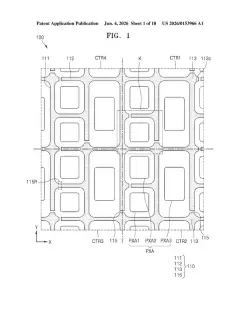
Samsung Patents a Touch Electrode Layout That Places Gaps Near Connection Points
Samsung Display is rethinking where to put the empty spaces inside touchscreen electrodes — and the exact placement turns out to matter more than you'd expect.
-
Samsung · Published Jun 4
Samsung Display Patents a Touch Panel That Shares Its Middle Zone Between Two Drivers
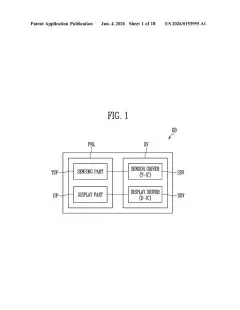
Samsung Display is patenting a touchscreen architecture that lets two separate sensor drivers co-manage a shared middle region of the panel — a design that could reduce latency and dead zones on large or foldable displays.