
OpenAI went from one patent filing last week to twelve. Read together, they sketch where the company is headed.
The U.S. patent office published 12 OpenAI filings on October 8, up from one the week before. One is already a granted patent, and another has been approved and is waiting to be issued. The rest are applications, which show what OpenAI is working on, not what it will ship.
Most trace back to a single week. Eleven of the twelve were filed, or claim a first filing, between April 2 and April 7, 2025. They fall into four groups: a device, a voice mode, a memory, and tools for the companies that build on OpenAI’s models.
A device that moves until you look at it
The only hardware in the batch is a tabletop assistant that waves, nods or rolls toward you until its camera sees you look. When a reminder, message or doorbell alert arrives, it picks the least disruptive motion that might work, checks a photo of you, and stops once you are paying attention.
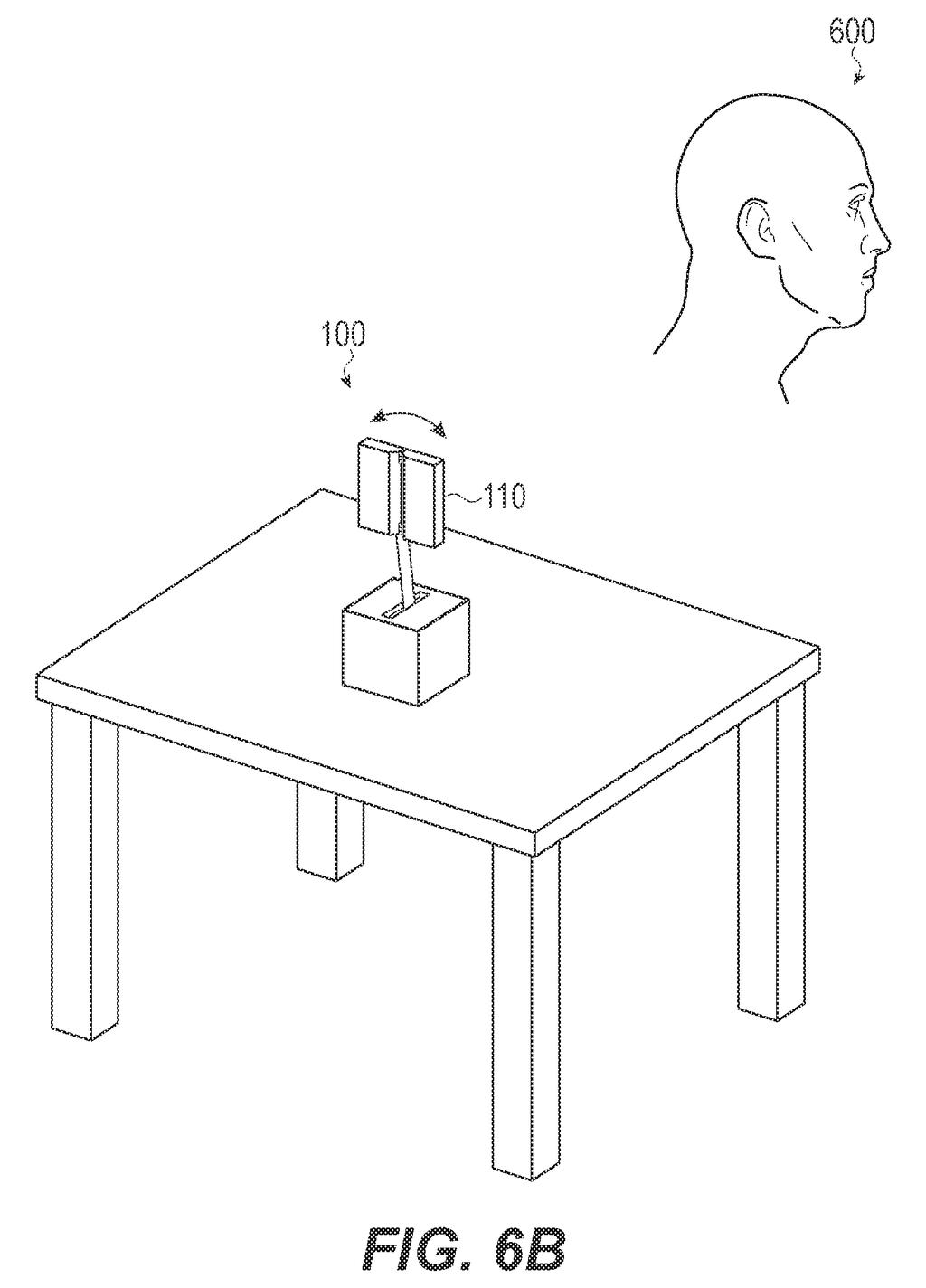
The drawings show a head on an arm, a wheeled body with eyebrow-like parts, and a screen with animated eyes. Reports this summer described OpenAI’s first device as a smart speaker with moving parts. The filing names no product, but it is the clearest look yet at how such a device might behave.
One inventor, Eric Gonzalez. Filed in April 2026 from an April 2025 provisional, and not yet examined.
Five filings about talking to an AI out loud
Five filings deal with the hardest part of talking to an AI out loud: knowing when to speak and when to stop. Three of them share most of a 13-person team, and they read like chapters of one design.
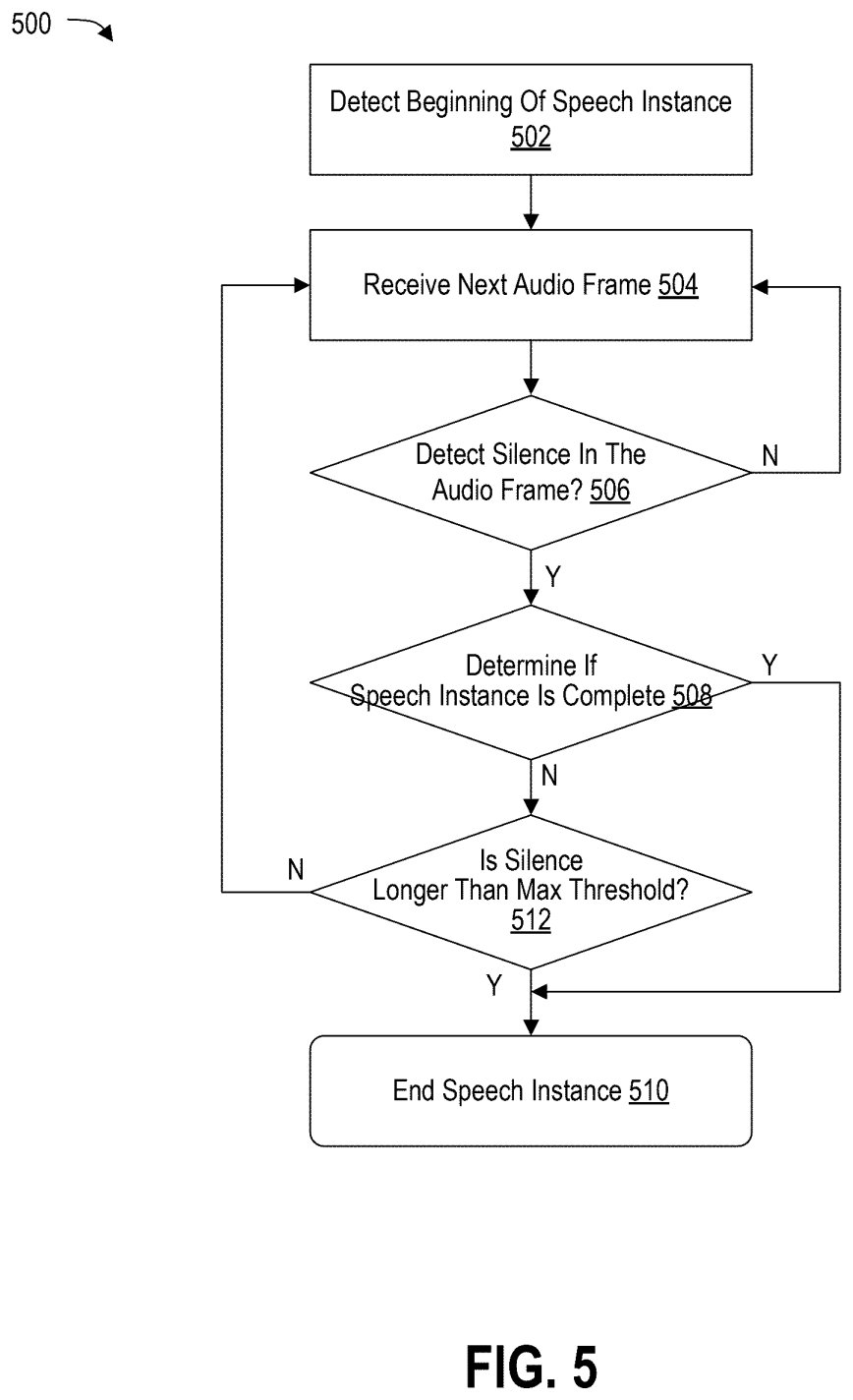
OpenAI already holds a granted patent on deciding when you have finished talking. Instead of waiting out a fixed silence, it checks whether your words form a complete thought. In the filing’s example, a pause after “too expensive” ends your turn, while a pause after “because” does not.
Your words also stream to the model as you talk, so it can start an answer and discard it if you keep going. The filing aims to reply about 300 milliseconds after you stop, roughly the gap in human conversation. It calls a 2-second maximum wait too short and 15 seconds too long.
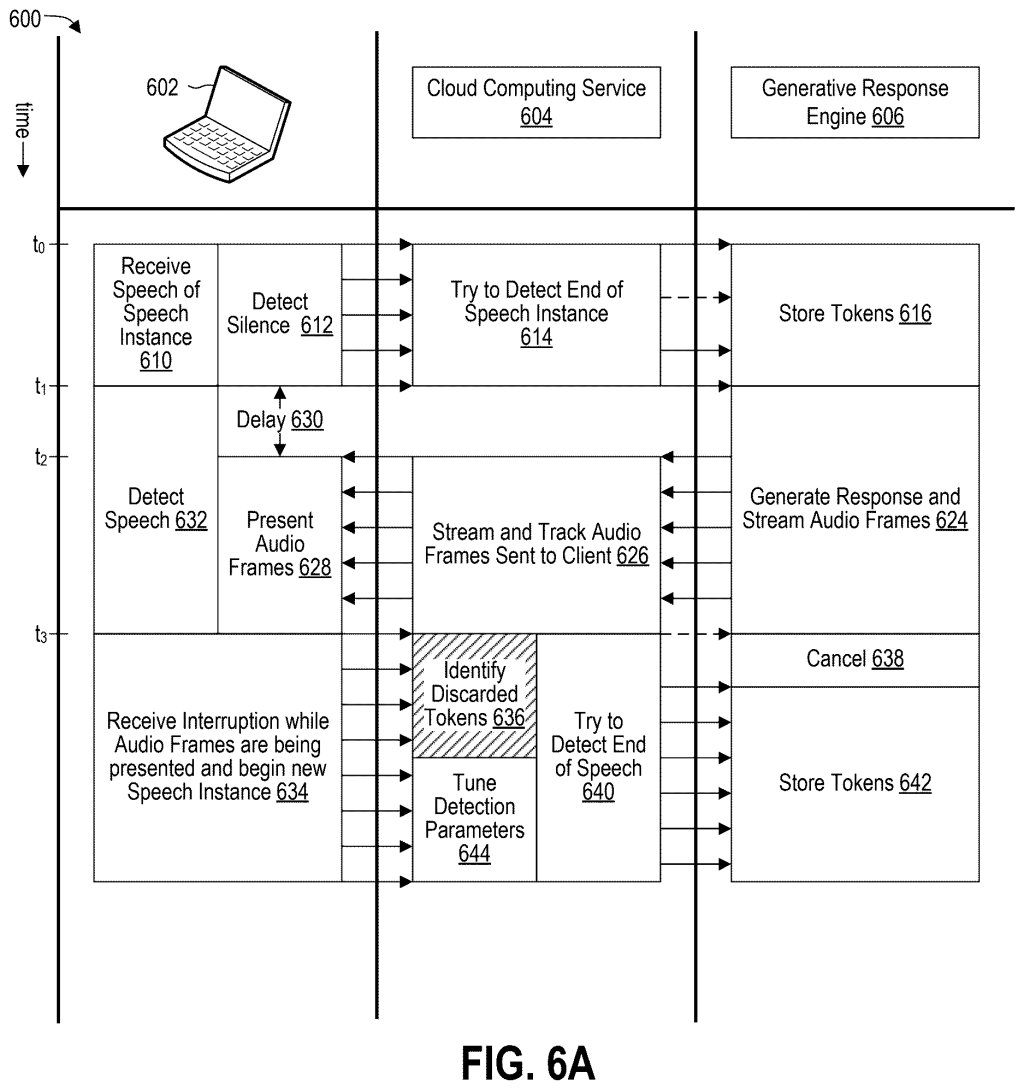
A second filing handles interruptions. When you talk over the AI, the server works out how much of its answer reached you and tells the model to forget the rest. In the filing’s example, the model drafted 2,000 tokens, the word-sized chunks AI works in, and only 400 had played.
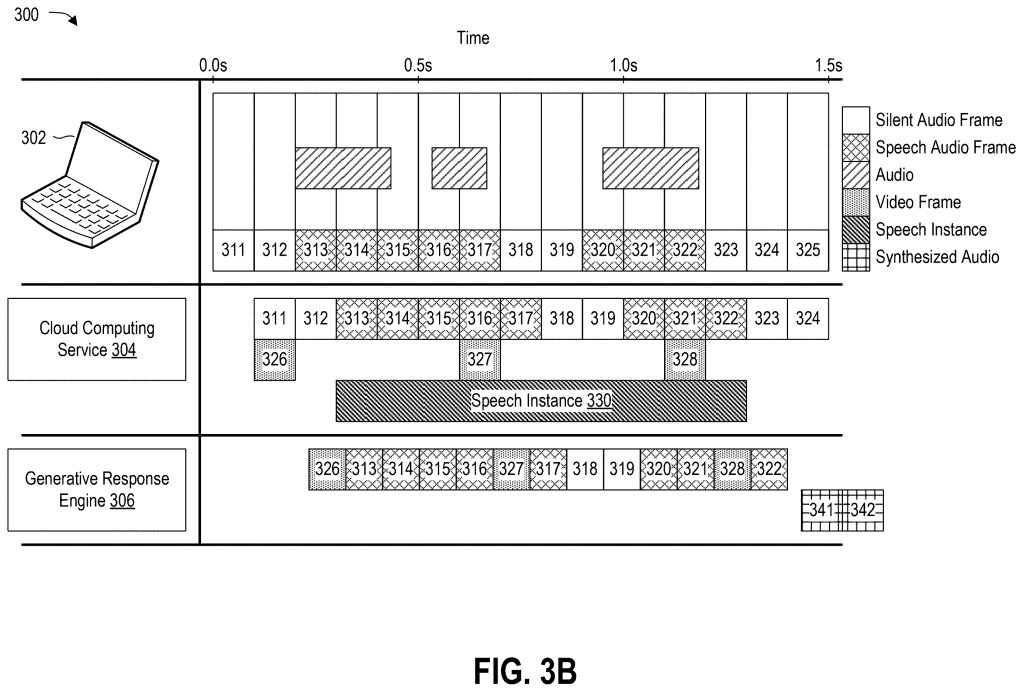
A third adds video. Camera frames are expensive: the filing puts each one at 65 tokens, at 30 frames a second, against 10 tokens for each tenth of a second of audio. So the service forwards only keyframes, such as the moment you point at something.
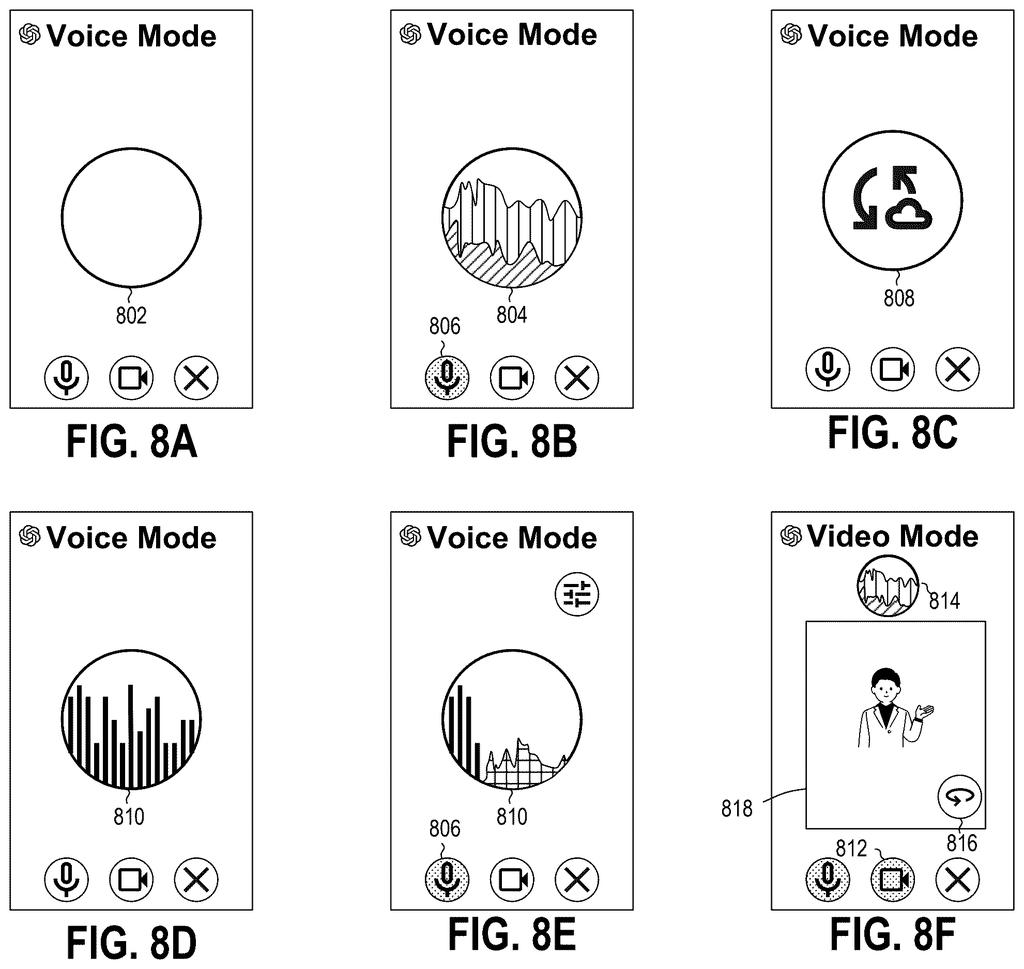
The last two are about controls. One covers the on-screen cues in voice mode, an emblem that pulses with whoever is speaking, plus playback that pauses when you cut in and resumes if the sound was not speech.
The other puts a stop button in OpenAI’s developer playground that silences the AI mid-answer without ending the session. The patent office has approved that one, and OpenAI has paid the fee to have it issued.
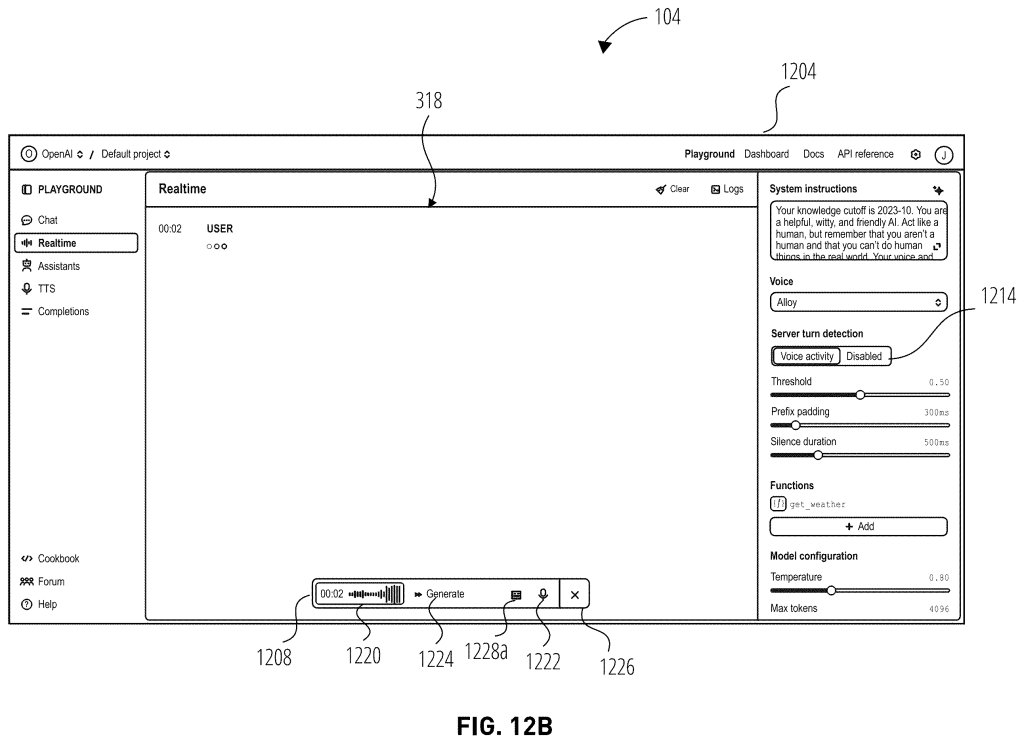
None of this needs new hardware. The filings name ChatGPT as one example of the AI involved, and the stop-button filing names OpenAI’s Realtime API, so this reads as plumbing for ChatGPT’s voice mode and for the voice apps others build on OpenAI.
Two filings about the notes it keeps on you
Two filings from the same four inventors explain how OpenAI wants its models to remember you. Both claim a first filing on April 7, 2025, three days before OpenAI updated ChatGPT’s memory to reference all of your past chats.
In the first, a background AI periodically reads your old chats and writes short narrative notes about you, which sit beside a “personalization notepad” of plain facts. When you start a new chat, both are loaded before the model answers. The filing’s sample note: “Jane enjoys exploring new and innovative dining experiences.”
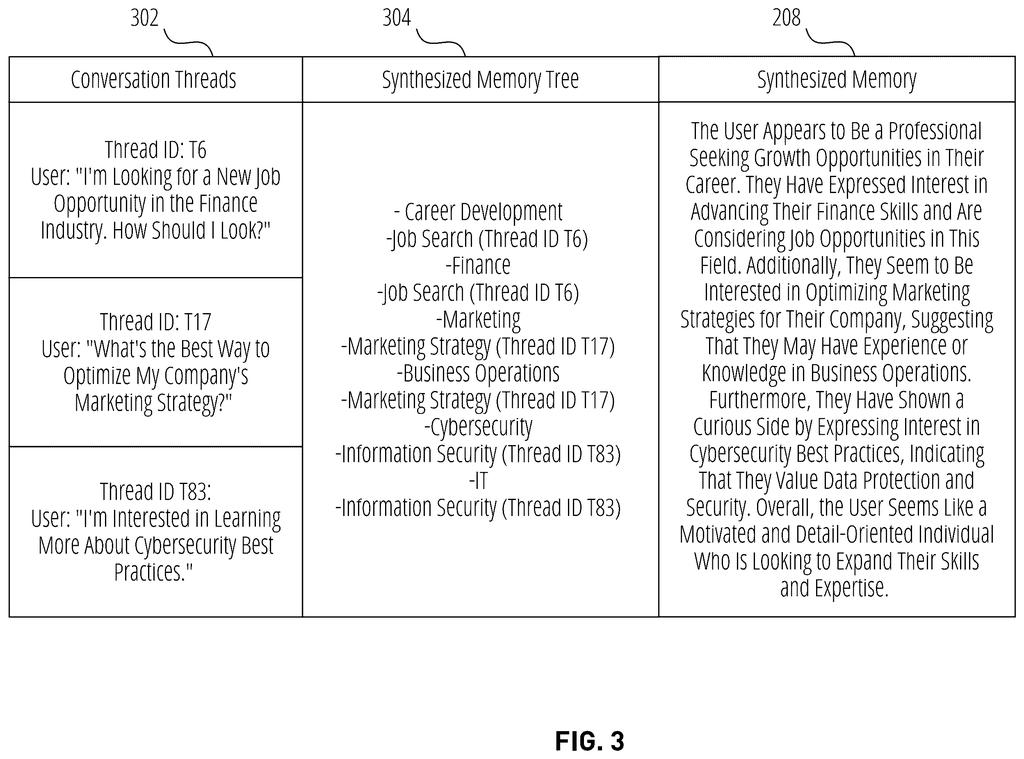
The filing also says the system can infer personality and values from how you write, not just from what you say. The patent examiner issued a final rejection in July 2026, so OpenAI can still amend the claims or appeal.
The second applies the same idea outside the chat window. A model reads your activity with a service, such as chats, clicks or purchases, and writes a plain-language profile that apps can use for recommendations. The filing describes separate versions for music, food and ads, and combining profiles from different companies into one recommendation.
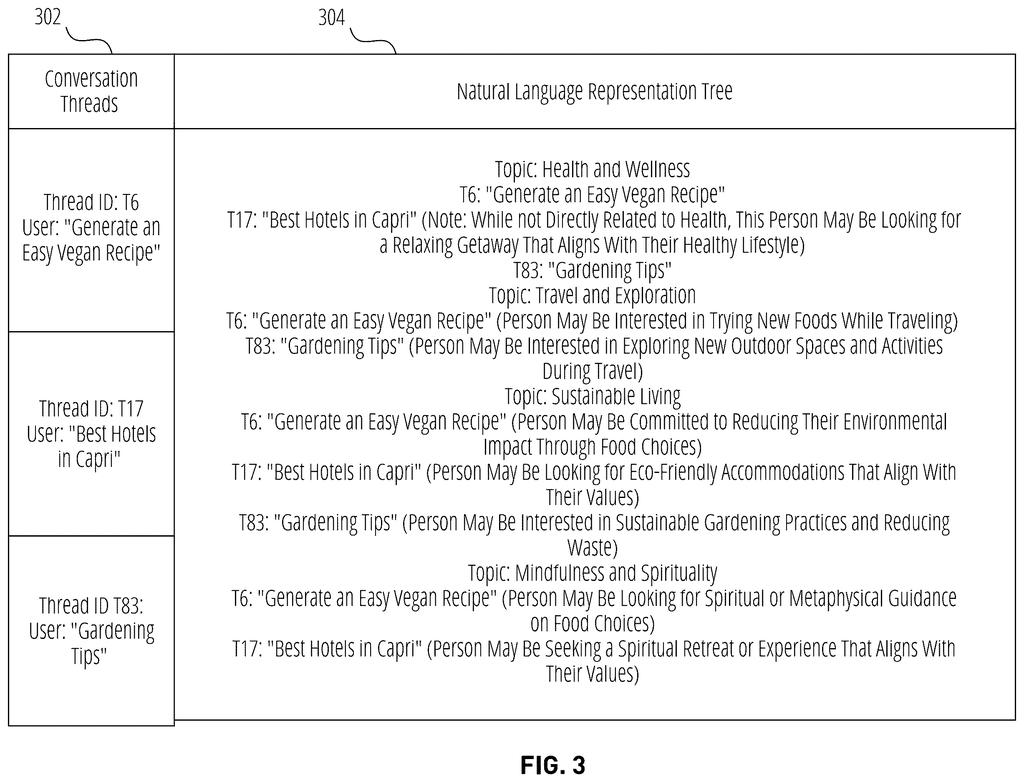
Its advertising example is specific. A search for “living room inspiration” meets a profile saying you shop at vintage and second-hand stores, so an ad-tuned model puts matching ads first. Another sample profile calls a user “well-educated, confident.” The filing has opt-in language but says little about reading or correcting your profile.
That lands in a live debate. ChatGPT has tested ads since February 2026, and OpenAI says personalized ads may draw on memories and recent chats when those settings are on, while advertisers never get your chats. The patent describes a broader system, including profiles that other companies’ services could use.
Four filings for the companies that build on OpenAI
The last four filings are for businesses that build on OpenAI’s models, and two share their inventors with the playground stop button.
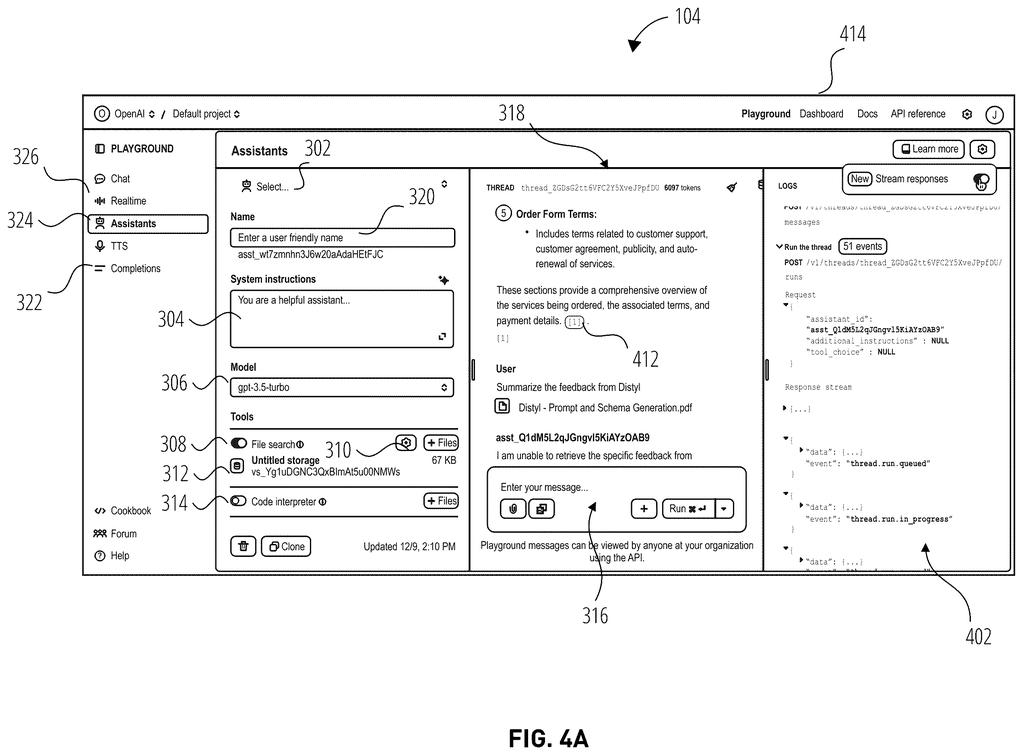
One is a single window for building and testing a custom chatbot: pick a base model, write its standing instructions, ask a test question, adjust, and ask again. Buttons next to each setting have another AI draft the instructions or code for you.
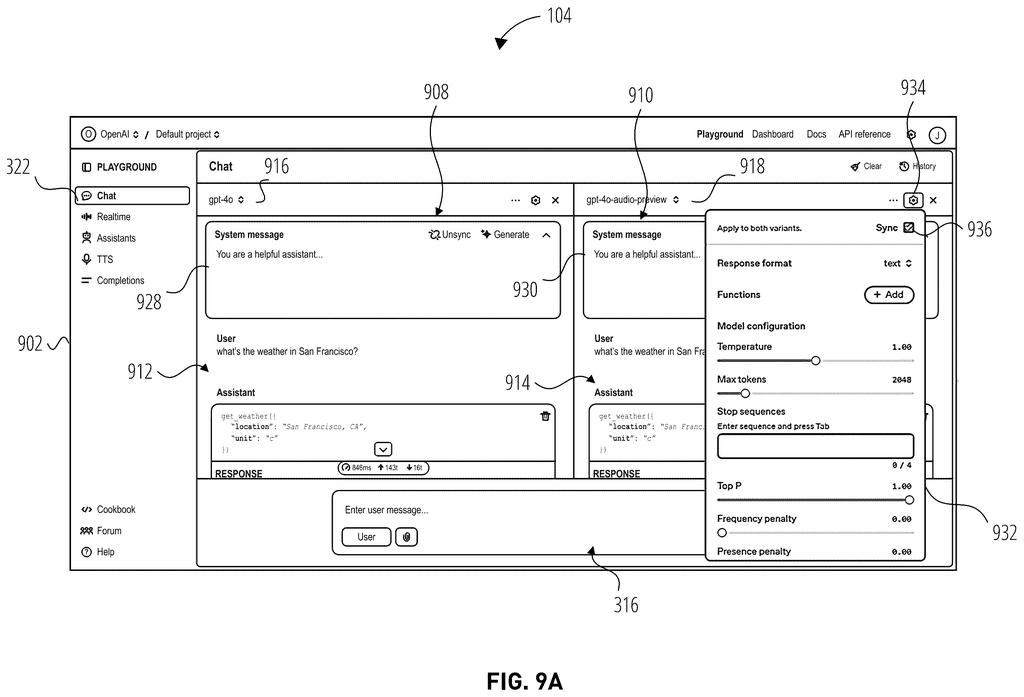
Another splits the screen so one question goes to two model versions at once, with a helper that matches their settings so the comparison is fair. Its list of possible models includes Anthropic’s Claude Sonnet, which makes it a tool for comparing AI engines in general, not just OpenAI’s.
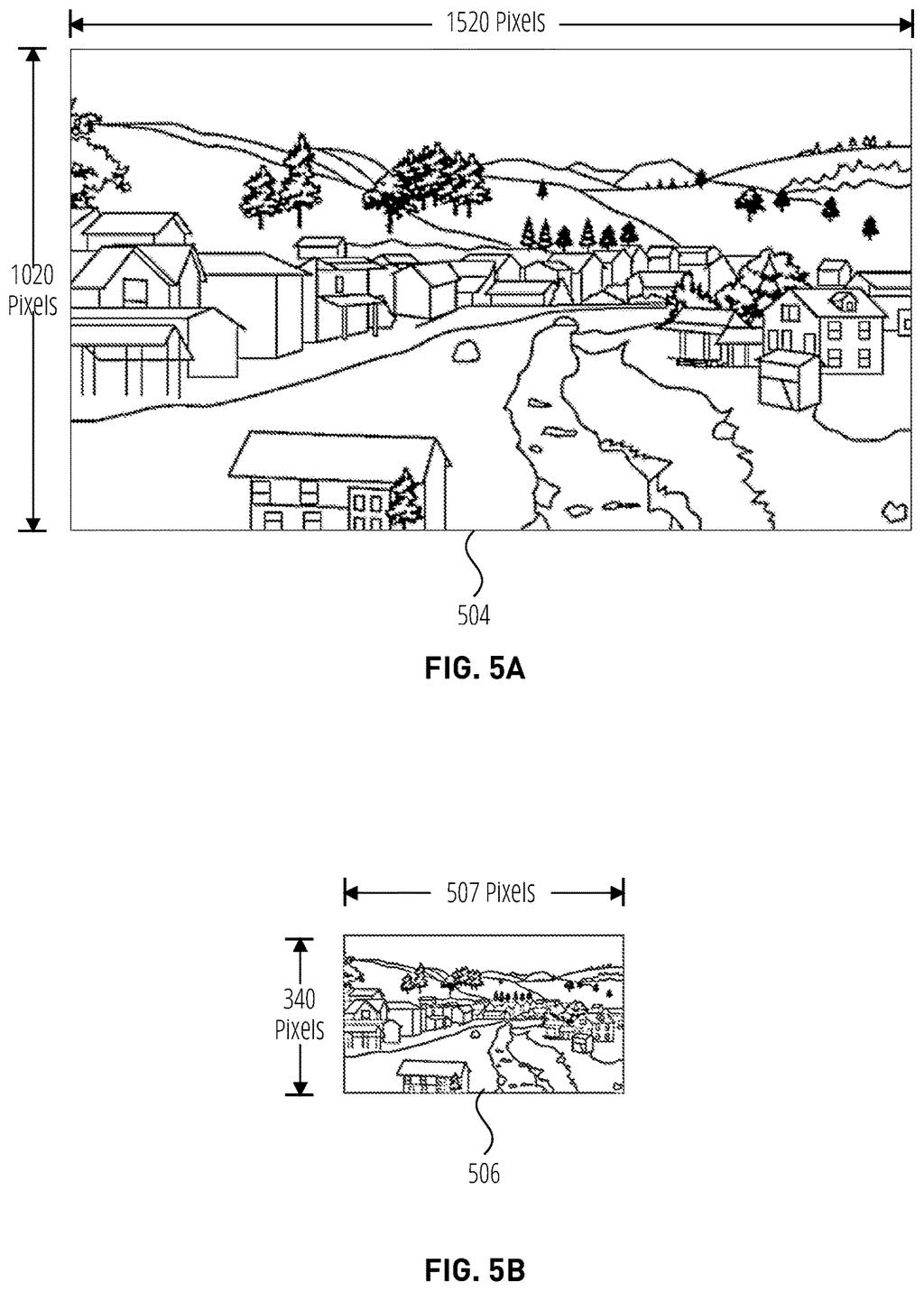
A third lets customers fine-tune a model with their own labeled images. The filing says as few as 100 images can help.
The fourth keeps thousands of those custom versions ready to answer: about 500 in fast GPU memory, 2,000 in server memory and millions in storage, with already-loaded models served first.
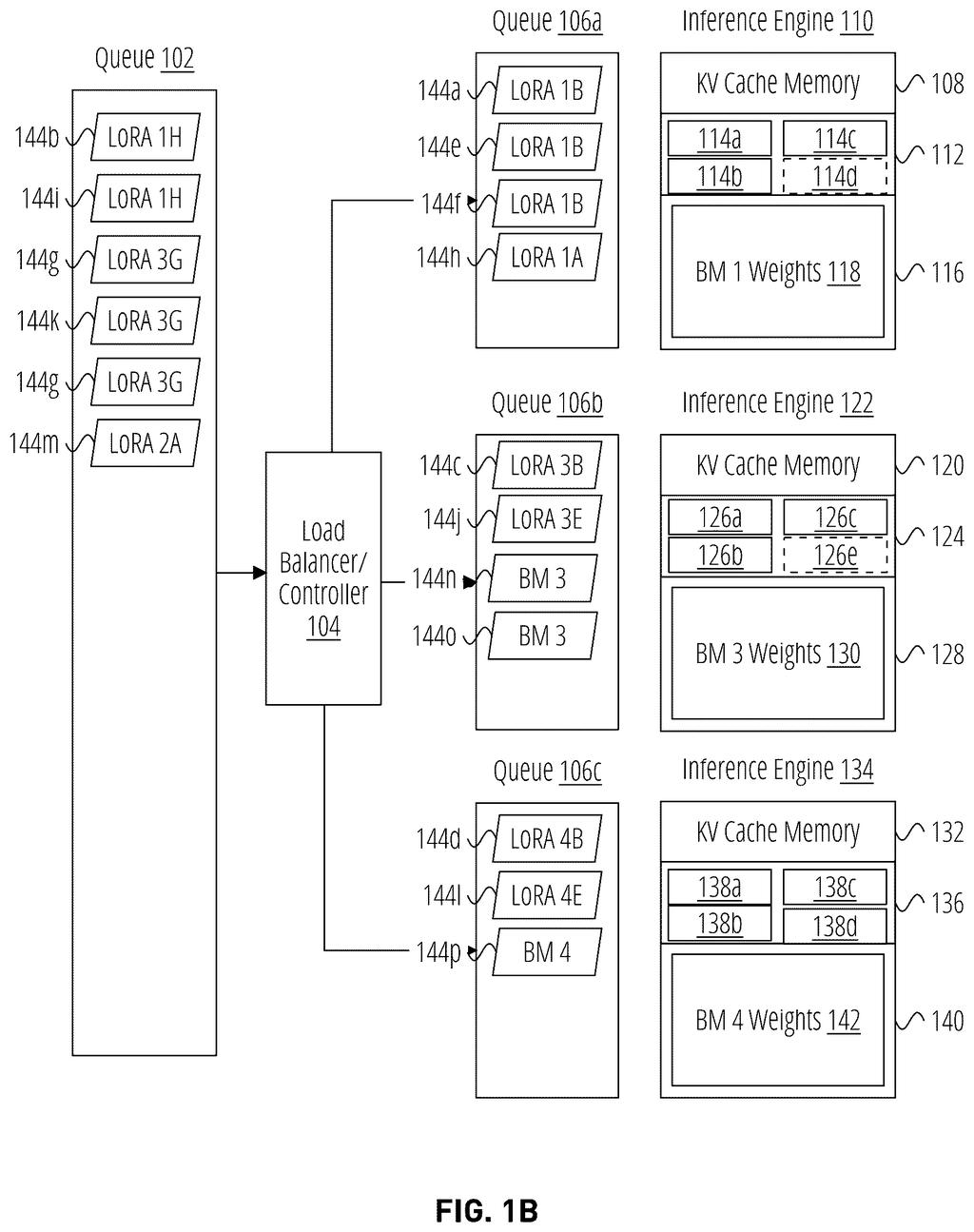
These read like documentation for products developers already use. The filings mention OpenAI’s Fine-Tuning API and its playground, and the custom-model math is about cost: small add-on files let one copy of a big model serve many customers.
What the twelve add up to
Read in order, the twelve filings describe a stack. A device gives the assistant a body. The voice filings make it a better listener. The memory filings let it carry what it learns about you from one chat to the next, and the developer tools let other companies build on all of it.
The status mix is a reminder to read these as plans. One patent is granted, one is approved, one has a final rejection and one has a first office action. The other eight are waiting for an examiner, and none names a product.
The filings to watch are the two about notes on you. The voice work fixes everyday annoyances. The memory and profile work decides what an AI believes about you, and whether that belief follows you into ads and other apps. That is where the details of each product will matter most.
All 12 OpenAI filings this week
- OpenAI Patents a Moving Assistant That Keeps Waving Until You Look at It
- OpenAI Wins a Patent for Voice Chat That Starts Thinking Before You Stop Talking
- OpenAI Patents a Voice Assistant That Forgets the Part You Talked Over
- OpenAI Files Patent for Voice AI That Knows When You’ve Finished Your Thought
- OpenAI Patents On-Screen Cues That Show When Its AI Voice Mode Is Listening
- OpenAI Files Patent for a Stop Button That Interrupts Its Voice AI Mid-Answer
- OpenAI Files Patent for a Chatbot That Writes Its Own Notes About You
- OpenAI Patents an AI That Writes Short Profiles of You for Apps to Use
- A New OpenAI Patent Puts Building and Testing a Custom Chatbot in One Window
- OpenAI Patents a Split-Screen Tool for Pitting Two AI Models Against Each Other
- OpenAI Files Patent for Letting Customers Teach Its AI With Their Own Pictures
- OpenAI Files Patent for Keeping Thousands of Custom AI Models Ready to Answer
Patentlyze reads every new patent application that Apple, Google, Microsoft, Meta, Nvidia, Samsung, OpenAI, Qualcomm, Sony, Intel, AMD, IBM, Adobe, Salesforce, Tesla, Amazon, and Disney file at the USPTO, and writes a plain-English breakdown of the ones that say something about where products are heading. New filings drop every Thursday. The full archive lives in our patent library.
Get lists like this in your inbox
We read every patent application Big Tech publishes and send you the ones worth knowing. Plain English, free, every week.