
Adobe
Adobe · AI / ML · Filed May 19, 2025 · USPTO published Nov 19, 2026 · This week's release
Adobe Files Patent for AI Images That Carry a Hidden Artist Signature
Ask an AI to paint 'in the style of Van Gogh' and Adobe's filing would slip a hidden code into the picture that points back to the artist. It is a way to give credit to the creators whose styles AI tools imitate.
- Publication number
- US 2026/0368946 A1(US20260368946A1)
- Applicant
- ADOBE INC.
- Filed · Published
- May 19, 2025 · Nov 19, 2026
- Inventors
- Vishal Asnani, Shruti Agarwal, John Philip Collomosse
- Status when we published
- Examiner raised objections; the company can respond
- Document
- 20 claims
- US classification
- 345/619
- Examiner
- SUO, JOSHUA JUNGWOOK (Art Unit 2616)
What Adobe's hidden artist signature does
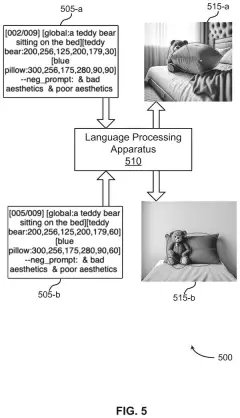
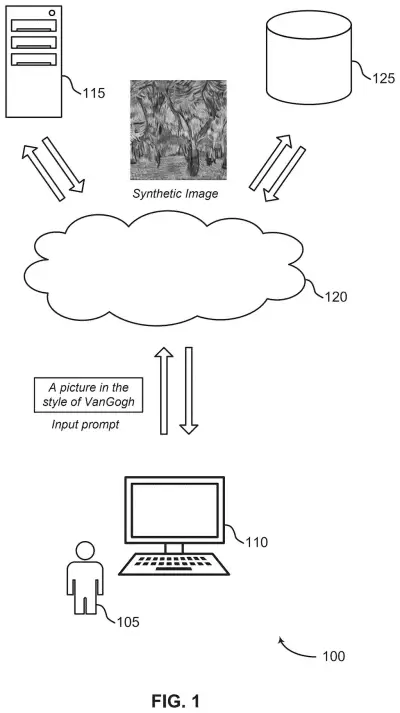
You type 'a picture of a dog in the style of Van Gogh' into an AI image tool and hit enter. A few seconds later you have a nice painting. What you can't see is whether the artist behind that style gets any credit for it, and today the answer is usually no.
Adobe's filing describes a way to change that. When an artist asks for credit, the system gives that artist a short secret code, a string of 12 or 16 ones and zeros. It then builds the code into the picture while it is being made, so the image still looks like the artist's style but carries an invisible tag.
Later, a second piece of software can read the tag back out and say which artist's style the image was built on. The goal is a trail back to the artist's work, without rebuilding the whole AI each time a new artist signs up.
… generating, using a concept encoder network, a concept token based on the input prompt and the target information, wherein the concept token represents the image concept and the target information; …
Translation: An AI tool combines your text prompt with hidden artist data into a single digital token.
How a secret code rides inside the image
The filing covers an image generator that takes two inputs: your text prompt and a hidden message the filing calls target information. In the examples, that message is a short sequence of 12 or 16 bits (ones and zeros) tied to one artist or style. A clean, unmarked image uses all zeros.
In the main version (claim 1), a concept encoder network (a small neural network) nudges the internal representation of a word like 'Van Gogh' so it also carries the code. That altered version is called a concept token. It is handed to a latent diffusion model (the type of AI that makes a picture by starting from random static and gradually cleaning it up), which produces an image that depicts the concept and carries the code.
A second version (claim 11) skips the token. A sequence mapper network instead tweaks the starting static itself based on the code. The filing also describes a decoder that reads the bits back out of a finished image, and a way to work out an image's provenance (where it came from) from them.
New artists can be added by fine-tuning only the model's attention layers (the parts that link prompt words to image regions) instead of retraining everything. One prompt can also carry codes for more than one artist.
… an image generation model generates a synthetic image based on the concept token, wherein the synthetic image depicts the image concept and includes an encoding of the target information.
Translation: The system then creates the final picture so that it secretly contains the embedded data.
What this means for artists and Adobe's AI tools
If this idea ever shipped in an image tool, an artist whose style gets imitated could request a hidden tag and later check whether a suspicious image carries it. For you as a user, the picture would look the same, because the tag is invisible. The filing says the mark is built to hold up under non-editorial changes to the image.
It speaks to a real sore spot: the filing itself says artists worry their work is used without recognition or pay. A tag only helps if tools actually add it and someone checks it. The examiner's first review rejected the claims as filed, which is routine and usually followed by amendments.
That makes this Adobe's 51st filing we've tracked since May in our controllable AI image generation watchlist, which already covers work like AI-made fabric and stone textures and styled letters that keep their shape.
Source: US 2026/0368946 A1 at the USPTO (PDF). Full patent text and figures are in the official publication.
Get our take in your Top Stories
Liked this breakdown? Add Patentlyze as a preferred source on Google, and our plain-English take shows up more often in your Top Stories the next time Adobe patent news breaks.
Add Patentlyze on Google
One click.
There are more where this came from
We read every patent application Big Tech publishes and send you the ones worth knowing. Plain English, free, every week.
The drawings · 17 sheets
17 drawing sheets from US 2026/0368946 A1 · click any drawing to enlarge


Show the other 9 sheets


More from Adobe
All 270 Adobe patents →
More in AI / ML
All 2,738 AI / ML patents →
Microsoft
Microsoft Patents an AI System That Finds Hidden Variables Skewing Your Data Analysis
Qualcomm
Qualcomm Files Patent to Keep Zoomed-In Images Sharp Without Draining Your Battery
Nvidia
Nvidia Patents Software That Grows Small Textures Into Full Images
Nvidia
No comments yet