
Apple
Apple · Wearable · Filed Mar 13, 2026 · USPTO published Nov 19, 2026 · This week's release
Apple Files Patent for Earbuds That Translate a Play While You Watch It
Apple's filing describes earbuds that translate a live opera or play into your language while the music keeps playing, with the translated voice seeming to come from the actor on stage.
- Publication number
- US 2026/0368457 A1(US20260368457A1)
- Applicant
- Apple Inc.
- Filed · Published
- Mar 13, 2026 · Nov 19, 2026
- Inventors
- Ashok MASILAMANI, Yang LU
- Status when we published
- Waiting for an examiner
- Document
- 20 claims
- US classification
- 704/2
- Parent application
- Claims priority from a provisional application 63806596 (filed May 15, 2025)
What Apple's play-translating earbuds would do
Ever sat through an opera in a language you don't speak, glancing back and forth between the stage and a tiny line of subtitles? Apple's filing describes a way to skip the subtitles and hear the translation in your ears instead.
The twist is what stays in. Your earbuds would keep the orchestra and the other sounds in the room, then add a computer-generated voice speaking the actor's lines in your language. The original dialogue can be muted, turned down, or smeared into a blur so it doesn't fight with the translation.
The filing also describes making the translated voice seem to come from where the actor is standing, and shaping it to resemble the actor's own voice, such as a higher or lower pitch. That way you can tell who is talking without looking away from the show.
obtain, with the one or more microphones during a performance, an audio input corresponding to the performance, the audio input including speech in a first language and ambient sounds …
Translation: The earbuds listen to a live show, capturing both the dialogue and the background noise around you.
How the translation lands where the actor stands
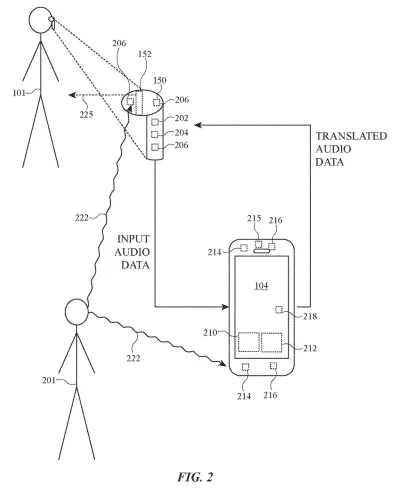
The core claim covers a device with microphones, speakers and a processor. During a live performance, the microphones pick up the show's audio, which holds both the speech (an actor's lines, say) and ambient sounds, such as music or other characters talking. The device gets a translation of that speech while the show is still going, then plays back the ambient sounds along with a computer-generated voice speaking the translation.
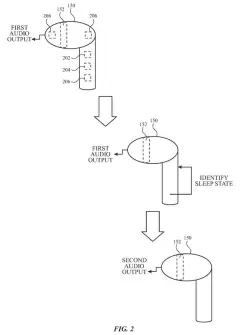
What happens to the original speech is flexible. The claims describe removing it, lowering its volume, or blurring it (smearing it in time so it is still faintly there but no longer competes). The device can be an earbud that sends part of the audio to a companion device, such as a phone, and gets the translated voice back.
Two extras appear in the claims. The translated voice can be spatialized (processed so it seems to come from the actor's spot on stage) and voice-matched (shaped to resemble the actor's voice, such as pitch or tone).
A second independent claim covers a different trick: beamforming, which means combining several microphones so they listen more closely in one direction. The width of that listening zone changes on the fly based on where two people are and how the device is moving, so the person you're talking to stays in range while a stranger nearby is shut out.
What this means for tourists at foreign theater
For you, the practical gain is keeping your eyes on the stage instead of a subtitle screen. The filing's examples include an opera, a play, a musical, a concert and a movie, and it also mentions train and airport announcements. The listening-zone idea could help in an ordinary noisy room too, where the earbuds would follow the person you're talking to.
The background section describes today's translation apps as text based: written text in, written text out, or spoken words turned into written text. This filing moves translation into audio, in real time, with the original sound still around you. The description talks about delays of a second or two, or less than one second, and says pausing translation while you speak can save battery. It is still a patent application, so nothing here says a product is on the way.
That makes this Apple's 20th filing in our wearable technology coverage since May, a count that includes applications like silent speech detection and live music translation via earbuds among the filings we've tracked.
Source: US 2026/0368457 A1 at the USPTO (PDF). Full patent text and figures are in the official publication.
Get our take in your Top Stories
Liked this breakdown? Add Patentlyze as a preferred source on Google, and our plain-English take shows up more often in your Top Stories the next time Apple patent news breaks.
Add Patentlyze on Google
One click.
There are more where this came from
We read every patent application Big Tech publishes and send you the ones worth knowing. Plain English, free, every week.
The drawings · 15 sheets
15 drawing sheets from US 2026/0368457 A1 · click any drawing to enlarge


Show the other 7 sheets


More from Apple
All 748 Apple patents →
More in Hardware
All 2,355 Hardware patents →
Samsung
Samsung Patents a Faster Way for Both Earbuds to Connect to Your Phone
Samsung
Samsung Patents Earbuds That Work Out What You're Doing From Sound and Movement
Google
Google Patents a Way for Wireless Earbuds to Share Audio Between Each Other

Sony
No comments yet