
Apple
Apple · Wearable · Filed Apr 23, 2026 · USPTO published Nov 19, 2026 · This week's release
Apple Files Patent for Earbuds That Translate an Opera Without Muting the Orchestra
Ordinary noise cancellation would flatten the orchestra along with the crowd. Apple's patent application describes earbuds that swap in a translated voice for the performer and leave the rest of the show alone.
- Publication number
- US 2026/0369291 A1(US20260369291A1)
- Applicant
- Apple Inc.
- Filed · Published
- Apr 23, 2026 · Nov 19, 2026
- Inventors
- Yang LU, Ashok MASILAMANI, Hanchi CHEN, Mitchell R. LERNER, Vladan BAJIC
- Status when we published
- Waiting for an examiner
- Document
- 20 claims
- US classification
- 381/71.1
- Parent application
- Continuation of 19/641,428 (filed Apr 7, 2026)(19641428)
What Apple's translating earbuds do at the opera
Every time you watch a play or opera in a language you don't speak, you make the same trade: keep your eyes on the stage or on the subtitles. Apple's patent application describes earbuds that translate for you instead, right in your ear, as the performer sings or speaks.
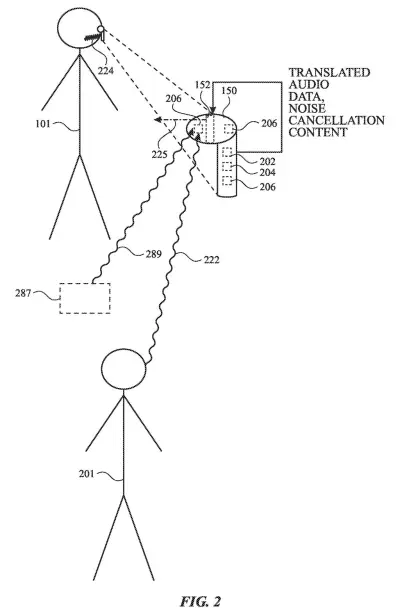
The catch is everything around the voice. Normal noise cancellation would hush the orchestra along with the audience, and that ruins the show. So the earbuds pick the performer's voice out of what their microphones hear and take it out. The music, the other actors and the sound effects still reach you as usual, and a computer-generated voice speaks the translation on top.
If you still want a hint of the original, the filing also describes playing back a blurred or quieter copy of the performer's voice, so the stage still feels real.
… outputting, by the speaker of the audio output device while outputting the computer-generated translated audio signal, a pass-through audio signal that includes the background sounds and omits the voice of the performer.
Translation: The earbuds play the translated lyrics while letting you hear the orchestra without the original singing.
How the earbuds pull a singer out of the room
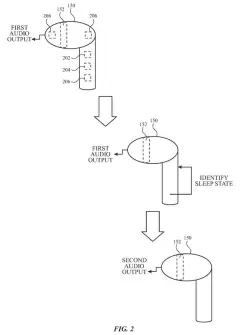
The claims cover a pass-through trick for translated performances. An earbud or headphone obtains a computer-generated translation of a performer's voice and plays it through its speaker. At the same time it plays a pass-through signal (a live feed of outside sound piped into your ear) that contains the background sounds but leaves out the performer's voice.
To make that work, the filing describes source separation, which is software that splits the microphone audio into the performer's voice, the wearer's own voice, and everything else. Voice activity detectors (tools that flag when someone is talking) help tell those apart. The translation can be made on the earbud itself or on a paired phone, which receives the microphone audio and sends the translated audio back.
The claims also name a few optional extras:
- A reduced or blurred copy of the performer's voice mixed back in, made by turning it down more at higher frequencies.
- Background sound that includes music and other performers.
- Live shows and movies as the kinds of performance.
The description also covers a related idea for plain conversations: raise noise cancellation while the translated voice plays, mostly on mid and high pitches, so low rumbles pass through and your ears feel fewer pressure swings.
The frequency-dependent increase effectively blur the ambient noise that reaches the ears of the user, while enhancing the ability of the user to hear and understand the computer-generated translated voice.
Translation: Adjusting the noise cancellation helps you clearly hear the translation over the surrounding sounds.
Why live translation needs to leave the music alone
If you've ever sat through a show abroad that you couldn't follow, you know the options are bad. Subtitles pull your eyes off the stage, and ordinary noise-cancelling headphones strip away the atmosphere. This filing points to a third option: you hear the full show, plus a voice in your ear telling you what is being said or sung.
It also shows translation features moving beyond one-on-one chats into movie theaters, plays and concerts. The description mentions translated audio arriving in about a second or two, or under a second. How well this would hold up in a loud, echoing hall is not something a patent application can show, so treat it as an idea on paper.
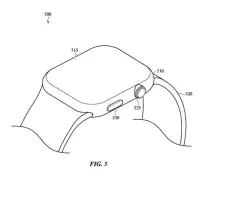
This is the 18th Apple patent we've tracked in our wearable tech filings since May, adding to work like earbuds that translate and a watch with curved glass.
Source: US 2026/0369291 A1 at the USPTO (PDF). Full patent text and figures are in the official publication.
Get our take in your Top Stories
Liked this breakdown? Add Patentlyze as a preferred source on Google, and our plain-English take shows up more often in your Top Stories the next time Apple patent news breaks.
Add Patentlyze on Google
One click.
There are more where this came from
We read every patent application Big Tech publishes and send you the ones worth knowing. Plain English, free, every week.
The drawings · 20 sheets
20 drawing sheets from US 2026/0369291 A1 · click any drawing to enlarge


Show the other 12 sheets


More from Apple
All 748 Apple patents →
More in Hardware
All 2,355 Hardware patents →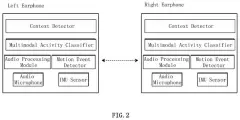
Samsung
Samsung Patents Earbuds That Work Out What You're Doing From Sound and Movement

Sony
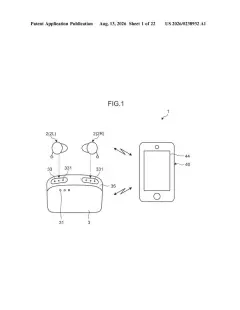
Sony Patent Reveals Earbuds That Automatically Track and Follow Moving Speakers

Google
Google Patents a Way for Wireless Earbuds to Share Audio Between Each Other
Sony
No comments yet