
Apple
Apple · AR / VR · Filed Apr 9, 2026 · USPTO published Nov 19, 2026 · This week's release
Apple Files Patent to Stop Floating Headset Screens From Shaking as You Move
Apple describes a way for a floating headset window to tell a glance from a real turn: it holds still until your head and body both turn the same way.
- Publication number
- US 2026/0367749 A1(US20260367749A1)
- Applicant
- Apple Inc.
- Filed · Published
- Apr 9, 2026 · Nov 19, 2026
- Inventors
- Yirong TANG, Daniel J. BREWER
- Status when we published
- Waiting for an examiner
- Document
- 20 claims
- US classification
- 715/848
- Parent application
- Claims priority from a provisional application 63819407 (filed Jun 6, 2025)
Why Apple's floating headset window stays put
When a video window follows you around inside a headset, it picks up more than you meant to send. A swinging arm, a quick glance to the side or a shoulder shrug can all make the window sway or jitter, which gets old fast.
Apple's filing describes a fix that watches two things at once: which way your head points and which way your torso points. The window moves only when both turn together in the same direction. Glance at a noise and it stays put. Turn your whole body and it swings around to meet you.
If the headset can't get a good read on your torso, it falls back on your head alone, but only once you've turned it far enough. The filing's example uses 45 degrees.
detecting, via the one or more input devices, a pose vector of the electronic device, wherein detecting the pose vector includes detecting a first vector and a second vector associated with a user of the electronic device; …
Translation: The system tracks your physical orientation by measuring two distinct body vectors.
How the headset compares head and torso turns
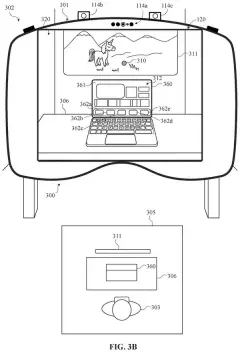
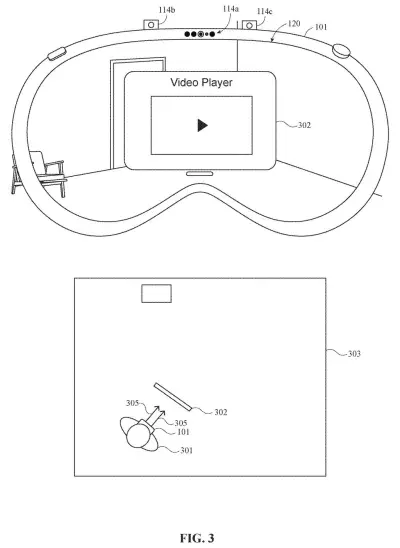
The headset keeps a running estimate of which way you are facing, called a pose vector (think of it as an invisible arrow pointing out from your chest). The video or app window sits at a set position relative to that arrow. In the filing's main example it stays square to the arrow, so it remains in front of you.
The arrow is built from two other readings, a head vector and a torso vector, picked up by cameras and sensors. It updates only when the headset is confident in its torso reading and the two vectors line up (within 1, 2 or 5 degrees in the examples) while moving at once, or when both have turned past a threshold in the same direction. If only your head or only your torso moves, nothing changes.
When the torso reading is weak (low confidence), the headset leans on your head. In one example the threshold is 45 degrees: a 20 degree head turn does nothing, while a 65 degree turn moves the arrow by the extra 20 degrees and the window follows.
The same logic can run up and down (the pitch dimension). One claim covers detecting that you are reclined when both vectors tilt upward relative to gravity. The filing also describes a separate walking-focused approach with locked and unlocked modes.
The pose vector may only move when both the head and torso vector are aligned and moving simultaneously.
Translation: Your virtual screens stay rock steady until your head and body deliberately turn together.
What this means for watching video on the move
If you watch a video in a headset while walking or turning around a room, a window that jitters every time your arm swings is distracting and can feel uncomfortable. A window that waits until you have actually changed direction is easier on the eyes, and you never have to think about it.
The filing also assumes that windows following you around is a normal thing to expect, so smoothing their motion becomes a comfort detail that matters more the longer someone wears the device. A headset like Apple's Vision Pro could use this kind of filter, though the filing names no product.
This is the 141st Apple patent we've tracked in our AR glasses watchlist since May, adding to filings like sending 3D objects to a headset and a headset control panel.
Source: US 2026/0367749 A1 at the USPTO (PDF). Full patent text and figures are in the official publication.
Get our take in your Top Stories
Liked this breakdown? Add Patentlyze as a preferred source on Google, and our plain-English take shows up more often in your Top Stories the next time Apple patent news breaks.
Add Patentlyze on Google
One click.
There are more where this came from
We read every patent application Big Tech publishes and send you the ones worth knowing. Plain English, free, every week.
The drawings · 19 sheets
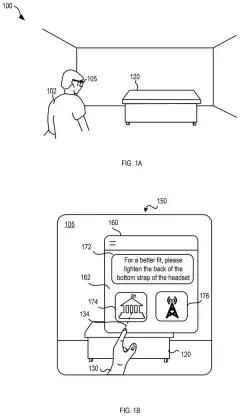
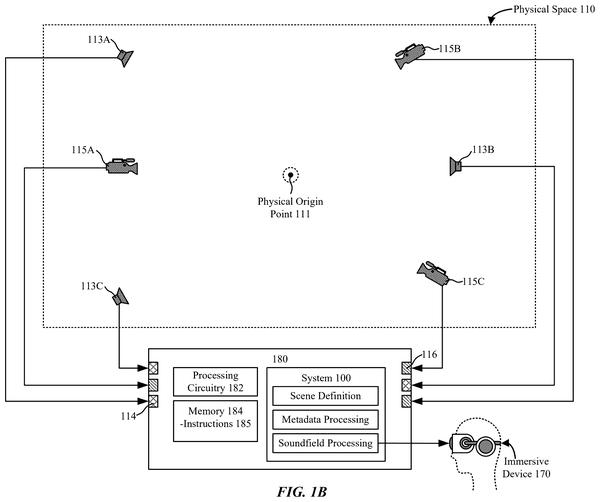
19 drawing sheets from US 2026/0367749 A1 · click any drawing to enlarge


Show the other 11 sheets


More from Apple
All 748 Apple patents →
More in AR / VR
All 713 AR / VR patents →
Apple
Apple Files Patent for Virtual TVs That Cast Colored Light on Your Real Walls
Apple
Apple Files Patent for Headphones That Click You Toward Whatever They Need to See
Apple
Apple Files Patent to Fix Floating Windows That Clip Into Your Furniture
Apple
No comments yet