
Apple
Apple · Energy · Filed May 16, 2025 · USPTO published Nov 19, 2026 · This week's release
Apple Patents a Magnetic Rubber Layer That Helps Trackpads Click With Less Power
The click you feel on a modern trackpad is an illusion, and Apple has found a way to make that illusion cost less power. The trick is to fill a tiny gap behind the pad with rubber that has iron dust mixed in.
- Publication number
- US 2026/0367705 A1(US20260367705A1)
- Applicant
- Apple Inc.
- Filed · Published
- May 16, 2025 · Nov 19, 2026
- Inventors
- George V Anastas
- Status when we published
- Approved; patent expected soon
- Document
- 18 claims
- US classification
- 345/174
- Examiner
- SHAH, SUJIT (Art Unit 2624)
What Apple's magnetic rubber trackpad pad does
Imagine pressing down on your laptop trackpad and feeling a crisp little click. Nothing actually clicked. Under the surface, an electromagnet tugs on a metal plate attached to the pad, nudging it a hair's width to fool your fingertip.
The catch is that magnets are weak across empty air. To get a strong click, the gap between magnet and plate has to be tiny, about 300 microns, roughly three sheets of paper. At that size, ordinary factory variation of 10 to 15 percent can change how the click feels from one device to the next.
Apple's fix is to fill that gap with a soft, rubbery pad loaded with iron particles. Magnetic force passes through it five to six times better than through air. So the same click could take less power, a smaller magnet, or looser assembly tolerances.
… a magnetorheological elastomer material disposed between the electromagnet and the target member; wherein the magnetorheological elastomer material is spaced away from the target member by an air gap.
Translation: A special rubber layer sits between the electromagnet and the metal target, with a small pocket of air left in between.
How the iron-filled rubber carries the magnetism
The patent covers three related setups built on one material: a magnetorheological elastomer (MRE), which is flexible rubber or silicone mixed with fine iron particles. The claims describe a trackpad in a computing device, a general electromagnetic actuator (a coil that moves a metal part), and a touch input device that clicks when its sensor detects a press.
In the trackpad version, a ferromagnetic target (a metal plate that magnets pull on) is attached to the touch panel. An electromagnet sits nearby, with the MRE pad between the two. When the coil is powered, the magnetic field travels through the pad and pulls the plate, moving the panel to create the click. The pad compresses as the plate moves, then expands when the coil switches off.
- One claim keeps a small air gap between the pad and the plate; others have the pad touching both parts.
- One claim puts the iron particles at about 30 to 40 percent of the pad by volume.
- The description says a gap of about 0.5 mm with the pad can match the force of a gap half that size with only air.
- A solenoid version (a coil that pushes or pulls a metal plunger) puts the pad between the coil and the moving rod.
The filing also describes a variation with permanently magnetic particles, which would let the actuator push the plate away as well as pull it, depending on polarity (which way the magnetic poles face).
… magnetorheological elastomer material positioned between a pole or tine of an electromagnet of the actuator and a ferromagnetic structure or armature to improve flux transmission efficiency, thereby enabling reduced actuator size, reduce energy expenditure for equivalent force production …
Translation: This smart rubber helps magnets pass magnetic force more efficiently so the clicker uses less battery power and can be made smaller.
Why a weaker magnet could mean a thinner laptop
If you use a laptop or a tablet keyboard with a trackpad, the click comes from a tiny magnet assembly, and anything that lets it work with less power or less space helps the whole device. The filing says the pad could let designers shrink the actuator, cut energy use, or loosen the tight factory tolerances that make clicks feel inconsistent and need costly calibration. Less rework and tuning can also mean lower costs.
The patent office has approved this application, and once Apple pays the final fee it should be issued as a granted patent. The description also says the same material could help in solenoids, haptic generators and magnetic sensors, so the idea reaches beyond trackpads.
That makes this Apple's 743rd filing we've tracked in our Apple coverage since May, adding to work like the video call layout patent and the fingertip headset device.
Source: US 2026/0367705 A1 at the USPTO (PDF). Full patent text and figures are in the official publication.
Get our take in your Top Stories
Liked this breakdown? Add Patentlyze as a preferred source on Google, and our plain-English take shows up more often in your Top Stories the next time Apple patent news breaks.
Add Patentlyze on Google
One click.
There are more where this came from
We read every patent application Big Tech publishes and send you the ones worth knowing. Plain English, free, every week.
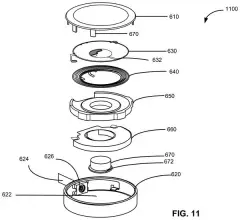
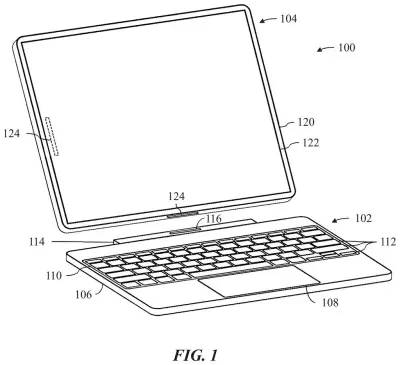
The drawings · 6 sheets
6 drawing sheets from US 2026/0367705 A1 · click any drawing to enlarge


More from Apple
All 748 Apple patents →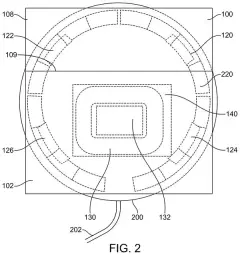
More in Energy
All 140 Energy patents →
Google
Google Files Patent for Steering AI Satellites With Earth's Magnetic Field
Sony
Sony Patents a Camera That Maps Objects in 3D While Using Less Power
Microsoft
Microsoft Files Patent for a Laptop Touchpad That Adjusts as It Wears Out
AMD
No comments yet