
GM
GM · Automotive · Filed May 14, 2025 · USPTO published Nov 19, 2026 · This week's release
GM Files Patent for an EV That Tells You If Your Battery Will Last as Long as You Want
What if you could tell your electric car how long you want the battery to last, and have the car tell you honestly whether your habits will get you there? That is the idea in a new GM filing.
- Publication number
- US 2026/0367169 A1(US20260367169A1)
- Applicant
- GM Global Technology Operations LLC
- Filed · Published
- May 14, 2025 · Nov 19, 2026
- Inventors
- Ryan Patrick Hickey, Matthew Edward Gilbert-Eyres, Russell A. Patenaude
- Status when we published
- Approved; patent expected soon
- Document
- 17 claims
- US classification
- 701/31.9
- Examiner
- WHITTINGTON, JESS G (Art Unit 3666)
What GM's battery lifespan goal actually does
A driver plans to keep her electric SUV for ten years. She plugs it in at fast chargers every week and drives hard in summer heat. Nobody tells her that her battery may be worn out well before year ten.
This GM patent application tries to close that gap. You type in how long you want the battery to keep powering the car, in days, months or years. The car then watches how you charge and drive, and works out how long the battery will actually last at that rate.
If the forecast falls short of your goal, the screen tells you. You can accept the shorter lifespan, or ask the car for suggestions on changing your habits to stretch it. It turns battery wear from a mystery into a goal you can see.
receiving, via a human-machine interface, a desired battery health target input for the electric vehicle battery, the desired battery health target input comprising a period of time indicating how long a user of the electric vehicle desires the electric vehicle battery to be used to power the electric vehicle …
Translation: Drivers can input how many years they want their EV battery to last.
How GM's car compares your goal to its forecast
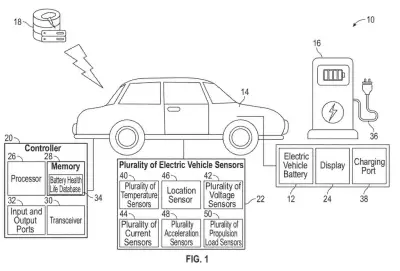
The system starts with a person entering a desired battery health target on the car's touchscreen. That is a period of time, such as a number of years, that the owner wants the battery to keep powering the car.
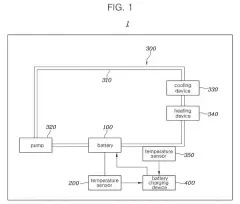
While the car charges and drives, its sensors collect data. During charging, temperature, voltage and current sensors help the car work out how fast it is charging (home charger, standard public charger or fast charger). During driving, it gathers temperature, acceleration, motor load (how hard the motor is working) and location readings. The description also says the car pulls in weather data and uses a machine-learning model (software that finds patterns in past data) to estimate how much wear each trip causes.
The car subtracts that projected wear from the battery's health to get a projected remaining battery life. It then compares that number to your goal.
- If the forecast meets or beats your goal, your goal becomes the official target.
- If it falls short, the screen says so and asks what you want to do.
- You can accept the shorter forecast as the target, or ask for tips based on your own charging and driving data.
The filing also describes an optional fleet mode where an operator sets limits, such as capping charging at the standard public speed or blocking hard acceleration. One dependent claim covers limiting vehicle functions based on the suggested techniques.
Why GM's battery goal could change EV ownership
Battery wear is one of the biggest worries for anyone buying or keeping an EV, and today owners mostly have to guess how their habits affect it. A feature like this would give you a concrete answer, in time terms, and a way to trade convenience (like frequent fast charging) for a longer-lasting battery. For companies running fleets, the limit-setting option could help protect an expensive asset.
The patent office has approved this application and GM has paid the fee to have it issued, so it should become a granted patent soon. A patent is not a product, and the filing names no specific GM vehicle or app.
GM's fifth filing we've tracked since November in our GM coverage follows patents like the pedal safety setup and the touchscreen test system.
Source: US 2026/0367169 A1 at the USPTO (PDF). Full patent text and figures are in the official publication.
Get our take in your Top Stories
Liked this breakdown? Add Patentlyze as a preferred source on Google, and our plain-English take shows up more often in your Top Stories the next time GM patent news breaks.
Add Patentlyze on Google
One click.
There are more where this came from
We read the new patents from Big Tech, carmakers and more and send you the ones worth knowing. Plain English, free, every week.
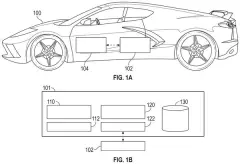
The drawings · 3 sheets
3 drawing sheets from US 2026/0367169 A1 · click any drawing to enlarge


More from GM
All 10 GM patents →
More in Automotive
All 432 Automotive patents →
Ford
Ford Patents a Way to Keep an EV Battery Cool After Part of It Fails
IBM
IBM Patents a Plan to Shuffle Cars Around So Their Sensors Use Less Battery
Hyundai & Kia
Kia Patents a Battery Check That Waits Before Crying Wolf on Your EV
Hyundai & Kia
No comments yet