
Hyundai & Kia
Hyundai & Kia · Automotive · Filed Nov 21, 2025 · USPTO published Nov 19, 2026 · This week's release
Kia Files Patent for Evening Out EV Battery Temperatures Before Charging
An electric car battery is really hundreds of small cells, and when some run hotter than others, charging wears them out unevenly. Kia's patent application has the car check for that mismatch and fix it before the plug does its work.
- Publication number
- US 2026/0365063 A1(US20260365063A1)
- Applicant
- KIA CORPORATION
- Filed · Published
- Nov 21, 2025 · Nov 19, 2026
- Inventors
- Yoo Hong Jang, Ji Eun Hwang, Sang Do Park, Ju Seok Kim, Sang Jin Lee
- Status when we published
- Waiting for an examiner
- Document
- 17 claims
- US classification
- 320/104
What Kia's pre-charge battery check actually does
You plug your electric car in after a long, hot drive. Inside the battery, some of the small cells that make up the pack are warmer than others, and nobody tells you. Charging in that state wears the warm and cool cells down at different rates, and the whole battery ends up only as healthy as its most worn-out cell.
Kia's patent application adds a quick check before charging starts. The car reads the temperature of each cell, and if the gap between them is too big, it runs coolant through the battery to even things out. Sometimes it only needs the coolant pump, which uses far less power than the car's heater or chiller.
Once charging begins, the car eases off the power while the cells are mismatched, then lets it climb as their temperatures draw closer together.
… a battery charging device configured to determine whether temperature control for the battery is necessary before charging the battery based on a battery cell temperature deviation determined based on a battery cell-specific temperature measured by the first temperature sensor …
Translation: The system checks if individual battery cells need temperature adjustments before you plug in to charge.
How Kia's coolant loop evens out cell temperatures
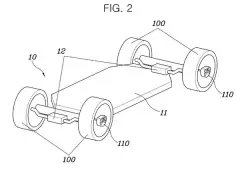
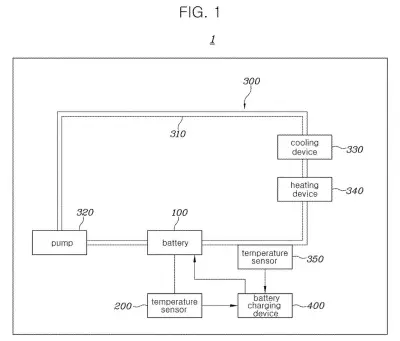
The system has four main parts: a battery pack with coolant flowing through it, a sensor that reads the temperature of the pack and of each individual cell, a coolant loop with a pump, a chiller and a heater, and a charging controller that ties it all together.
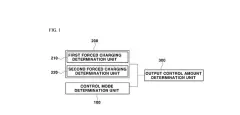
When you plug in, the controller looks at the temperature deviation (the gap between the warmest and coolest cells). If any cell is off by more than a preset reference value, the controller decides the battery needs temperature control before charging goes on. It then starts the pump so coolant moves through the pack, pulling heat from some cells and giving heat to others.
To speed this up, a second sensor reads the coolant itself. The controller aims for coolant at the average of the hottest and coolest cell temperatures. If the coolant is warmer than that, the chiller runs. If it is cooler, the heater runs.
Charging current is also adjusted. The car starts below the usual current for the battery's charge level and temperature. It then multiplies that current by a weighting factor tied to the cell gap. In the filing's example, the factor is 0.3 for a gap of 10°C or more, 0.6 for 8 to 10°C, and 0.9 for 5 to 8°C. As the gap shrinks, the current rises.
Why Kia's battery-heat check matters to EV owners
The payoff for you is a battery that wears out more evenly, which is what decides how long an electric car keeps its range. A pack is limited by its most worn cell, so slowing the wear on the worst cells helps the whole battery last longer.
The design also tries to avoid a slow charge. The car holds back power only while the cells are far apart in temperature, then speeds up as the gap closes. The filing says the pump alone can often do the job, which saves energy compared with firing up the chiller or heater. You would likely never see any of this on the dashboard, but you could notice it years later in how well the battery has held up.
Hyundai's seventh patent we've tracked since November in our Hyundai coverage follows filings like a smarter EV battery alert and a hydrogen car powering campsites.
Source: US 2026/0365063 A1 at the USPTO (PDF). Full patent text and figures are in the official publication.
Get our take in your Top Stories
Liked this breakdown? Add Patentlyze as a preferred source on Google, and our plain-English take shows up more often in your Top Stories the next time Hyundai & Kia patent news breaks.
Add Patentlyze on Google
One click.
There are more where this came from
We read the new patents from Big Tech, carmakers and more and send you the ones worth knowing. Plain English, free, every week.
The drawings · 3 sheets
3 drawing sheets from US 2026/0365063 A1 · click any drawing to enlarge


More from Hyundai & Kia
All 15 Hyundai & Kia patents →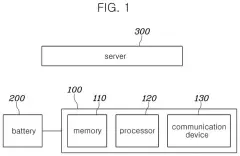
More in Automotive
All 432 Automotive patents →
GM
GM Files Patent for an EV That Tells You If Your Battery Will Last as Long as You Want
Ford
Ford Patents a Way to Keep an EV Battery Cool After Part of It Fails
GM
GM Files Patent to Heat EV Cabins With Heat From Your Brakes
GM
No comments yet