
GM
GM · Automotive · Filed May 15, 2025 · USPTO published Nov 19, 2026 · This week's release
GM Files Patent for Catching Bad EV Battery Packs Using Data Cars Send Home
GM's electric cars already phone home with battery data, and this patent describes a way to mine it for the one wire or circuit board that is making a battery read wrong. The goal is to catch the fault before it becomes a recall.
- Publication number
- US 2026/0367161 A1(US20260367161A1)
- Applicant
- GM GLOBAL TECHNOLOGY OPERATIONS LLC
- Filed · Published
- May 15, 2025 · Nov 19, 2026
- Inventors
- Zijin Chen, Guoqiang Lan, Shelby Patzer, Jie Du, Mahmoud Artima, Ryan B. Moulliet, William Crowe, Hui Chen, Paras Gandhi, Ali Talib
- Status when we published
- Approved; patent expected soon
- Document
- 20 claims
- US classification
- 701/31.4
- Examiner
- SARWAR, BABAR (Art Unit 3667)
What GM's battery-voltage watchdog actually does
A new electric SUV sits on a dealer lot, and its battery pack keeps sending voltage readings to a server. Buried in those numbers can be a sign of trouble: a circuit board that leaks a little current, or a sensor wire that was never welded or soldered well, which makes the car misread its own battery.
That's the problem GM goes after here. The patent describes a way to take the data cars already send home, sort readings taken within minutes of each other into batches, and look for two neighboring sections of the battery whose numbers drift in opposite directions. That pattern points to a faulty sensor board or a bad connection.
If a car's readings look off, the system can recommend replacing the pack, or just keeping an eye on it for a while when the evidence is thin. It can also run before the car is ever sold, using data from the factory or the dealership.
receiving data from a telematics system, the data comprising battery cell group voltage data from a plurality of measurement records, wherein each measurement record of the plurality of measurement records includes a timestamp including a date and time …
Translation: The system collects timestamped voltage reports sent remotely from the vehicle's battery.
How GM spots two neighboring cells drifting apart
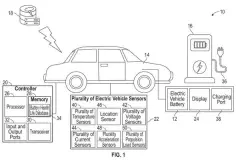
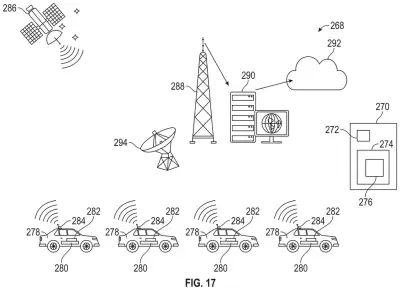
GM's connected cars send battery data (voltage, charge level, temperature, cell balance and mileage) to a remote server; the filing names OnStar as one suitable source. Because a reading can reach the server at a different time than the car recorded it, the system first bundles records from the same vehicle that fall inside a 600-second window into one measurement group.
Each sense line (a thin wire tapped onto a group of cells) reports a running voltage total, and one group's voltage is the difference between neighboring lines. So an error at one line pushes one group up and its neighbor down. The system hunts for that pair: one group more than a standard deviation (a measure of normal spread) above the module average, the other as far below, while the rest sit close to normal.
It then sorts the pattern into two kinds:
- Small gaps (20 mV or less in the filing's example) point to a defect on the cell monitoring unit board, such as current leaking through a capacitor or diode.
- Larger gaps point to a connection problem, such as a missing weld or a weak solder joint.
Each kind gets its own detection threshold.
A second route tracks cells whose voltage sags over time. A prediction model (the filing mentions XGBoost) scores each suspect cell: above 0.6 means faulty, 0.5 to 0.6 means keep monitoring. The cutoffs are tuned against real pack replacements, warranty claims and diagnostic codes.
… analyzing the data in the plurality of measurement groups to identify abnormal patterns and relationships with respect to data in one measurement group and data in a remainer of the plurality of measurement groups …
Translation: It compares different batches of battery data to spot unusual performance patterns.
Why GM wants to catch battery faults before recalls
The practical upside for you is a battery problem that gets found before it turns into a breakdown. The filing says wrong voltage readings can push the car's balancing software into bad charging and discharging choices, which can cut performance and range, annoy owners and lead to recalls. Catching the cause early, even at the dealership before a car is sold, could mean fewer surprise pack swaps.
The patent office has approved this application, and once GM pays the final fee it should be issued as a granted patent. The system also chooses between replacing a pack and simply monitoring it, based on a severity score tied to warranty history and warning codes. The filing says the aim is to avoid unnecessary interventions while still flagging real faults early.
GM's sixth patent application we've tracked since November in our GM coverage follows the battery life estimator and the pedal lockout system.
Source: US 2026/0367161 A1 at the USPTO (PDF). Full patent text and figures are in the official publication.
Get our take in your Top Stories
Liked this breakdown? Add Patentlyze as a preferred source on Google, and our plain-English take shows up more often in your Top Stories the next time GM patent news breaks.
Add Patentlyze on Google
One click.
There are more where this came from
We read the new patents from Big Tech, carmakers and more and send you the ones worth knowing. Plain English, free, every week.
The drawings · 15 sheets
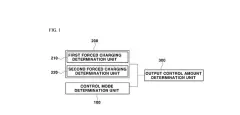
15 drawing sheets from US 2026/0367161 A1 · click any drawing to enlarge


Show the other 7 sheets


More from GM
All 10 GM patents →
More in Automotive
All 432 Automotive patents →
IBM
IBM Patents a Plan to Shuffle Cars Around So Their Sensors Use Less Battery
Ford
Ford Patents a Way to Keep an EV Battery Cool After Part of It Fails
Hyundai & Kia
Kia Patents a Battery Check That Waits Before Crying Wolf on Your EV
Hyundai & Kia
No comments yet