
Ford
Ford · Automotive · Filed May 14, 2025 · USPTO published Nov 19, 2026 · This week's release
Ford Patents a Way to Keep an EV Battery Cool After Part of It Fails
When part of an EV battery pack starts overheating, the standard response is to cut power to those cells. The problem: that also cuts power to the pump keeping the battery cool. Ford's new patent breaks that catch-22.
- Publication number
- US 2026/0365081 A1(US20260365081A1)
- Applicant
- Ford Global Technologies, LLC
- Filed · Published
- May 14, 2025 · Nov 19, 2026
- Inventors
- Mihir Devendra Upadhye, Kevin Mackenzie, Nathan Lee, Kevin Higgins
- Status when we published
- Approved; patent expected soon
- Document
- 20 claims
- US classification
- 701/22
- Examiner
- VORCE, AMELIA J.I. (Art Unit 3666)
How Ford's split-battery cooling fallback actually works
Every time an EV battery heats up faster than expected, the car has to make an uncomfortable choice: cut power to the troubled cells to protect them, or keep them running so the coolant pump stays on. Right now, those two things are tied together, and switching one off means switching both off.
Ford's approach splits the battery pack into two groups of cells, each one sitting in cooling fluid. If the sensors detect that one group is overheating (rising pressure in the fluid is one of the signals they watch), the car electronically disconnects that group while keeping the other group live. The healthy group then powers the coolant pump, so the struggling cells actually get more cooling right when they need it most.
The car can still drive on the remaining group, though at reduced range, and the failing cells are bathed in fluid the whole time rather than left to cook in isolation. It is a failsafe designed to let you keep moving and protect the battery at the same time.
… electrically deactivating a first group of fluid immersed battery cells of the battery pack and electrically activing a second group of fluid immersed battery cells of the battery pack in response to an indication of thermal degradation …
Translation: The system shuts off damaged cells while keeping healthy cells running when things get too hot.
How switches and valves reroute power when a cell group degrades
The battery pack is divided into two groups of cells, both submerged in a cooling fluid (the filing mentions glycol as one option). A set of three switches, labeled S1, S2, and S3 in the filing, controls how those groups connect to the car's high-voltage electrical bus.
In normal driving, switch S3 is closed and S1 and S2 are open, putting both groups in series so the bus gets the full combined voltage. When the system detects thermal degradation in one group (a pressure spike in the cooling fluid above a preset threshold, or a drop in pump speed paired with a rise in the pump's power draw), the controller opens the two switches isolating the bad group and closes the one that routes current only through the healthy group.
- Deactivated group: no current flows in or out; the cells stop generating heat from electrical load.
- Active group: still connected to the bus, so it can run the traction motor and, critically, the DC/DC converter that powers the coolant pump.
- Coolant valves: the system also opens the valve to the troubled group wider, pushing more fluid through it, while maintaining flow to the healthy group.
The bus voltage drops to roughly half when only one group is active, which limits top-end power, but the patent confirms that propulsion and cooling both remain operational. The filing also describes using pump speed and power consumption as early-warning signals: if the pump has to work harder than expected (rising electrical draw) while slowing down, that may mean internal pressure in the cells is building before temperatures spike visibly.
… allow a battery pack that is split into two or more groups of battery cells to be controlled to a desired temperature and remain operational in the presence of battery pack degradation …
Translation: It lets the vehicle keep driving safely even if part of the battery starts to fail.
What this means for EV reliability when the battery goes wrong
For EV owners, the nightmare scenario is not just a battery failure but a battery failure that cascades because the car could not cool itself through it. This patent targets that specific gap. If Ford puts this into production vehicles, it means a degrading cell group gets isolated and kept cold, rather than isolated and left to its own thermal fate. The car stays drivable, and the battery has a better chance of surviving the event without permanent damage.
The application has been approved by the patent office, and once Ford pays the final issue fee it should be issued as a granted patent. That approval signals the patent office found the specific combination of switch logic and fluid-cooling control to be novel. Ford's interest here covers both battery electric vehicles and hybrid powertrains, and the filing explicitly extends the idea to marine, agricultural, and off-highway vehicles, so the potential scope is wider than passenger cars alone.
One more thing to know: the patent office has already approved this application. Once Ford pays the final fee, it should be issued as a granted patent, and the final claims may read a little differently from the version described here.
Ford's eighth filing we've tracked since November in our Ford coverage follows patents like the folding roof rack for e-bikes and the single trailer-brake dial.
Source: US 2026/0365081 A1 at the USPTO (PDF). Full patent text and figures are in the official publication.
Get our take in your Top Stories
Liked this breakdown? Add Patentlyze as a preferred source on Google, and our plain-English take shows up more often in your Top Stories the next time Ford patent news breaks.
Add Patentlyze on Google
One click.
There are more where this came from
We read the new patents from Big Tech, carmakers and more and send you the ones worth knowing. Plain English, free, every week.
The drawings · 7 sheets
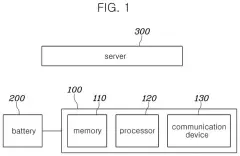
7 drawing sheets from US 2026/0365081 A1 · click any drawing to enlarge


More from Ford
All 8 Ford patents →
More in Automotive
All 432 Automotive patents →
Tesla
Tesla Patents a Fallback for When Part of Its Car Screen Fails
GM
GM Files Patent for an EV That Tells You If Your Battery Will Last as Long as You Want
Ferrari
Ferrari Files Patent for Side Wings That Also Help Cool the Radiators
Hyundai & Kia
No comments yet