
Microsoft
Microsoft · AI / ML · Filed Jul 15, 2026 · USPTO published Nov 12, 2026 · This week's release
Microsoft Patents an AI Judge That Picks the Cleanest Photo Cutout
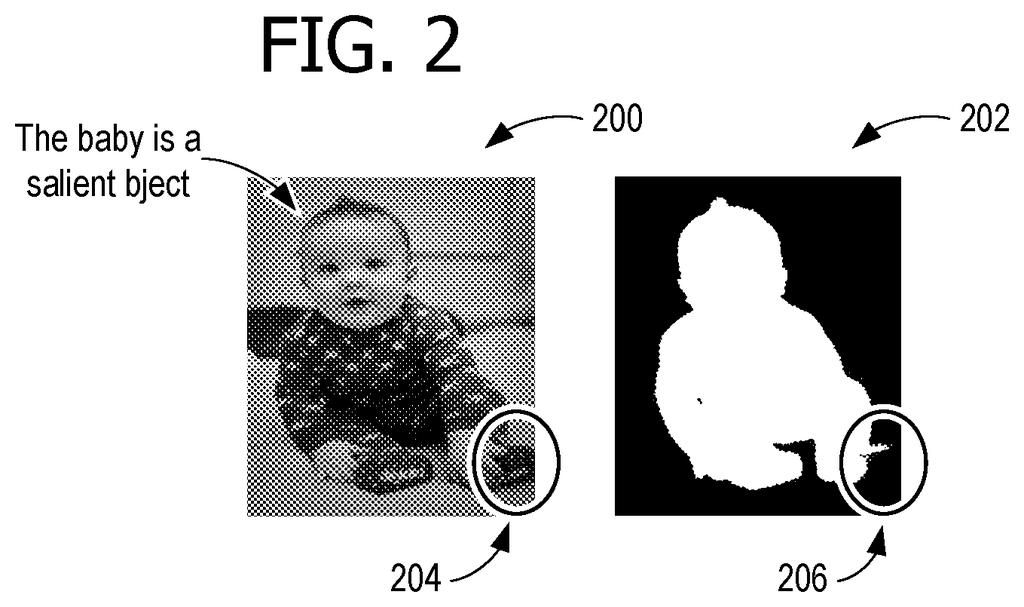
Microsoft's patent describes an AI that grades photo cutouts, catching flaws like a baby's missing foot, without ever being shown the correct answer.
- Publication number
- US 2026/0360140 A1(US20260360140A1)
- Applicant
- Microsoft Technology Licensing, LLC
- Filed · Published
- Jul 15, 2026 · Nov 12, 2026
- Inventors
- Dongdong CHEN, Yunsheng LI, Lu YUAN, Xuelu FENG
- Status when we published
- Waiting for an examiner
- Document
- 1 claims
- US classification
- 382/100
- Parent application
- Continuation of 18/431,913 (filed Feb 2, 2024)(18431913)
What Microsoft's photo-cutout grader actually does
Ever cut a person out of a photo, only to find a foot missing from the outline? Editing tools start by tracing an outline around the main subject, and when that trace is sloppy, everything built on it looks off: ragged edges, leftover background, or a body part that vanishes.
Microsoft's patent has several different outline-drawing programs (or one program run with different settings) all trace the same photo. A separate AI grader then looks at the photo and each outline together and gives each one a quality score. The highest scorer goes on to the editing job, and you can set a minimum score so weak outlines get tossed.
The odd part is that the grader never sees a perfect answer to compare against. It learned from people who rated outlines, so it judges new ones roughly the way a person would.
… cause a quality predictor to assign a first quality score to the first segmentation mask, wherein the quality predictor comprises a multi-stage vision transformer model having multiple sequential transformer stages and a query head; …
Translation: An advanced neural network grades how well each cutout isolates the intended subject.
How the grader scores each outline without answers
The filing covers a system that takes an image with an object in it and produces at least two segmentation masks (digital cutouts that mark which pixels belong to the main object). One comes from a first object detector with one set of settings, and another comes from a different detector with different settings. The description names U2Net, DIS and SelfReformer as example detectors, and says one program run with different settings can also supply the competing masks.
A quality predictor then scores each mask. In the claim, it is a multi-stage vision transformer (an AI model that studies an image in several successive layers) topped by a "query head," a final piece that outputs a learned list of numbers representing how good the mask is predicted to be. It looks at the image and the mask together as a pair.
Training came from people. Human raters scored masks from 1 to 4, judging only the quality of the cutout itself (is it complete, are the edges clean), not whether it picked the right object or how many objects it found.
Finally, a mask is chosen when its score beats the competing mask and also clears a threshold the user sets. The chosen mask then feeds an image processing task. The description also covers reports that show which detectors or settings tend to do best.
A quality predictor assigns a quality score to each segmentation mask, without using ground truth for the image(s).
Translation: The system ranks the quality of each cutout without needing a reference image to compare against.
Why cleaner cutouts matter for photo editing tools
If you have ever swapped a photo background or erased a stranger from a vacation shot, you have relied on a cutout like this. The filing says inaccurate outlines often cause editing glitches that hurt the final result, so automatically picking the best one is a direct fix. It also describes an AI cursor that lets you hover over an object in a photo to learn about it and search for similar images.
Behind the scenes, the same grader could help build and clean up huge image collections used to train other AI models. The filing notes that thousands of outlines are far too many for people to check by hand, so a grader can flag weak ones and suggest better replacements. The filing does not name any product.
Microsoft has now filed its tenth patent we've tracked in the AI photo editing race since July, adding to earlier applications like filling in missing video detail and sharpening low-quality video.
Source: US 2026/0360140 A1 at the USPTO (PDF). Full patent text and figures are in the official publication.
Get our take in your Top Stories
Liked this breakdown? Add Patentlyze as a preferred source on Google, and our plain-English take shows up more often in your Top Stories the next time Microsoft patent news breaks.
Add Patentlyze on Google
One click.
There are more where this came from
We read every patent application Big Tech publishes and send you the ones worth knowing. Plain English, free, every week.
The drawings · 9 sheets
9 drawing sheets from US 2026/0360140 A1 · click any drawing to enlarge


Show the other 1 sheets

More from Microsoft
All 646 Microsoft patents →
More in AI image & video
All 223 AI image & video patents →
Samsung
Samsung Patents an AI That Grades Its Own Photo Edits to Get Better Over Time
Samsung
Samsung Files Patent for Photo Editing That Finishes Cut-Off People You Drag Around
Adobe
Adobe Files Patent for a Photo Editor That Suggests Fixes Based on What's in Your Picture
Qualcomm
No comments yet