
Google
Google · Security · Filed Jan 2, 2025 · USPTO published Nov 19, 2026 · This week's release
Google Files Patent for Counting App Installs From Ads Without Seeing Who You Are
Google's patent filing has your phone do the ad-credit matching itself, while the server mixes in a decoy so the phone never learns if the ad actually worked.
- Publication number
- US 2026/0368245 A1(US20260368245A1)
- Applicant
- Google LLC
- Filed · Published
- Jan 2, 2025 · Nov 19, 2026
- Inventors
- Satvik Chauhan, Haonan Chen, Kevin Wei Li yeo, Da Won Lee, Leili Rasouli, Zhern Sue Lai
- Status when we published
- Examiner raised objections; the company can respond
- Document
- 34 claims
- US classification
- 707/769
- Examiner
- TRAN, LOC (Art Unit 2164)
- Parent application
- National Stage Entry of PCT/US2024/051402 (filed Oct 15, 2024)(PCTUS2024051402)
What Google's on-phone ad matching actually does
Every time you tap an ad and then download the app it promoted, someone on the other end wants to know the ad worked. That credit-keeping is called attribution, and it got harder once phones largely dropped the device ID tags advertisers used to count on.
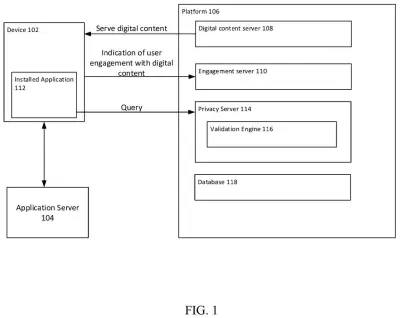
Google's filing describes a workaround where your phone does the matching. When you tap the ad, Google's servers store a scrambled version of your IP address (the number your connection uses online) along with a rough date. When you install the app, your phone scrambles its own address the same way and asks the server for similar-looking entries, sending only a fragment of the scramble.
The server sends back a batch of possible matches, and your phone checks them. The twist: your phone can't tell whether any match is real. Only the server can confirm one, and it may even send a decoy so your phone never learns whether the ad worked.
The hashes are transient identifiers that remove any personalized information associated with the user such that the user remains anonymous while an attribution can still be determined.
Translation: Temporary codes strip out personal data to keep you anonymous while still tracking ad clicks.
How a scrambled IP address gets matched to an install
The claimed method runs inside an app on your device. After install, the app builds an installation keyed hash of the device's network identifier, usually an IP address. A keyed hash is a one-way scramble made with a secret key, so the original number can't be read back out.
Earlier, the server stored a timestamped engagement hash for the ad tap (the scrambled address mixed with the date or time window). The phone sends only a short prefix of its hash. The server returns every stored entry that starts the same way as candidate matches. The prefix length works like a dial: shorter means more anonymity and more candidates, longer means fewer candidates and less anonymity.
From there:
- The phone decrypts the candidates (the server encrypts them, in some versions twice, once with a key from the phone and once with its own).
- It compares them against its own timestamped installation hash and keeps any that line up as possible valid matches.
- It sends those to the server, which alone validates them.
The server can also filter out taps that happened after the install, and may return a decoy when no true match exists.
… generating, by the one or more processors of the user device, an installation keyed hash of a network identifier associated with the user device; …
Translation: Your phone creates a special hidden code using your network info when you install the app.
Why Google wants ad results without the tracking IDs
If you ever install an app after seeing an ad, this describes a way for advertisers to learn the ad worked without receiving your name, email or a device ID. The filing says that feedback keeps ad-picking models useful, and that losing device IDs has made it hard to get. The description also says your raw data stays on the device and only masked results go to servers, which it ties to attribution transparency regulations.
It is a patent application, not a product. The examiner's first review rejected the claims as filed, which is routine at this stage and usually followed by amendments, and nothing in the filing ties it to a specific Google product.
This is the 72nd Google filing we've tracked since May in our on-device AI privacy watch, following applications like try-on previews and fall detection without faces.
Source: US 2026/0368245 A1 at the USPTO (PDF). Full patent text and figures are in the official publication.
Get our take in your Top Stories
Liked this breakdown? Add Patentlyze as a preferred source on Google, and our plain-English take shows up more often in your Top Stories the next time Google patent news breaks.
Add Patentlyze on Google
One click.
There are more where this came from
We read every patent application Big Tech publishes and send you the ones worth knowing. Plain English, free, every week.
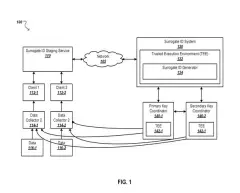
The drawings · 4 sheets
4 drawing sheets from US 2026/0368245 A1 · click any drawing to enlarge


More from Google
All 1,127 Google patents →
More in Security
All 353 Security patents →
IBM
IBM Files Patent for Testing Apps With Real Data After Scrubbing Private Details
Qualcomm
Qualcomm Files Patent for Shrinking AI Image Generators to Fit on Your Phone
Adobe
Adobe Files Patent for Teaching Its AI With Made-Up User Requests
Microsoft
No comments yet