
Google
Google · AR / VR · Filed Jul 23, 2026 · USPTO published Nov 19, 2026 · This week's release
Google Files Patent for Try-On Previews That Never Touch Your Camera
Google's patent application describes a way to show you how a lipstick or a sofa would look without ever seeing your face or your living room. A set of sample photos does the job instead.
- Publication number
- US 2026/0368243 A1(US20260368243A1)
- Applicant
- Google LLC
- Filed · Published
- Jul 23, 2026 · Nov 19, 2026
- Inventors
- James Sraw Singh, Ivan Neulander, Subramanian Shyamsunder Mathur, Agustin III Olivan Venezuela
- Status when we published
- Waiting for an examiner
- Document
- 20 claims
- US classification
- 345/633
- Parent application
- Continuation of 18/658,163 (filed May 8, 2024)(18658163)
What Google's sample-photo try-on actually does
Every time you shop online for lipstick or a sofa, you hit the same wall: the product photo shows it on a model or in a staged room, not on you or in your home. Augmented reality try-on can fix that by laying the product over your camera view, but plenty of people skip it. Maybe they're on a train, maybe they don't feel camera-ready, or maybe they just don't want to hand over camera access.
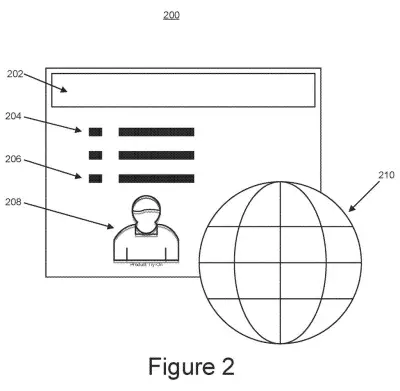
Google's patent application describes a workaround. The company collects a set of sample photos, such as faces with different eye colors or living rooms with different color schemes. It then digitally places a product into every one of them ahead of time and files the finished pictures away, tagged by product.
When you search, you get a picture of the product on a sample that resembles you. You pick the template you like, and the choice can be remembered. A link to the full live try-on stays available if you change your mind.
… processing, by the computing system, the plurality of template images and the plurality of segmentation masks with the rendering model to generate a plurality of prerendered images, wherein the plurality of prerendered images are generated based on the augmented reality asset associated with the product …
Translation: The system mashes up stock models and product graphics ahead of time to build a library of virtual try-on previews.
How template photos become ready-made product previews
The patent covers a pipeline for making and storing prerendered images: finished pictures of a product placed into a sample photo, made before any shopper asks for them.
First, the system picks template images from a large pool of photos. They are chosen to represent a typical range for a topic, such as faces, rooms or yards. Each template gets a segmentation mask (an outline that marks which pixels are the lips, the floor, the wall and so on), so the product lands in the right spot.
Next, a brand or retailer supplies a rendering model (the recipe for drawing its product realistically, including color and shine). Google gives these third parties a software development kit (a toolbox for building the effect) and receives the finished effect back as a compressed file. The system runs every template through that recipe.
The results are saved and tagged by product, with consistent names for products and colors so searches match correctly. The filing describes several ways to use them:
- Show a prerendered image as a search result for a product.
- Show a carousel of the same product on different templates.
- Pick the template a user saved as their preference.
- Offer a link to a live try-on that does use the camera.
The filing also describes rendering a product to its real measurements, such as checking how much room a piece of furniture takes up.
Systems and methods for generating augmented reality prerenderings can provide the benefit of an augmented reality rendering without requiring the use of user data.
Translation: Shoppers get to see how items look without needing to share their own photos or video feeds.
What this means for shopping without a camera
For you, the practical gain is a try-on preview that works in situations where a live camera view does not: in a store aisle, on a bad hair day, or when you would rather not give an app camera access. The filing also notes that live AR needs a lot of bandwidth and processing power, and showing a stored picture is far lighter.
For brands, the appeal is reach. A cosmetics or furniture company that builds one rendering effect could have its product appear in search results on many sample faces and rooms. The filing also describes using your saved template to personalize product ads, so expect the commercial angle to be as important as the convenience.
This is the 71st Google filing we've tracked since May on on-device AI privacy, following work on a speaker that reads your calendar and fall detection without face recognition.
Source: US 2026/0368243 A1 at the USPTO (PDF). Full patent text and figures are in the official publication.
Get our take in your Top Stories
Liked this breakdown? Add Patentlyze as a preferred source on Google, and our plain-English take shows up more often in your Top Stories the next time Google patent news breaks.
Add Patentlyze on Google
One click.
There are more where this came from
We read every patent application Big Tech publishes and send you the ones worth knowing. Plain English, free, every week.
The drawings · 11 sheets
11 drawing sheets from US 2026/0368243 A1 · click any drawing to enlarge


Show the other 3 sheets


More from Google
All 1,127 Google patents →
More in AR / VR
All 713 AR / VR patents →
Samsung
Samsung Patents a Way to Animate Your Face From a Single Photo Using Only Your Voice
Apple
Apple Patents a Facial Animation System That Learns Your Face in Real Time
Sony
Sony Files Patent for a Camera That Scrambles Faces Before the Image Is Even Recorded
Microsoft
No comments yet