
Google
Google · AI / ML · Filed Apr 17, 2026 · USPTO published Nov 19, 2026 · This week's release
Google Files Patent for Picking Ads to Sit Inside AI Search Answers
When an AI writes you a long answer, the ad system behind it still needs a few short keywords to work with. This patent application describes a middle step that boils the answer down to a shopping-style search phrase, and decides whether an ad is worth requesting at all.
- Publication number
- US 2026/0368476 A1(US20260368476A1)
- Applicant
- Google LLC
- Filed · Published
- Apr 17, 2026 · Nov 19, 2026
- Inventors
- Vincent Leroy, Dorothea Wiesmann Rothuizen, Dan Beat Kluser, Stefan Postavaru, Witold Zbigniew Slowinski, Gokhan Mergen, Kumar Avinava Dubey, Michael James Boratko, Sai Meher Karthik Duddu, James Kuczmarski Johnsrud, Iftekhar Naim, Siddhant Mittal, Baixu Chen
- Status when we published
- Waiting for an examiner
- Document
- 21 claims
- US classification
- 707/723
- Parent application
- Claims priority from a provisional application 63807337 (filed May 16, 2025)
What Google's AI search ad matching actually does
You ask Google's AI search assistant how to start a podcast for your small business, and it writes back a long, helpful walkthrough. Somewhere behind the scenes, an ad system has to decide whether to slip in a link, and it was built for short searches like "podcast microphone," not essays.
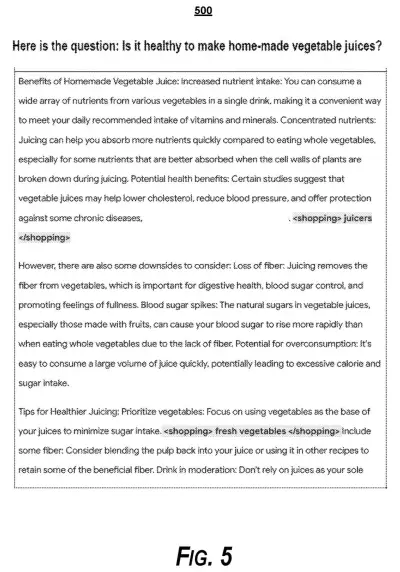
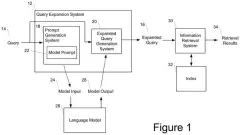
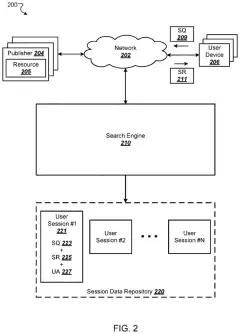
This patent application describes a go-between. The AI breaks your question into narrower ones (cheap microphones, editing software), looks up results for each, and boils everything down to a short proxy phrase such as "beginner podcast microphone bundle." It also gives that phrase a score. A high score means you probably want to buy something, so the phrase goes to the ad server. A low score, say for a question about history, means no ad gets requested.
The result is a link you can shop from, sitting inside the answer you're already reading.
… processing, using the first machine-learned model, the user query to generate a plurality of subqueries, the plurality of subqueries being associated with subcategories of the first category; …
Translation: The system breaks a search into smaller parts using AI.
How Google turns a question into an ad search
The claims cover a pipeline built around a machine-learned model (a program trained on lots of examples until it can spot patterns, like what a pile of search results is really about). It starts with a user query tied to a broad category, such as food and beverage.
From there, the steps run like this:
- Split: the model breaks the question into subqueries, narrower questions tied to subcategories. "How many tennis balls fit in a trunk?" becomes "how big is a tennis ball?" and "how big is this car's trunk?"
- Search: the system gathers search results for each subquery.
- Condense: the model reads those results and writes a proxy phrase, a short set of keywords meant to capture what you want.
- Score: the model gives that phrase a ranking score.
- Fetch: based on the score, the system asks a content server (the filing's example is an ad backend) for a matching item.
Several dependent claims add detail. The score can come from how closely the phrase matches a rough first-draft answer. The fetch can run in parallel with the full answer being written. Below a threshold, such as for a non-commercial question, nothing is fetched. A second phrase can be made when the score is high, and your earlier queries can feed in as context.
The description also mentions a second model that rewrites the fetched ad as text and embeds it as a link inside the answer. That part is described in the filing but is not in the claims.
… calculate, using the first machine-learned model and based on the plurality of search results, a ranking score for the first proxy phrase.
Translation: An AI model scores the search results to pick relevant ads.
Why ads inside Google's AI answers matter to you
If you use AI search, answers could start carrying shopping links tied to what the answer actually says, not just to the words you typed. The filing also describes the opposite case: questions with no product or service behind them would get no link at all.
For Google and advertisers, the appeal is practical. Ad systems were built around a few keywords, and long AI answers don't fit them. A translation step lets existing ad backends keep working, and running it alongside the answer means you shouldn't wait longer for the text. The filing says the phrases are meant to be a privacy-safe picture of your intent, and it calls out ad relevance and filters for inappropriate content as part of the design.
This is the 122nd Language AI filing from Google we've tracked since May, adding to work like translating video calls and on-screen text translation.
Source: US 2026/0368476 A1 at the USPTO (PDF). Full patent text and figures are in the official publication.
Get our take in your Top Stories
Liked this breakdown? Add Patentlyze as a preferred source on Google, and our plain-English take shows up more often in your Top Stories the next time Google patent news breaks.
Add Patentlyze on Google
One click.
There are more where this came from
We read every patent application Big Tech publishes and send you the ones worth knowing. Plain English, free, every week.
The drawings · 15 sheets
15 drawing sheets from US 2026/0368476 A1 · click any drawing to enlarge


Show the other 7 sheets


More from Google
All 1,127 Google patents →
More in AI / ML
All 2,738 AI / ML patents →
IBM
IBM Patents a Fix for Search Results That Match the Words but Miss the Answer
IBM
IBM Files Patent for Turning Finished Documents Into Question Lists for AI
Qualcomm
Qualcomm Files Patent for Small AI Models That Fix Broken Code Edit by Edit
Microsoft
No comments yet