
IBM
IBM · AI / ML · Filed May 7, 2025 · USPTO published Nov 12, 2026 · This week's release
IBM Files Patent for Turning Finished Documents Into Question Lists for AI
Most of any report is boilerplate, and only a few numbers and names change each time. IBM's patent application describes software that finds those changing parts in an old document and turns them into questions for an AI to answer.
- Publication number
- US 2026/0359558 A1(US20260359558A1)
- Applicant
- International Business Machines Corporation
- Filed · Published
- May 7, 2025 · Nov 12, 2026
- Inventors
- Sarbajit Kumar Rakshit, Sathya Santhar, Sridevi Kannan
- Status when we published
- Waiting for an examiner
- Document
- 20 claims
- US classification
- 715/234
What IBM's document-to-question tool actually does
A finance team opens last quarter's report and starts typing new numbers over the old ones, one sentence at a time. Sections written by different people end up sounding like different authors, and a stale figure can slip through.
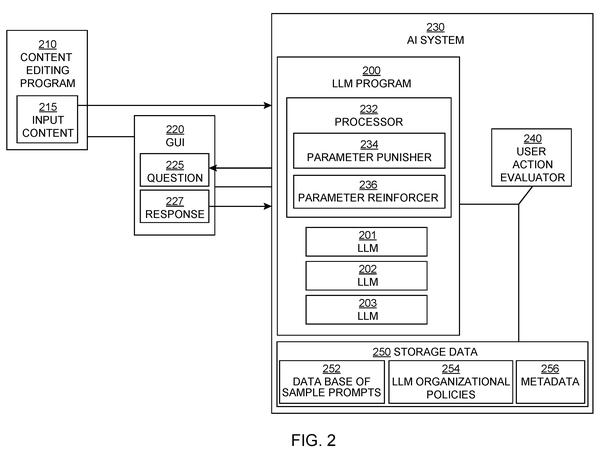
IBM's patent application describes a tool that does the grunt work for you. It reads a finished document and sorts out which parts never change (the headings, the standard wording) and which parts change every time (the dollar figures, the names, the dates). Then it turns each changing part into a question, like "What was the net loss reported by the company?"
An AI answers those questions using your data, and the new document comes out in the same voice as the old one. You get a fresh report without starting from a blank page.
an identifying component that identifies a reference document corresponding to a specified context subject or a specified client entity, the reference document comprising first dynamic elements that define first context information; …
Translation: The system finds a source document based on a specific topic or client.
How IBM spots the parts of a report that change
The system starts by finding a reference document, meaning a finished document written for the same subject or the same client as the one you want to produce. It then tags each piece of text as static (stays the same every time) or dynamic (changes with new information).
The filing describes two ways to do the tagging. One is a language model trained on thousands of hand-tagged examples to pick out names, figures and similar items. The other compares two documents, such as a company's third-quarter and fourth-quarter results, using a long short-term memory transformer (a model that tracks how words relate to earlier words). Parts that differ in meaning count as dynamic, and sentences worded differently but meaning the same count as static.
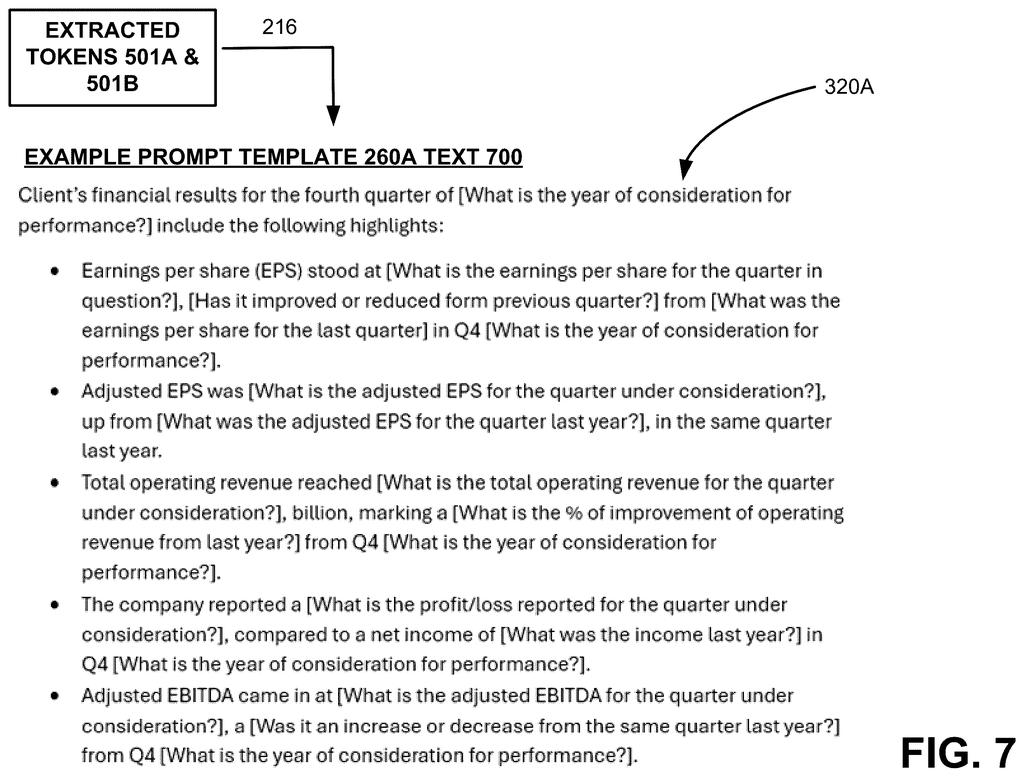
Next, each dynamic piece becomes a prompt. From the line "The company reported net loss of X million dollars," the system generates the question "What was the net loss reported by the company?" Prompts can also be layered, so one answer shapes the next question, like a tree branching from one stem.
Finally, a retrieval-augmented generation model (an AI that looks up outside information before writing) answers the prompts using public data, databases or your own entries. Optional pieces keep the original writing style, generate matching charts, and let you edit the result.
… a generating component that, based on the first dynamic elements, generates a prompt template corresponding to the specified context subject or the specified client entity and comprising second dynamic elements that define second context information different from the first context information.
Translation: It turns that source document into a reusable template filled with adjustable placeholders.
What this means for your next quarterly report
Anyone who writes the same kind of document again and again could use this. The filing's own example is a request for proposal, the long document a company sends out when it wants bids on a project, often with several teams writing different sections. A tool that builds the template from a past proposal and keeps the writing style consistent could cut down on rewriting and on mismatched voices.
The filing says existing tools cannot fetch a similar past document and build from it, and it adds that the output need not copy the old structure. It describes no product, so there is nothing to try today. It does show IBM mapping out how AI could handle the repetitive paperwork of business.
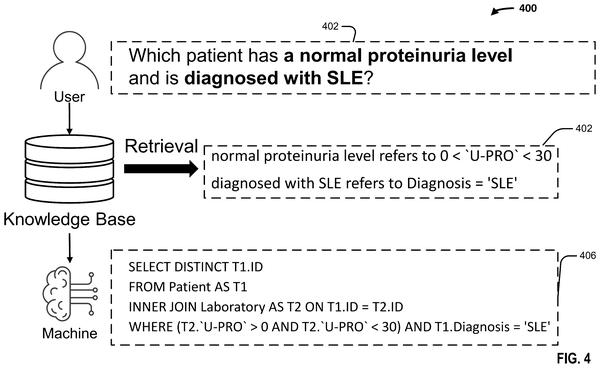
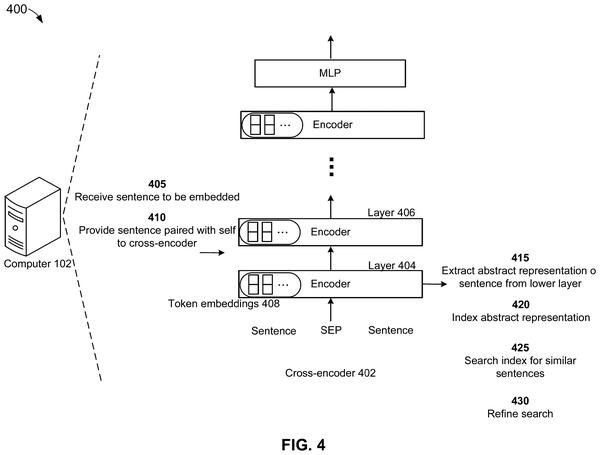
IBM's 43rd filing in the Language AI work we've tracked since May connects to earlier ideas like plain-English database queries and showing an AI a sentence twice to speed up search.
Source: US 2026/0359558 A1 at the USPTO (PDF). Full patent text and figures are in the official publication.
Get our take in your Top Stories
Liked this breakdown? Add Patentlyze as a preferred source on Google, and our plain-English take shows up more often in your Top Stories the next time IBM patent news breaks.
Add Patentlyze on Google
One click.
There are more where this came from
We read every patent application Big Tech publishes and send you the ones worth knowing. Plain English, free, every week.
The drawings · 11 sheets
11 drawing sheets from US 2026/0359558 A1 · click any drawing to enlarge


Show the other 3 sheets


More from IBM
All 470 IBM patents →
More in AI / ML
All 2,637 AI / ML patents →
Google
Google Patents an AI Document Writer That Knows When to Ask You a Question

Google
Google Patents a Retrieval-Augmented System for Visual Question Answering
Google
A New Google Patent Teaches Software to Spot Glare on Scanned Documents
Microsoft
No comments yet