
IBM
IBM · AI / ML · Filed May 8, 2025 · USPTO published Nov 12, 2026 · This week's release
IBM Patents a Fix for Search Results That Match the Words but Miss the Answer
Search tools often return a sentence that shares your words but doesn't answer your question. IBM's fix is to chop the stored text into pieces and leave your question whole.
- Publication number
- US 2026/0359551 A1(US20260359551A1)
- Applicant
- International Business Machines Corporation
- Filed · Published
- May 8, 2025 · Nov 12, 2026
- Inventors
- Jeffrey Scott McCarley, Radu Florian, Robert Todd Ward
- Status when we published
- Examiner raised objections; the company can respond
- Document
- 20 claims
- US classification
- 704/9
- Examiner
- JACKSON, JAKIEDA R (Art Unit 2657)
What IBM's fragment-search patent actually does
Every time you type a question into a search box, a computer has to pick which stored sentence answers it. Sometimes it grabs an impostor. Ask 'Is Jane Doe a blacksmith?' and the system might hand back a story about a veterinarian named Jane Smith rescuing a black-tailed doe, because so many words overlap.
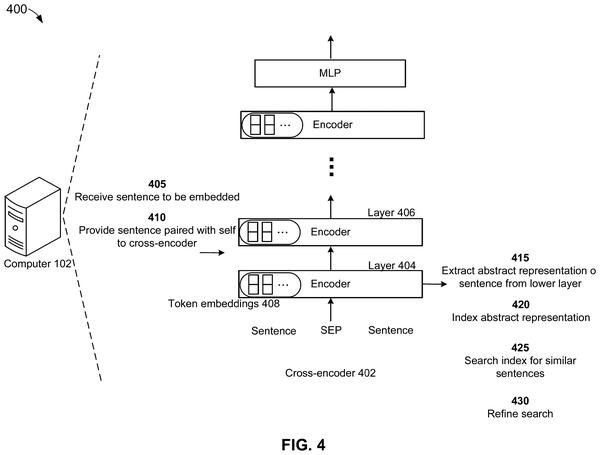
IBM's patent application describes a different way to read the stored sentence. Instead of judging it as one block, the system chops it into short fragments, reads each fragment on its own, and then checks whether any single fragment looks like your question. The question itself stays in one piece.
In the blacksmith example, 'Jane' and 'Doe' sit side by side in the correct sentence, so they land in the same fragment and trigger a match. In the veterinarian story they are far apart, so no fragment resembles the question and the impostor loses.
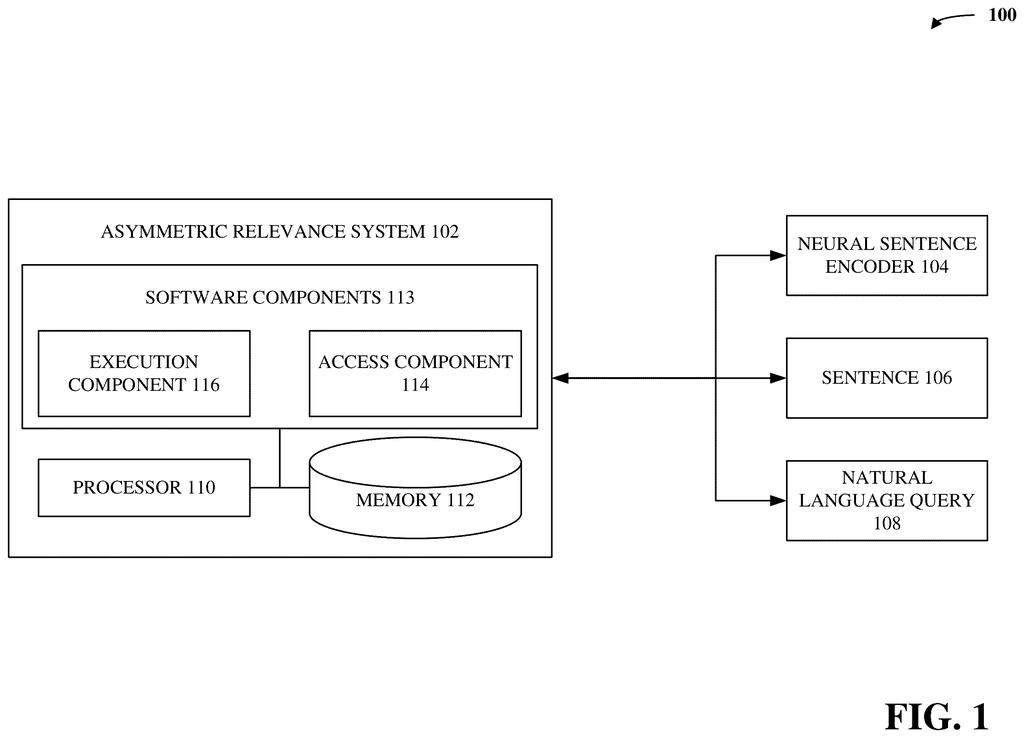
an access component that accesses a first textual passage and a neural sentence encoder; and an execution component that generates a first embedding for the first textual passage based on independently executing the neural sentence encoder on a plurality of fragments of the first textual passage.
Translation: The system breaks down a text into smaller pieces and runs an AI encoder on each part separately.
How IBM slices the answer but not the question
Search systems like this turn text into embeddings: a fixed-length list of numbers that works as a fingerprint for what a piece of text means. Texts with similar meanings get similar lists, and a score such as cosine similarity or Euclidean distance (two standard ways to measure how close two lists are) says how near they are.
The claims cover a system, a method and a stored-program version, all built on one move. A sentence encoder (the neural network that produces the fingerprints) is run separately on several fragments of a passage, which the system finds with ordinary text parsing. The fragment fingerprints are then fused into one for the whole passage, either by joining them end to end or by adding them together.
The filing also describes compressing each fragment's fingerprint before joining, so the passage fingerprint ends up the same length as the question's. The other text, such as the question, is encoded whole in a single pass. If the similarity score clears a threshold, the two are treated as related.
Once there is a match, the system can score the question against each fragment to find which piece answers it. The filing says this can happen even when a caller asks for ordinary whole-passage encoding, and that a 'passage' can stretch from a sentence to a chapter, a webpage or a book.
… independent execution of the neural sentence encoder on the plurality of fragments can yield a plurality of fragment embeddings, and the first embedding for the first textual passage can be based on fusing the plurality of fragment embeddings.
Translation: It then combines all those individual pieces back together into a single unified search profile.
Why look-alike answers trip up search today
If you use any tool that digs answers out of a pile of documents (a company help site, a research database), the annoying failure is a confident result that shares your words but misses your point. This patent application goes straight at that failure. Because the filing says passages can be paragraphs or chapters, the same trick could also point to the specific stretch of text that answers you.
The costs show up in the filing too: every passage gets read in several pieces, and stored fingerprints grow unless they are compressed. The examiner's first review rejected the claims as filed, which is routine at this stage and usually followed by amendments, so nothing here is approved or granted.
IBM's 44th filing in Language AI patents we cover since May follows earlier applications like turning documents into question lists and plain-English database queries.
Source: US 2026/0359551 A1 at the USPTO (PDF). Full patent text and figures are in the official publication.
Get our take in your Top Stories
Liked this breakdown? Add Patentlyze as a preferred source on Google, and our plain-English take shows up more often in your Top Stories the next time IBM patent news breaks.
Add Patentlyze on Google
One click.
There are more where this came from
We read every patent application Big Tech publishes and send you the ones worth knowing. Plain English, free, every week.
The drawings · 11 sheets
11 drawing sheets from US 2026/0359551 A1 · click any drawing to enlarge


Show the other 3 sheets


More from IBM
All 470 IBM patents →
More in AI / ML
All 2,637 AI / ML patents →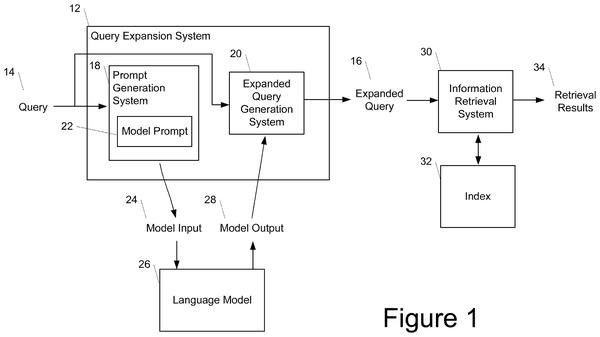
Google
Google Files Patent for Letting an AI Add Search Words You Never Typed
Meta
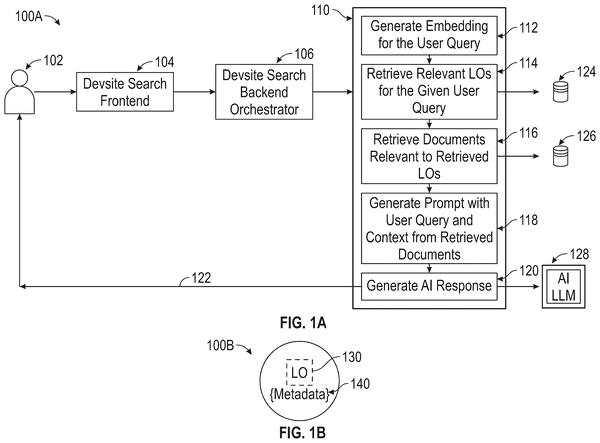
Meta Patents a Search System That Matches Queries to Learning Goals Before Fetching Results
Microsoft
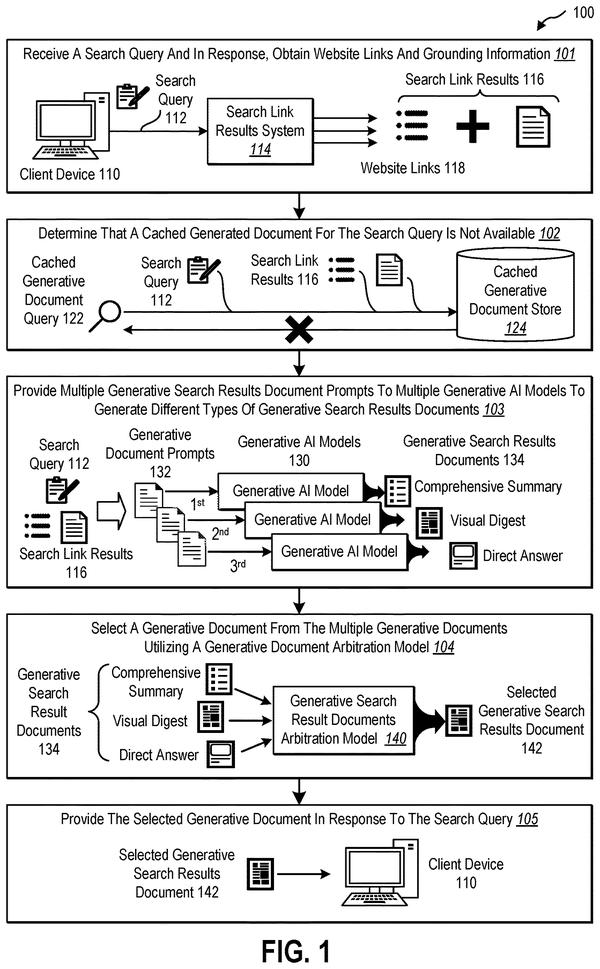
Microsoft Files Patent for a Search Engine That Picks the Best AI Answer Format
Salesforce
No comments yet