
Google
Google · Software · Filed Oct 29, 2025 · USPTO published Nov 19, 2026 · This week's release
Google Files Patent for Sending Your Ad Clicks to a More Fitting Web Page
When you tap an ad, the page you land on is usually one the advertiser picked by hand, even if a better one exists. Google's filing describes a way to find that better page automatically, across tens of billions of web pages.
- Publication number
- US 2026/0368261 A1(US20260368261A1)
- Applicant
- Google LLC
- Filed · Published
- Oct 29, 2025 · Nov 19, 2026
- Inventors
- Niraj Kumar, Krishna Kanth Tatavarthi, Ashish Tickoo, Adrian Jeremy Jane, Deepak Lukose, Chaitanya Gajanan Gokhale, Hang Yin, Eyuel Haileyesus Tessema, Wuyuan Li, Zhuowei Cai
- Status when we published
- Examiner raised objections; the company can respond
- Document
- 20 claims
- US classification
- 707/737
- Examiner
- MINA, FATIMA P (Art Unit 2159)
- Parent application
- Claims priority from a provisional application 63806775 (filed May 16, 2025)
What Google's ad-click redirect patent does
Imagine you search for 'red shoes' and tap an ad from a shoe store. Instead of landing on the store's home page, you land on a page about red shoes. That gap between where ads send you and where they could send you is what this patent application goes after.
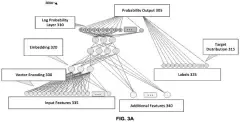
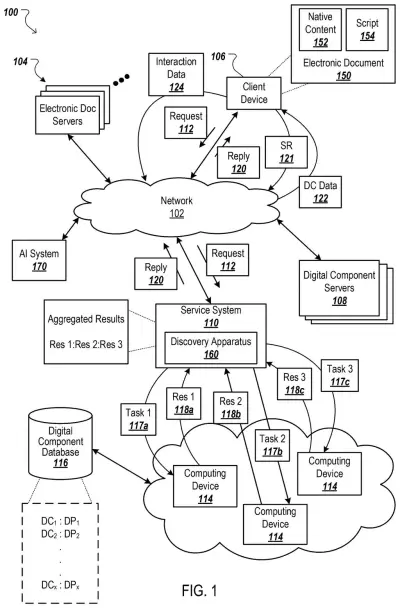
Advertisers usually choose their destination pages by hand, so people often end up somewhere generic even when a more specific page exists. Google's system reads web pages ahead of time, boils each one down to a list of numbers that captures its meaning, and compares that to a similar summary of each advertiser's ad group. When a page is a close enough match, it becomes a possible destination.
Then, when you tap an ad, the system can swap the link for the best-fitting page based on what you searched. Google says the design is meant to handle tens of billions of pages and millions of ad groups, refreshed about once a week.
… generating, by the service system and for a given candidate URL among the set of candidate URLs, a landing page representation of content accessible at the given candidate URL …
Translation: The system builds a digital summary of what is actually on a given webpage.
How Google matches one web page to many ad groups
The claims cover a method with a few core steps. A service system gathers a set of candidate URLs (web page addresses), builds a landing page representation for each (an embedding, meaning a list of numbers that captures what the page is about), and decides which account groups the page suits. An account group is a slice of an advertiser's account that holds its ads, keywords and destination pages.
The key move is flipping the search. Instead of testing every page against every group, the system starts with one page and builds its embedding once, which is the costly step because it uses machine learning. It then compares that embedding with embeddings already stored for each group, using a cheap calculation such as a dot product (a quick way to score how alike two lists of numbers are). A page that scores above a minimum level of match gets mapped to that group.
The filing also describes these details:
- Group embeddings are built from the group's URL, its ads, past search queries it served and its keywords.
- Candidate pages come from a union of advertisers' URLs and URLs from a search system.
- The system writes 'landing page queries', phrases the page fits, and only uses the page when a searcher's query matches one.
When someone taps an ad, the system picks the matching page and redirects the device there. Checks can rerun weekly or whenever a group changes.
Why your ad clicks may land somewhere new
For you, the payoff would show up as an ad click that lands on the exact page about what you searched for, instead of a general page you have to dig through. For advertisers, it means less hand-picking of destination pages across big accounts.
For Google, the point is scale. The filing says checking every page against every ad group by brute force would take orders of magnitude longer than a weekly refresh allows, so the cost-saving trick is what makes the idea workable. The examiner's first review rejected the claims as filed, which is routine at this stage and usually followed by amendments.
That makes this Google's 1112th filing we've tracked in our Google coverage since May, adding a privacy angle to work like measuring device replacement and catching bad app updates.
Source: US 2026/0368261 A1 at the USPTO (PDF). Full patent text and figures are in the official publication.
Get our take in your Top Stories
Liked this breakdown? Add Patentlyze as a preferred source on Google, and our plain-English take shows up more often in your Top Stories the next time Google patent news breaks.
Add Patentlyze on Google
One click.
There are more where this came from
We read every patent application Big Tech publishes and send you the ones worth knowing. Plain English, free, every week.
The drawings · 4 sheets
4 drawing sheets from US 2026/0368261 A1 · click any drawing to enlarge


More from Google
All 1,127 Google patents →
More in Software
All 814 Software patents →
Samsung
Samsung Patents a System That Turns Web Page Content Into Auto-Generated Sound
IBM
IBM Patents a System That Automatically Checks Web Page Layouts for Broken Designs
Apple
Apple Patents a Web Browser That Hides Page Navigation Until You Need It
Apple
No comments yet