
Google
Google · Software · Filed Oct 29, 2025 · USPTO published Nov 12, 2026 · This week's release
Google Files Patent for Search Ads That Rewrite Themselves to Match What You Typed
Google describes an ad that swaps its headline and description in the fraction of a second after you hit search, while the web address printed on the ad stays exactly the same.
- Publication number
- US 2026/0359372 A1(US20260359372A1)
- Applicant
- Google LLC
- Filed · Published
- Oct 29, 2025 · Nov 12, 2026
- Inventors
- Laukik Vilas Chitnis, Zhenbin Weng, Caren Zeng, Rushnil Grover, Yunke Tian, Deepak Lukose, Krishna Kanth Tatavarthi, Niraj Kumar, Ashish Tickoo, Adrian Jeremy Jane, Hang Yin, Alpa Jain, Jason Chen, Jing-Tang Keith Jang
- Status when we published
- Waiting for an examiner
- Document
- 20 claims
- US classification
- 709/217
- Parent application
- Claims priority from a provisional application 63800958 (filed May 6, 2025)
What Google's search-ad rewriting patent does
Imagine you search for 'women's hiking boots' and an ad from a shoe store appears. Ads usually carry wording written in advance. In this Google patent application, the headline and description get swapped for lines taken from the store's own hiking boot page, such as 'Women's Hiking Boots' and 'Hike all day in these stylish, comfortable, and rugged boots.'
The address shown on the ad stays the same. What changes is the wording and, after you tap, where you land. Instead of the store's front page, you could be sent to the page that best fits what you searched for.
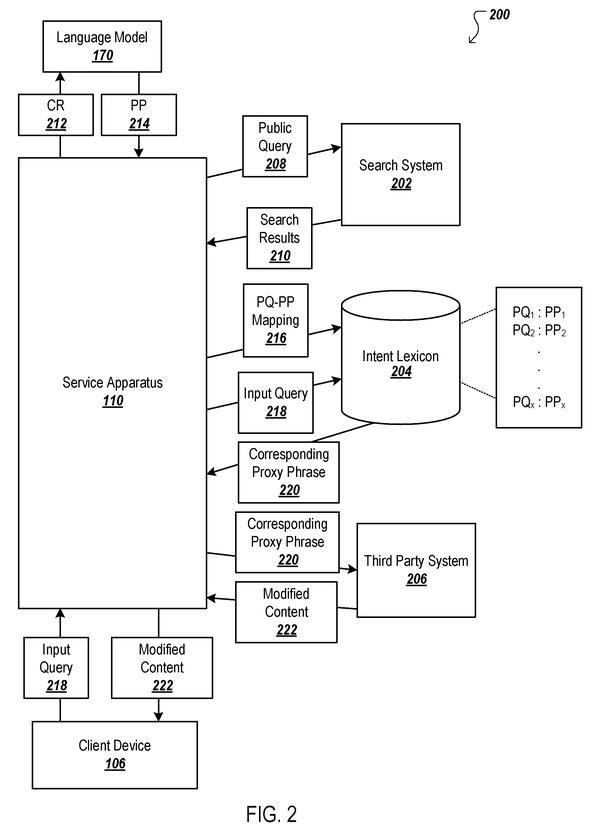
The hard part is speed. A search ad has about a second to show up, so the system does its homework ahead of time. It reads the advertiser's pages, saves the approved lines, and only picks among them once you search.
… creating, by the service system, a modified digital component using the given digital component, wherein the modified digital component includes: at least one content element from the elements database that was not already included in the given digital component; and the display URL …
Translation: The system builds a custom ad on the fly by adding fresh text pulled from the website's other pages.
How Google preps ad lines before you search
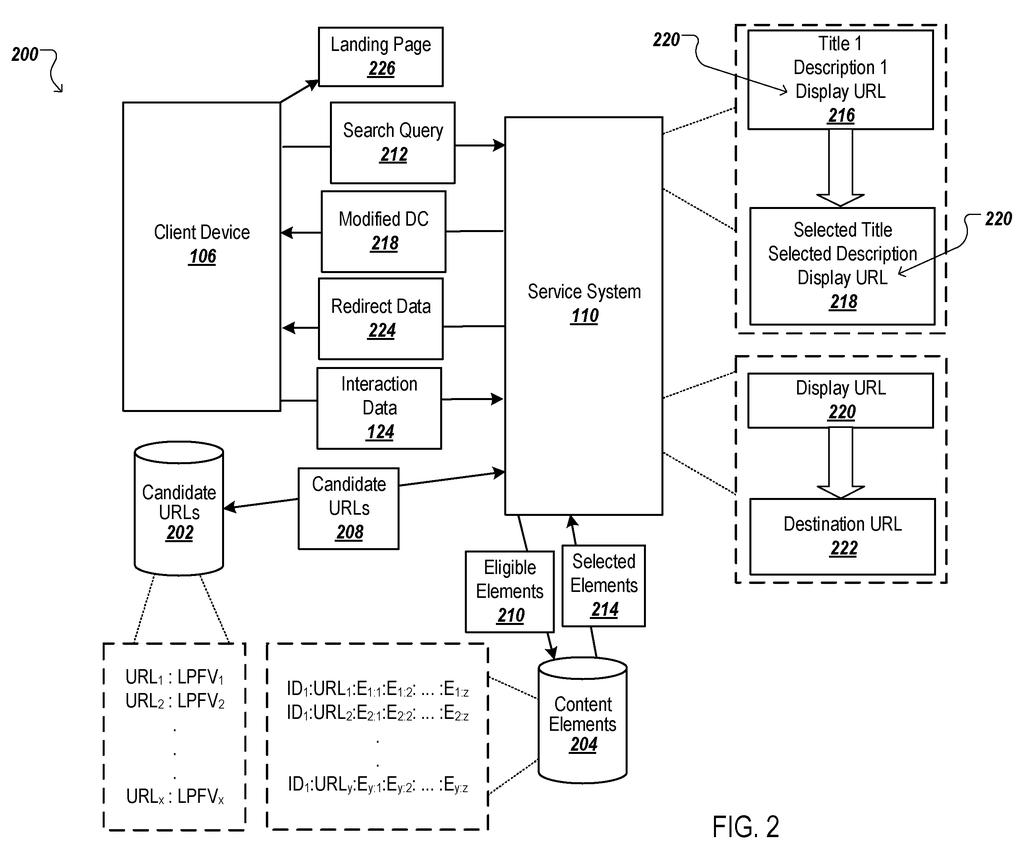
The filing describes a service that works in two stages. Before anyone searches, it starts with an advertiser's account and a display URL (the web address printed on the ad, like example.com). It gathers pages on the same main domain, such as example.com/shoes/women, and extracts content elements: headlines, descriptions and other snippets of text.
Each element is scored against the page it came from using feature vectors (lists of numbers that summarize what a page is about, so a computer can measure how close two things are). Elements may also be written by a generative AI model, but they get a grounding check: if an ad line says 'women's blue shoes,' the page has to mention them. The best-scoring lines, including headline and description pairs, are stored under the account's ID.
Once a search arrives, the live stage is short:
- The search matches a keyword the ad is set to run on, so the ad is selected.
- The system looks up the stored lines for that account and compares them to the search.
- It fills in the ad's headline and description with the best match and sends it back, display URL unchanged.
The filing also describes a follow-up step. After you interact with the ad, the system can redirect you to a different destination URL, chosen by how closely that page matches your search. The description adds that search history and location could factor in.
Why Google's ad rewrite changes where you land
For you, the practical change is an ad whose wording echoes what you just typed, and a click that lands on a specific page instead of a general one. That could save a few taps of hunting around a store's site. It also means the address shown on an ad may not be the page you end up on.
For advertisers, the appeal is scale. The filing notes that one account can hold millions of web pages, which nobody can match to searches by hand. For Google, the filing is mostly about doing this inside the time limit of a search response, where tens of thousands of queries arrive each second. The filing names no product, and the description includes language about user controls and anonymizing personal data.
Google's 1066th filing in our Google coverage since May adds to a run that includes a battery-saving car key patent and cheaper long-document AI reading.
Source: US 2026/0359372 A1 at the USPTO (PDF). Full patent text and figures are in the official publication.
Get our take in your Top Stories
Liked this breakdown? Add Patentlyze as a preferred source on Google, and our plain-English take shows up more often in your Top Stories the next time Google patent news breaks.
Add Patentlyze on Google
One click.
There are more where this came from
We read every patent application Big Tech publishes and send you the ones worth knowing. Plain English, free, every week.
The drawings · 4 sheets
4 drawing sheets from US 2026/0359372 A1 · click any drawing to enlarge


More from Google
All 1,079 Google patents →
More in Software
All 753 Software patents →
Adobe
Adobe Files Patent for Turning Flat AI Images Into Layered, Editable Artwork
Samsung
Samsung Files Patent for Restoring Lost Detail in Heavily Zoomed Phone Photos
Samsung
Samsung Patents a TV Feature That Names the Song Playing in Your Show
Microsoft
No comments yet