
Honda
Honda · Automotive · Filed Feb 17, 2026 · USPTO published Nov 19, 2026 · This week's release
Honda Files Patent for Driver Assist That Finds the Riskiest Spot in a Turn
When a car turns, its path can cross another car's path in two places at once, and Honda's new patent is about deciding which crossing to worry about.
- Publication number
- US 2026/0365171 A1(US20260365171A1)
- Applicant
- HONDA MOTOR CO., LTD.
- Filed · Published
- Feb 17, 2026 · Nov 19, 2026
- Inventors
- Fumiya Kobayashi, Shunya Ishikawa, Ravi Pratap Tripathi, Sampath Praveen Allanki, Yashaswini G
- Status when we published
- Waiting for an examiner
- Document
- 9 claims
- US classification
- 701/41
What Honda's turn-assist patent actually does
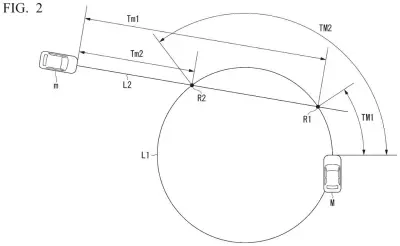
Many driver-assist systems predict where your car and a nearby car are headed, then watch the spot where those two paths cross. Turning makes that messy. A curving path can cross a straight one in two places, and a simple rule like react to the nearest crossing can pick the wrong one.
Honda's filing tackles that. For each crossing, the system estimates when your car and the other car would each arrive. The crossing where those two arrival times are closest together is treated as the riskiest, because that is where the cars would nearly meet.
Crossings behind your car get ignored, since the cars are expected to be moving apart by then. Once the system picks its target, it can slow or speed up the car, steer it away, or alert you with a screen message, a sound or a vibrating steering wheel.
… controls the first mobile object with reference to an intersection having a higher degree of approach among degrees of approach between a first target and a second target corresponding to a plurality of intersections when the first target arrives at each of the plurality of intersections …
Translation: The car pinpoints the exact spot in a turn where another vehicle gets closest.
How Honda picks the riskiest crossing point
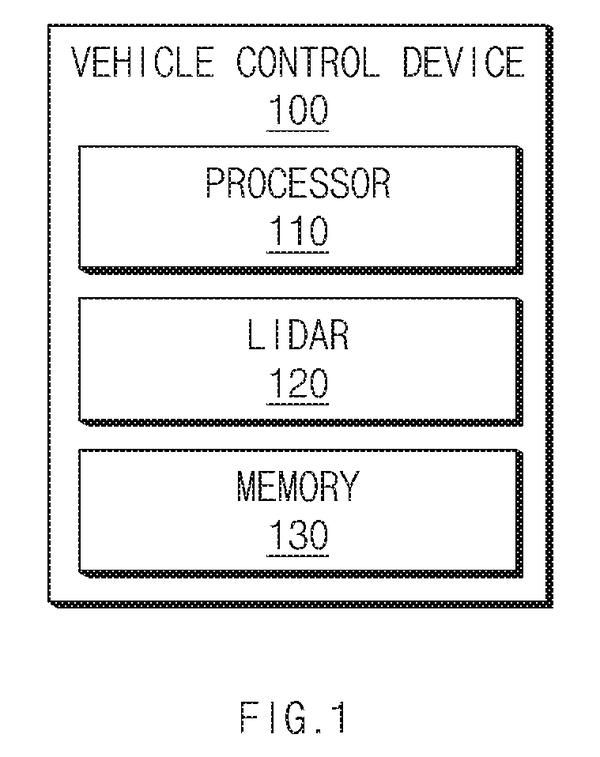
The car's cameras, radar and lidar (a laser-based distance sensor) spot nearby vehicles and report their position and speed. The system then draws a predicted path for each vehicle. For your own turning car, it assumes a simple circular curve built from speed, yaw rate (how fast the car is rotating) and steering angle.
Where two predicted paths cross, the filing calls each spot an intersection. For each one, the system works out an arrival time for both vehicles, then takes the gap between them, called a margin time. The crossing with the smallest gap has the highest degree of approach and becomes the reference intersection. If two gaps tie, either the closer or the farther crossing can be used.
Two refinements are described. Crossings behind your car (past a line running sideways from the car's reference point, or beyond roughly 180 degrees around the assumed circle) are dropped. The system can also track two or more points on each vehicle, such as its width or tire positions. With two points on each car, that produces eight crossings to compare.
Once the reference intersection is chosen, the car can do one or more of these:
- Adjust its speed to arrive earlier or later
- Steer away from the crossing
- Alert the driver by display, sound or steering wheel vibration
What this means when you turn near traffic
Turning is a moment when your path bends and another car's path can cross it more than once. Picking the crossing with the tightest timing gives a driver-assist system a better target for a warning, a slowdown or a steering nudge.
The filing describes a vehicle with a gas engine, an electric motor or both, and says the idea could apply to other moving objects too. It does not name a Honda model or feature, and as an application it may change or never reach a vehicle. For you, the most direct effect would be alerts and automatic speed changes that point at the spot that matters mid-turn.
Honda's sixth filing in our Honda coverage since November adds to a run that includes a carbon-removal heat system and a Wi-Fi update holder.
Source: US 2026/0365171 A1 at the USPTO (PDF). Full patent text and figures are in the official publication.
Get our take in your Top Stories
Liked this breakdown? Add Patentlyze as a preferred source on Google, and our plain-English take shows up more often in your Top Stories the next time Honda patent news breaks.
Add Patentlyze on Google
One click.
There are more where this came from
We read the new patents from Big Tech, carmakers and more and send you the ones worth knowing. Plain English, free, every week.
The drawings · 9 sheets
9 drawing sheets from US 2026/0365171 A1 · click any drawing to enlarge


Show sheet 9

More from Honda
All 8 Honda patents →
More in Automotive
All 432 Automotive patents →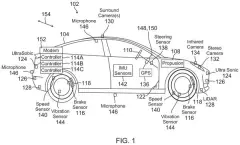
Qualcomm
Qualcomm Files Patent for Driver-Assist Tech That Reads Brake Lights Through Fog and Glare
Nvidia
Nvidia Files Patent for Cars That Guess Which Turn You Plan to Take
Qualcomm
Qualcomm Files Patent for Tagging Car Video With Details About the Camera That Shot It
Nvidia
No comments yet