
IBM
IBM · AI / ML · Filed May 15, 2025 · USPTO published Nov 19, 2026 · This week's release
IBM Patents an AI Tool That Explains Why Sales Dropped
Ask most business software why sales fell and it can only fetch numbers. IBM's patent application describes a system that rewrites your question, hunts for related data, and writes an answer.
- Publication number
- US 2026/0368220 A1(US20260368220A1)
- Applicant
- International Business Machines Corporation
- Filed · Published
- May 15, 2025 · Nov 19, 2026
- Inventors
- Donald Banks, Obidul Islam, Sagar Thomas, Zhibo Zhang
- Status when we published
- Approved; patent expected soon
- Document
- 20 claims
- US classification
- 707/760
- Examiner
- NGUYEN, KIM T (Art Unit 2153)
What IBM's question-answering patent actually does
You're a manager staring at a sales chart, and August revenue in Los Angeles just fell off a cliff. You type a plain question into a chat box: why did it drop? Most current tools can fetch a number, but they stumble when the answer isn't sitting in any one spot.
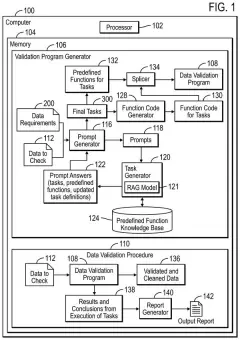
IBM's patent application describes a way to handle that. First the system works out what kind of question you asked: a plain lookup, or a why, how or what will happen question. For the harder ones, it rewrites your question into a simpler one, finds the parts of the data involved, and checks which other columns of data statistically move along with them.
It then loops, adding what it found and trying again, up to a limit so it never searches forever. Finally an AI writes the answer in normal language. The filing says the AI models don't need to be trained on or see your private customer data; only the step that runs the database lookup touches it.
… adding one or more driver columns to a selection query language statement and applying filters from context associated with an originally received query to further evaluate the targeted data locations.
Translation: The system automatically digs deeper into the data to find out what actually caused the sales numbers to move.
How IBM breaks a hard question into steps
The system starts by sorting your question into one of five types: descriptive (look up a known fact), diagnostic (why did this happen), driver (what causes this), prescriptive (how should we handle it) and predictive (what will happen). Descriptive questions get a direct data lookup. The rest take the longer path.
Next, the question is rewritten into a simpler form and converted into SQL (the standard language databases understand). In the filing's example, 'why did revenue drop in August 2023 in Los Angeles' becomes a request for revenue by month for July and August 2023 in that city. The system then works out which data locations (tables, columns and filters) the request touches.
Then comes key driver analysis: statistical tests that find which other columns of data move together with the one you care about. In the claims, the system:
- Adds those driver columns to the database request,
- Applies filters from your original question, and
- Runs it against the data to get highs, lows, averages and changes between time periods.
A depth limit check decides whether the answer is good enough or another round is needed. When it is good enough, an AI model writes the final answer in plain language, and it can flag a false premise, such as asking why revenue fell when it actually rose.
Why IBM's patent matters for business data users
The practical payoff is for anyone who holds a question but not the skills to dig through a company database. Instead of waiting on an analyst, you could ask 'why' in your own words and get an explanation backed by the numbers. The privacy design matters too: the filing says only the database step touches customer data, not the AI models writing the answer.
The patent office has approved this application and IBM has paid the fee to have it issued, so it should become a granted patent soon. The filing frames the work as something that could be offered as a service to customers on demand, which fits how businesses buy data tools.
That makes this IBM's 60th filing in Enterprise AI coverage we've tracked since May, joining work like the math-checking AI filing and the database-shrinking one.
Source: US 2026/0368220 A1 at the USPTO (PDF). Full patent text and figures are in the official publication.
Get our take in your Top Stories
Liked this breakdown? Add Patentlyze as a preferred source on Google, and our plain-English take shows up more often in your Top Stories the next time IBM patent news breaks.
Add Patentlyze on Google
One click.
There are more where this came from
We read every patent application Big Tech publishes and send you the ones worth knowing. Plain English, free, every week.
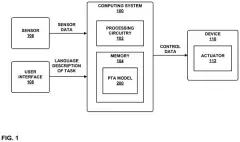
The drawings · 5 sheets
5 drawing sheets from US 2026/0368220 A1 · click any drawing to enlarge


More from IBM
All 481 IBM patents →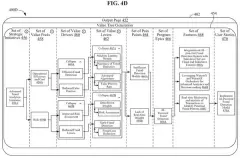
More in AI / ML
All 2,738 AI / ML patents →
Google
Google Files Patent for AI Video That Grows Forward and Backward From One Photo
Microsoft
Microsoft Files Patent for Catching the Best Job Listings Its Shortlist Misses
Qualcomm
Qualcomm Files Patent for Phones That Learn From Days Like Today
Qualcomm
No comments yet