
Microsoft
Microsoft · AI / ML · Filed May 9, 2025 · USPTO published Nov 12, 2026 · This week's release
Microsoft Files Patent for Catching the Best Job Listings Its Shortlist Misses
When an app narrows hundreds of millions of items down to a shortlist, anything the shortlist drops is gone for good. Microsoft's patent application adds a hidden second pass that reveals what got dropped, then teaches the shortlist maker to stop dropping it.
- Publication number
- US 2026/0359314 A1(US20260359314A1)
- Applicant
- Microsoft Technology Licensing, LLC
- Filed · Published
- May 9, 2025 · Nov 12, 2026
- Inventors
- Qianqi Shen, Srividya Krishnamurthy, Shaobo Zhang, Yuchin Juan, Luke E. Simon, Steven X. Xu, Declan P. Boyd, Chengming Jiang, Jianqiang Shen, Jeffrey W. Lee
- Status when we published
- Company responded; back with the examiner
- Document
- 20 claims
- US classification
- 707/723
- Examiner
- MINCEY, JERMAINE A (Art Unit 2159)
What Microsoft's shortlist-checking patent does
Ever wonder how an app picks a handful of things to show you out of hundreds of millions? It can't judge them all. A fast first pass builds a shortlist, then a slower, more careful pass sorts only what made the list.
The risk is easy to see. If the fast pass leaves out something the careful pass would have loved, you never see it, and nobody notices. Microsoft's filing describes a way to catch those misses while the system is running.
For a small slice of requests, the system runs a hidden second copy of the process. This copy skips the shortlist and lets the careful ranker look at everything. The system then compares the two results and uses the gap to retrain the fast pass, so its shortlists drift closer to what the careful ranker would pick.
… computing an alignment of a retrieval objective of the retrieval machine learning model with a ranking objective of the ranking machine learning model based on a comparison of the first predictive output generated from the first subset of the entity-item pairs and the retrieved second predictive output generated from the entity-item pairs …
Translation: Comparing the fast search results against the thorough final list to see where the system is missing good options.
How the hidden test path grades the shortlist
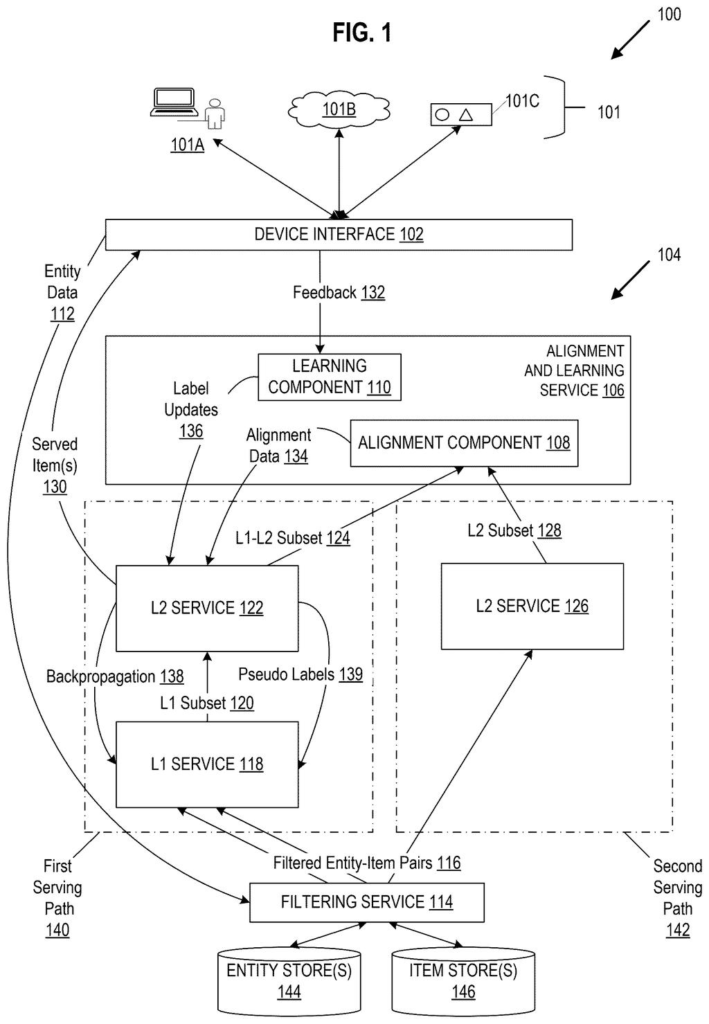
The filing describes two serving paths (separate routes through the software) that start from the same list of person-and-item pairs. An item could be a job posting, a video or an ad. In the live path, a fast retrieval model cuts the list down to a shortlist, and a more careful ranking model scores only that shortlist. Those top results are what you actually see.
In the test path, the ranking model skips the shortlist and scores every pair. Its answer is stored in memory as the reference. The system then compares the two paths using a regret calculation (a measure of the value, such as a click or an ad bid, lost by taking the shortcut). The result is used to update the retrieval model. Because the test path is slower, one example sends it under ten percent of traffic.
The filing also describes some optional extras:
- Training the retrieval model as a 'student' that copies the ranking 'teacher,' using labels the ranker predicts itself (called pseudo labels).
- Running part of retrieval on a GPU (a graphics chip) with stored embeddings (number summaries of each item) to keep it fast.
- Feeding in budget-based boost values from a pacing service for ad auctions.
- Adjusting labels based on how people react to what they were shown.
An alignment of a first objective of the first machine learning model with a second objective of the second machine learning model is computed using the first predictive output and the second predictive output.
Translation: The software measures how well the initial screening matches the final scoring to fix any blind spots.
Why feeds, job listings and ads could improve
Recommendation systems decide which job listings, videos, search results and ads reach you. If the quick first pass drops a good match, you never learn it existed. This filing aims to catch that automatically, instead of relying on hand-written rules that engineers re-check on a schedule. The description says mistakes can pile up between those scheduled fixes.
For platforms and advertisers, the filing also covers auctions. It describes lining up the stages so the whole pipeline acts like one 'big' auction instead of a small one at the very end. Keep in mind this is an application: the examiner's first review rejected the claims as filed, a routine step that is usually followed by amendments.
Microsoft's 62nd filing in the Enterprise AI patents we've tracked since May adds to a run that includes applications on two small AIs sharing control and on AI skipping still video frames.
Source: US 2026/0359314 A1 at the USPTO (PDF). Full patent text and figures are in the official publication.
Get our take in your Top Stories
Liked this breakdown? Add Patentlyze as a preferred source on Google, and our plain-English take shows up more often in your Top Stories the next time Microsoft patent news breaks.
Add Patentlyze on Google
One click.
There are more where this came from
We read every patent application Big Tech publishes and send you the ones worth knowing. Plain English, free, every week.
The drawings · 10 sheets
10 drawing sheets from US 2026/0359314 A1 · click any drawing to enlarge


Show the other 2 sheets


More from Microsoft
All 646 Microsoft patents →
More in AI / ML
All 2,637 AI / ML patents →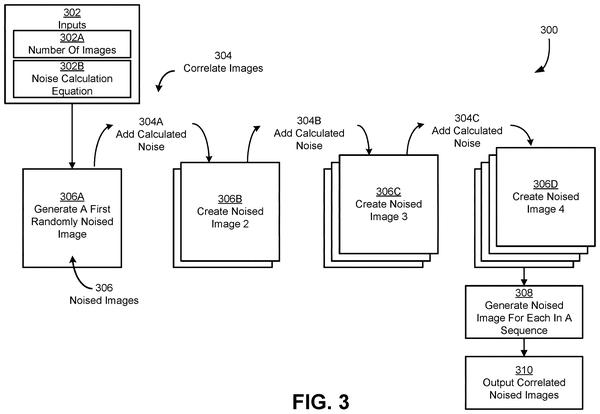
Nvidia
Nvidia Files Patent for AI Video Built From Frames That Share Their Static
Adobe
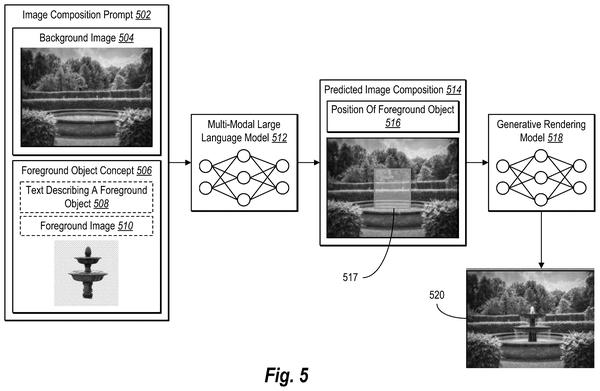
Adobe Patents an AI That Suggests What to Add to Your Photo and Where
IBM
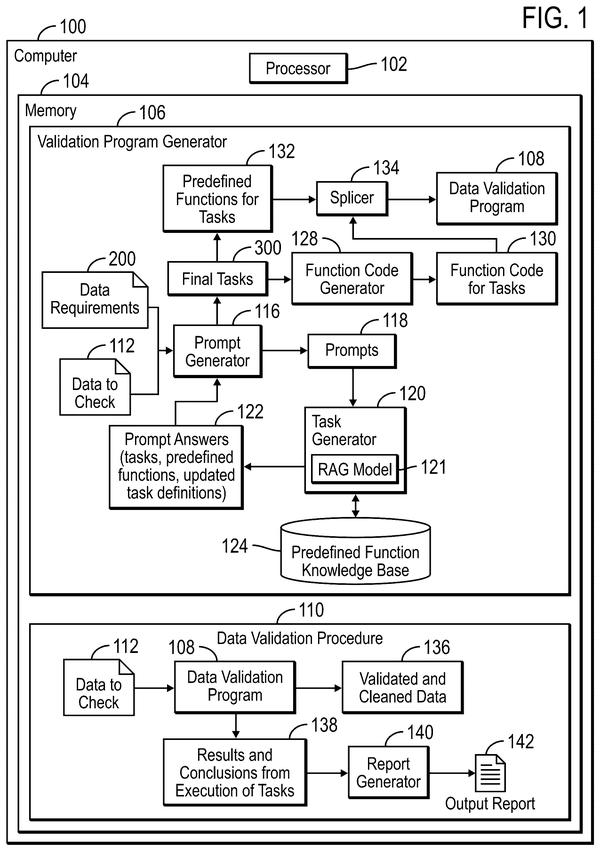
IBM Patents an AI That Writes the Error-Catching Code Analysts Build by Hand
AMD
No comments yet