
Intel's New Patent Lets CPUs Guess Memory Values Before Looking Them Up
Every time your computer's processor needs data from memory, it waits. Intel is patenting a chip that skips that wait by guessing the answer before the question is even fully asked.
What Intel's memory-prediction chip actually does for you
A processor runs a web browser, a game, or a spreadsheet by constantly fetching numbers from memory. Each fetch takes time, and those tiny delays stack up into the lag you feel when an app stutters or a tab takes a beat to respond.
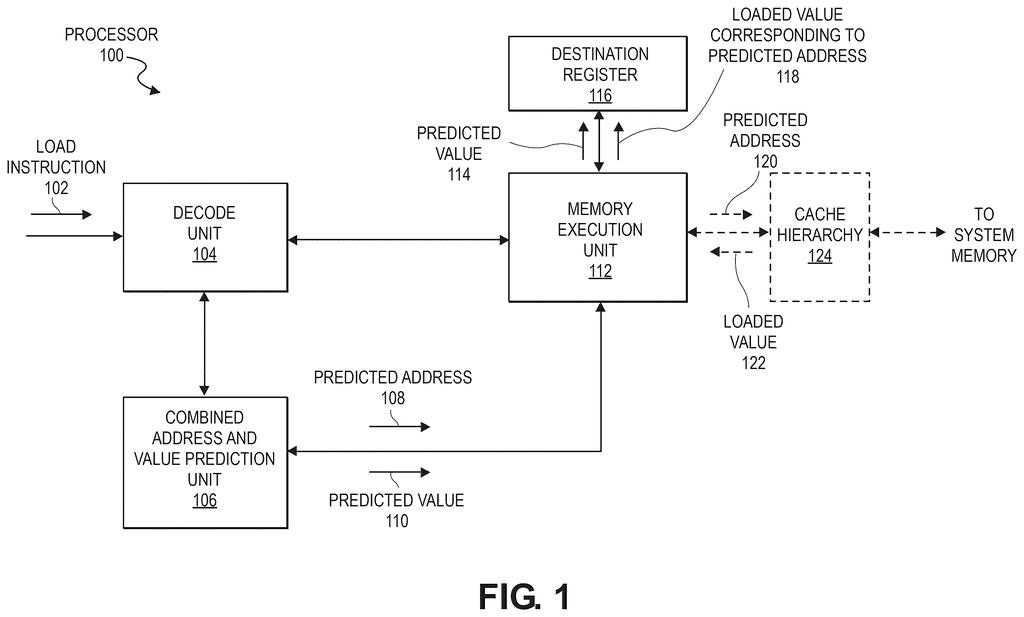
Intel's patent describes a processor that tries to short-circuit that wait. Instead of always going to memory for data, the chip can either predict where in memory to look (and go fetch it early) or predict the actual value and skip the fetch entirely. The right move is chosen per instruction, depending on which prediction the chip is most confident about.
For you, this is invisible infrastructure. You wouldn't see a new button or setting. You'd just notice that software feels a little more responsive, especially in code that reads the same kinds of values over and over again.
… a prediction unit to provide either a predicted address or a predicted value for the load instruction …
Translation: The chip guesses where data lives or what it actually says before checking.
How the prediction unit chooses between address and value
The patent centers on a prediction unit inside the processor that watches load instructions (the commands that tell a CPU to go grab a value from memory) and makes a call before the slow memory trip completes.
It can operate in two modes:
- Address prediction: The chip predicts where in memory the data lives, kicks off the fetch early, and stores the result in the destination register (the small on-chip slot the instruction was going to write to). This is load address prediction, already a known technique, but usually done separately.
- Value prediction: The chip predicts the actual number the instruction would have loaded, and writes that directly to the destination register without going to memory at all. This is load value prediction, useful when a variable holds the same number repeatedly.
The key claim is that a single unified prediction unit decides which strategy to use for each instruction, rather than having two separate systems that might conflict. If value prediction confidence is high, skip the memory trip. If address prediction is stronger, prefetch early. The memory execution unit then either validates the guess or corrects it.
… load a value corresponding to the predicted address and store the loaded value in the destination register or store the predicted value in the destination register …
Translation: It either fetches the real data from the guessed address or just uses its guess directly.
What faster memory guessing means for everyday computing
Memory latency (the delay between asking for data and getting it) is one of the oldest bottlenecks in computing. Processors have grown far faster than memory has, so chips spend a surprising amount of time just waiting. Any technique that reduces that wait has a real effect on how software feels, from browser tabs to video encoding to database queries.
What makes this patent worth noting is the combined approach. Choosing dynamically between two prediction strategies per instruction is more flexible than either approach alone. Whether Intel ships this in a consumer chip or a server processor, the payoff is the same for the person on the other end: fewer of those small, invisible stalls that turn a fast machine into a merely okay one.
Intel's 47th filing we've tracked since May in the AI chip wars, following one on security hardware reconfiguration and one on built-in fault detection for AI models, adds another layer to the picture.
Memory latency prediction is a decades-old research area, and Intel has a long history of publishing and patenting incremental improvements here. This filing lands firmly in that category. There is no dramatic new idea, just a tighter integration of two techniques that previously ran in parallel, or not at all.
That said, the reader-facing impact of getting this right is real. The stutter when you scroll a large document, the pause before a game loads the next area, the half-second hang in a spreadsheet with thousands of formulas: all of these trace back, at least in part, to memory latency. A chip that makes smarter per-instruction calls about how to handle that latency could shave off enough of those moments to be perceptible.
This reads like a filing to protect engineering work already done inside Intel's CPU design pipeline, not a moonshot. The probability of it showing up in a future architecture without fanfare is fairly high.
There are more where this came from
We read every patent application Big Tech publishes and send you the ones worth knowing. Plain English, free, every week.
The drawings
17 drawing sheets from US 2026/0299955 A1 · click any drawing to enlarge


Want this weekly breakdown for a company we don't cover? Patentlyze Pro →
Be the first to weigh in