
Meta
Meta · AR / VR · Filed May 13, 2026 · USPTO published Nov 19, 2026 · This week's release
Meta Files Patent for Glasses That Show You Doing the Workout in Your Own Home
Meta's patent application describes glasses that spot a pull-up bar in your home, ask you about it, then show a picture of you doing the exercise right there. They can also chime in on their own after about four hours of sitting.
- Publication number
- US 2026/0369055 A1(US20260369055A1)
- Applicant
- Meta Platforms Technologies, LLC
- Filed · Published
- May 13, 2026 · Nov 19, 2026
- Inventors
- Andrew Garrod Bosworth, Alexander James Himel
- Status when we published
- Waiting for an examiner
- Document
- 20 claims
- US classification
- 345/156
- Examiner
- MERCEDES, DISMERY E (Art Unit 2627)
- Parent application
- Claims priority from a provisional application 63805176 (filed May 13, 2025)
What Meta's goal-coaching glasses actually show
Most goal-tracking apps show your progress as a list, a table or a dashboard, and none of that looks like the room you actually live in. Chatbots have a similar problem: without detailed information from your devices, their advice tends to stay general. Meta's patent application describes smart glasses that try to close that gap.
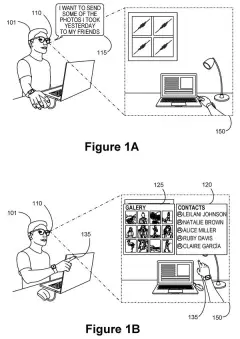
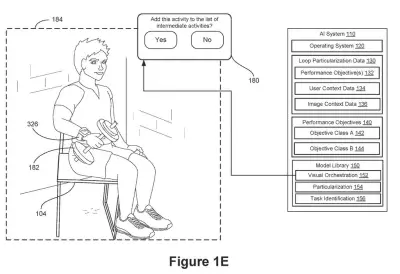
Here's the idea. You tell the glasses a goal, say, lose five pounds in a month. The glasses then look around, spot something useful like a chair or a pull-up bar, and ask you a few questions about it. Once the system has enough to go on, it shows you a picture of you doing the exercise with that very object, right where it sits in your home.
The filing also describes nudges you didn't ask for: a prompt after hours of sitting, a reminder to sip water, or a suggestion to pick the grilled chicken over the fried.
… a first LLM configured to identify objectives for the wearer to accomplish, (ii) a second LLM configured to cause the AR device to obtain relevant data about the physical surroundings of the wearer, and (iii) a third LLM configured to cause the AR device to present visual representations of activities for the wearer to perform …
Translation: The system uses three separate AI language models to set goals, scan your room, and show you workout visuals.
How three AI models split the coaching job
The claims describe a pair of AR glasses (glasses that overlay digital images on the real world) connected to an AI system made of three large language models, or LLMs (the text-and-reasoning AI behind modern chatbots). Each model has its own job:
- First LLM: shows menus and prompts on the glasses to work out your objective. The description lists fitness, work, relationship-building and household goals.
- Second LLM: tells the glasses' cameras to capture images of an object it recognizes as useful for that goal, then asks you for more information about it.
- Third LLM: checks whether visualization criteria are met. If so, it has the glasses display pictures of activities, with at least one showing that recognized object being used.
The description gives examples of those criteria: enough photos from different angles, high confidence in what the object is, an object that fits the goal, a position in your view where the overlay can sit on it, and a suitable visual to show. If a check fails, the system asks you more questions or takes more pictures.
Dependent claims add extras: prompts triggered by sounds around you without being asked, a nudge after you have been sedentary too long, step-by-step sub-goals, healthier food swaps when the cameras see food, and live performance numbers from a sensor shown while you move.
… at least one visual representation depicting the recognized physical object being used to perform the activity …
Translation: The glasses show an image of your actual household object being used for the exercise.
What this means for Meta's AR glasses and privacy
If this ever reached a product, your glasses would turn a vague goal into a plan built around your actual furniture, fridge and calendar. The filing describes weekly meal plans, shopping lists that appear when you walk into a grocery store, and workouts placed on your calendar automatically. Instead of a dashboard on your phone, the coaching shows up in the room where you'd do the work.
The trade-off is how much the glasses must watch and hear. The filing relies on cameras to recognize objects and food, and on microphones to pick up conversations and store sounds. It states that data collection happens with user consent and that you can opt out at any time. How that works in practice is something this document can't tell you.
That makes this Meta's 86th filing we've tracked since May on our smart glasses watchlist, joining one about picking your outfit by AI and one about a custom on-the-spot control panel.
Source: US 2026/0369055 A1 at the USPTO (PDF). Full patent text and figures are in the official publication.
Get our take in your Top Stories
Liked this breakdown? Add Patentlyze as a preferred source on Google, and our plain-English take shows up more often in your Top Stories the next time Meta patent news breaks.
Add Patentlyze on Google
One click.
There are more where this came from
We read every patent application Big Tech publishes and send you the ones worth knowing. Plain English, free, every week.
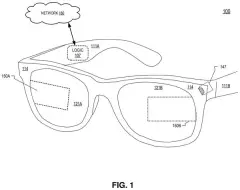
The drawings · 14 sheets
14 drawing sheets from US 2026/0369055 A1 · click any drawing to enlarge


Show the other 6 sheets


More from Meta
All 192 Meta patents →
More in AR / VR
All 713 AR / VR patents →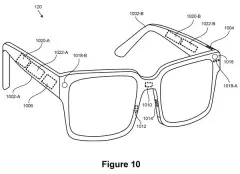
Meta
Meta Patent Reveals AI Glasses and Smartwatch Working Together to Complete Tasks
Meta
Meta Files Patent for Glasses That Record Your Walks as 3D Memories
Meta
Meta Files Patent for Glasses Batteries Shaped to Fit Inside Slimmer Frames
Meta
No comments yet